
Lieferung heute & morgen

Qualitätsgarantie

Willkommens-Angebote freischalten: KOSTENLOSE Lieferung | Bis zu 80 % RABATT | Kostenlose 30-Tage-JoyPlus-Testphase
App herunterladen
A good hand blender is an indispensable tool in the kitchen. It purees soups to a velvety finish, blends creamy smoothies, and chops ingredients in seconds. But the market is flooded with devices whose marketing promises often suggest more than the technology can deliver. Many buyers invest in models that lose power after a short time, become unhygienic, or come with accessories that just gather dust in a cupboard.
As your Joybuy Product Recommendation Officer, I have analysed the most common pitfalls to help you make an informed decision. This guide will show you what really matters and how to avoid the three most common mistakes when buying a hand blender.
Before we dive into the technical details, let's look at the three most common reasons for a bad buy. Knowing them will protect you from disappointment and unnecessary expense.
The Wattage Trap: More Power Isn't Always Better. Manufacturers often advertise high wattage ratings (e.g., 1200 W) to suggest superiority. In practice, however, it's not the raw motor power that's crucial, but the efficiency with which this power is transferred to the blades. A well-engineered 700-watt motor from a premium brand like Braun can often deliver finer results than a poorly designed 1200-watt generic device. What truly matters are the quality of the motor, the design of the blades, and the overall build.
The Accessory Dilemma: Quantity Over Quality. Extensive Hand Blender Sets seem like a great deal at first glance. However, the numerous attachments are often made of low-quality material and are impractical for everyday use. A rarely used potato masher or a weak chopper attachment just takes up space. It's more sensible to invest in a high-quality base unit and purchase only the accessories you truly need.
The Hygiene-Risk Factor: Difficult to Clean. A design flaw that is often overlooked is how easy the device is to clean. Models with a non-detachable blending shaft or a housing with many crevices and vents are breeding grounds for bacteria. Food residue gets trapped and is nearly impossible to remove. A detachable, dishwasher-safe stainless steel blending shaft is therefore a must-have for hygienic and easy handling.
To avoid these pitfalls, focus on the following three core features. They are the key to a durable and high-performing appliance.
A powerful hand blender isn't defined by its wattage alone. Look for variable or multi-step speed control. This allows you to precisely adjust the power to the ingredients—slower for soft fruits to prevent splashing, and faster for hard vegetables or nuts. Models with an additional turbo button provide a short burst of power for extra-fine results.
The blending shaft is the heart of the appliance. Here are the crucial points:
hand blender for soups, plastic shafts should be avoided as they can warp, discolour, or absorb odours when exposed to heat. Stainless steel is durable, hygienic, and flavour-neutral.Instead of buying an overloaded set, consider which accessories are relevant to you.
hand blender with a chopper is extremely practical for chopping herbs, nuts, onions, or even small amounts of meat. Pay attention to a suitable size (350 ml to 500 ml is ideal for everyday use).hand mixer for tasks like whipping cream or egg whites. However, for heavy doughs, a dedicated hand mixer is more suitable.Here are three recommendations tailored to different needs that meet the quality criteria mentioned above.
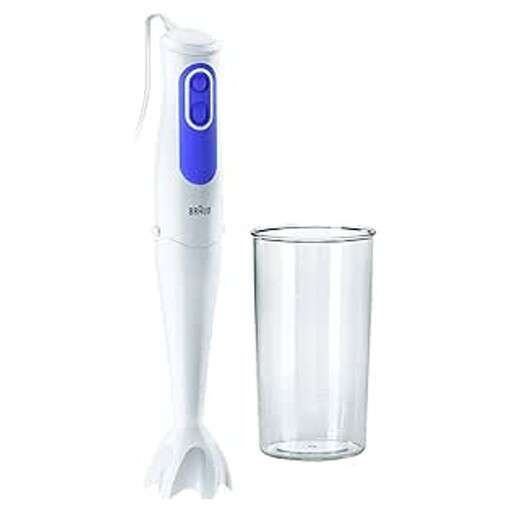
Why it's a good fit: Ideal for anyone seeking a reliable brand-name appliance for basic tasks like smoothies and soups, without paying for unused accessories. It offers proven Braun quality for daily use.
This model avoids the accessory trap by focusing on the essentials: a powerful blending wand and a beaker. The 700 watts are highly efficient thanks to PowerBell Plus technology.
Features SplashControl and PowerBell Plus technology for clean operation and fine blending results, which is not a given in this price range.
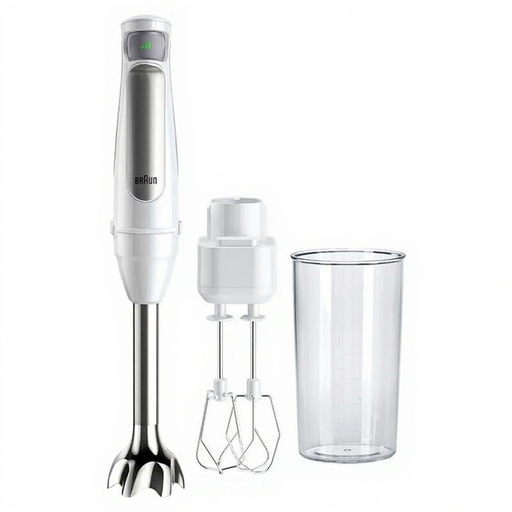
Why it's a good fit: For home cooks who value control, power, and flexibility. The 1000-watt motor and intuitive speed control make it a powerful all-rounder.
This model debunks the wattage trap. It's not just about the 1000 watts, but how they are controlled via SmartSpeed technology. You're investing in smart engineering, not just raw power.
The Easy SmartSpeed technology provides seamless variable speed control based on how hard you press the button. This allows for precise one-handed operation and full control over the texture.
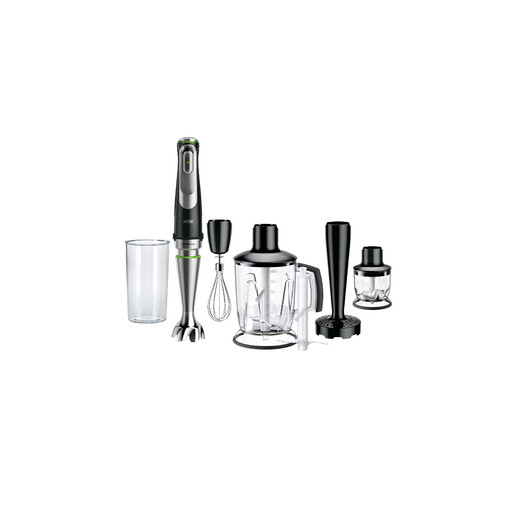
Why it's a good fit: For those who make no compromises and want a complete, high-quality system for demanding tasks. Ideal for processing hard ingredients and a wide variety of preparations.
This is an example of a hand blender set done right. The accessories (chopper, whisk, masher) are high-quality and functional, providing real value rather than just inflating the price.
The ActiveBlade technology, where the blade moves up and down, pulverises even the hardest foods like nuts or ginger with minimal effort. The 1200-watt motor provides the necessary power to do so.
We have compiled a complete, up-to-date list of products that fully meet these strict selection criteria and the German safety regulations.
1. How many watts should a good hand blender have? For most everyday tasks like pureeing soups or making smoothies, 600 to 800 watts from a quality manufacturer is perfectly sufficient. Models with 1000 watts or more are beneficial if you regularly want to process very hard ingredients like ice, frozen fruit, or nuts. However, the combination of motor efficiency, blade design, and build quality is always more important than the wattage number alone.
2. Can you use a hand blender to puree hot soup directly in the pot? Yes, this is one of the main advantages of a hand blender. However, it is essential that the appliance has a stainless steel blending shaft. Plastic blending shafts can warp at high temperatures or potentially release unwanted substances into the food. Always immerse the blending shaft completely in the liquid before turning the device on to avoid hot splashes.
3. What is the difference between a hand blender and a hand mixer? Although both are handheld, they serve different purposes. A hand blender (also called an immersion or stick blender) is equipped with a blade at the end of a shaft and is used for chopping, mixing, and pureeing directly in a pot or tall container. A hand mixer uses two rotating beaters or dough hooks and is designed for tasks like whipping cream, mixing batter, or kneading yeast dough.