
Lieferung heute & morgen

Qualitätsgarantie

Willkommens-Angebote freischalten: KOSTENLOSE Lieferung | Bis zu 80 % RABATT | Kostenlose 30-Tage-JoyPlus-Testphase
App herunterladen
A good hand blender, often called a stick or immersion blender, is an indispensable tool in the kitchen. It purées soups directly in the pot, whips up creamy smoothies, and helps prepare sauces or baby food. However, the market is crowded, and many devices promise more than they can deliver. Before you make a decision, it's crucial to know the common pitfalls that often lead to a bad purchase. As your Joybuy Product Recommendation Officer, I'll help you separate the wheat from the chaff.
Many purchasing decisions are based on marketing promises that disappoint in practice. Pay close attention to these three points to make an informed choice:
To avoid the pitfalls mentioned above, you should focus on three core technical features. These largely determine the performance, durability, and user-friendliness of your new hand blender.
Wattage alone is only half the story. The key to a fine, splash-free blend is the interplay between the motor, the blending bell (the lower part of the shaft), and the blade design.
The blending shaft comes into direct contact with food. There are two common materials here:
A good hand blender set is distinguished not by the quantity, but by the quality and ease of use of its accessories. An intuitive attachment system, often called EasyClick or similar, allows you to swap attachments with just one hand. A hand blender with a chopper is a useful addition for many households for chopping onions, herbs, or nuts. A whisk attachment is practical for whipping cream or egg whites.
Based on the quality criteria mentioned, we have identified a few models that are particularly suitable for different user profiles.
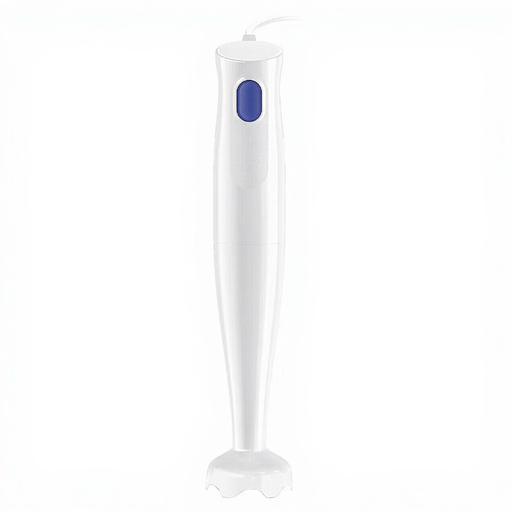
Why it's a good fit: Ideal for users seeking a simple, reliable device for basic tasks like preparing soups and simple smoothies. Its light weight of only 550 grams makes handling particularly comfortable.
This model focuses on the core function of blending and avoids the accessory trap. You don't pay for unused attachments, but instead get a focused, efficient tool.
The 450-watt motor is perfectly adequate for standard applications. The EasyTwist system allows for easy changing of the dishwasher-safe attachments.
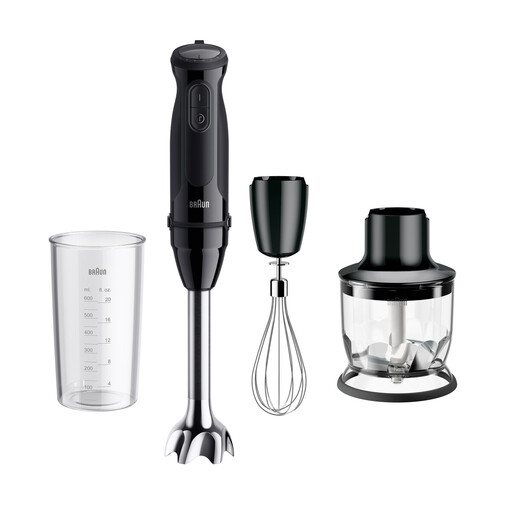
Why it's a good fit: Perfect for ambitious cooks who want to do more than just blend. This set offers a balanced combination of a powerful motor and the most frequently used accessories for daily use.
The combination of a 1000-watt motor and PowerBell VPlus technology debunks the wattage-only trap. Here, power is efficiently converted into blending force. The accessories (chopper, whisk) are field-tested and useful.
21 speed settings plus a turbo function allow for maximum control. The EasyClick Plus system ensures quick accessory changes, and all parts that come into contact with food are BPA-free.
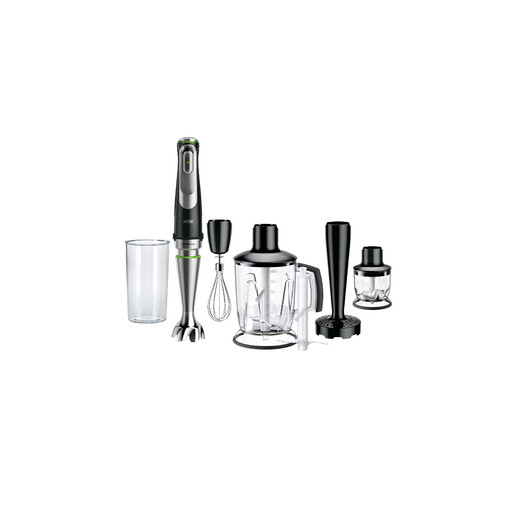
Why it's a good fit: For those who make no compromises and regularly tackle demanding tasks like crushing ice, nuts, or fibrous vegetables. A powerhouse for maximum performance.
The high power of 1200 watts is justified by the ACTIVEBlade technology, where the blade moves up and down. This allows it to process the toughest ingredients where cheaper models would fail.
The imode technology offers preset power levels (pulse, low, and high speed). The Advanced SmartSpeed control intuitively adjusts the speed based on the pressure applied to the button.
We have compiled a complete, up-to-date list of products that fully meet these strict selection criteria and safety regulations.
How do you properly clean a hand blender? Cleaning is straightforward if you have a model with a detachable stainless steel blending shaft. Rinse the shaft under hot water immediately after use to prevent residue from drying. Most detachable blending shafts and accessories are dishwasher-safe. The motor unit must never be submerged in water; wipe it with a damp cloth if necessary.
How many watts should a good hand blender have? There's no one-size-fits-all answer to this question. For simple applications like soups and shakes, 400-600 watts are often sufficient. For versatile home chefs who also make pesto or dips, 700-1000 watts is a good benchmark. Anyone who regularly wants to crush hard ingredients like frozen fruits, nuts, or ice should choose a model with 1000 watts or more and advanced blade technology.
Can you crush ice with a hand blender? Not every hand blender is suitable for this task. Crushing ice cubes requires a very powerful hand blender (typically over 1000 watts) and specially hardened blades. Many manufacturers explicitly state in the product description whether the device is suitable for crushing ice or offer a special chopper attachment for this purpose. Attempting this with an unsuitable model can damage the motor or the blades.