
Lieferung heute & morgen

Qualitätsgarantie

Willkommens-Angebote freischalten: KOSTENLOSE Lieferung | Bis zu 80 % RABATT | Kostenlose 30-Tage-JoyPlus-Testphase
App herunterladen
A hand blender can purée soup straight in the pan, mix sauces, prepare baby food or chop vegetables for dips. However, some product claims can quickly lead to the wrong purchase. Wattage, accessories and drinking cups alone tell you little about whether a model suits the way you cook.
A 1,000 or 1,200 W motor can be useful for thicker mixtures and larger quantities. But a 280 W model may be enough for the occasional soup, soft fruit or simple purée. The blade design, speed control, permitted operating time and container you use are also important.
A hand blender with accessories may seem versatile at first. But a whisk, chopper, measuring beaker and extra blades are only worthwhile if you’ll use them regularly. More parts also mean you’ll need more storage space and have more items to clean.
With a dishwasher-safe blender, only the removable parts that come into contact with food can usually go in the dishwasher. The motor unit, cable and plug must be kept dry. Before buying, check exactly which components are dishwasher-safe.
The wattage is a useful starting point for comparison, but it isn’t the only measure of quality. These features are relevant for different uses:
A powerful blender shouldn’t be run continuously without breaks. Take limits such as a maximum running time of 60 seconds seriously to avoid overheating.
A stainless steel blade is corrosion-resistant and suitable for many kitchen tasks. The design of the blade guard affects how much the mixture splashes and how well ingredients are directed towards the blade. For hot soup, use a container that’s tall enough and leaves plenty of room above the mixture.
If you’re looking for a blender for soup and baby food, choose one with controllable speed and a blending attachment that’s easy to clean. Only blend hot liquids if the instruction manual explicitly says it’s safe to do so. Many compact smoothie blenders aren’t suitable for hot liquids.
A hand mixer, or hand blender, is usually used directly in a pan or in a tall beaker. A smoothie blender, personal blender or smoothie maker, on the other hand, often comes with sealable drinking containers. A capacity of 0.5 to 0.7 litres is handy for individual portions; for families or multiple servings, a larger container may be more practical.
A portable blender with a battery and USB-C connection is handy for the office, travelling or days out. You’ll need to consider its charging time, the number of blending cycles per charge and how easy it is to clean on the go. A traditional jug blender often has a larger capacity, but needs a permanent spot on your worktop and is less flexible.
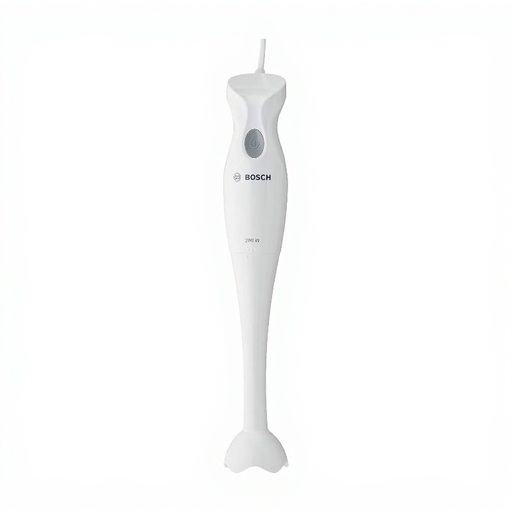
Why it suits this profile: Weighing just 0.6 kg, this hand blender is designed for simple blending and mixing tasks, and takes up very little storage space.
The product details specify 280 W, a turbo button and a removable, dishwasher-safe blending unit, rather than making vague claims about power.
Lightweight design, splash guard and removable blending foot with a stainless steel blade.
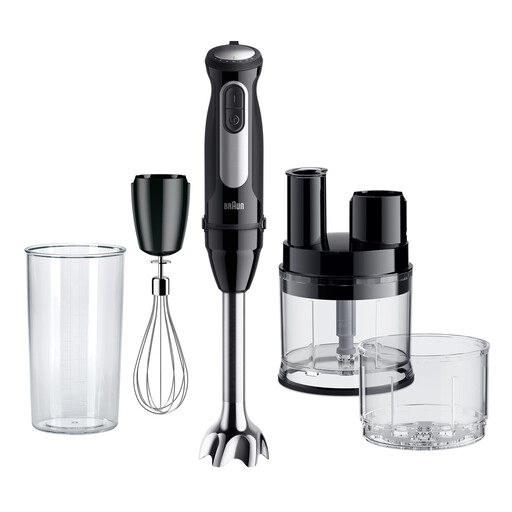
Why it suits this profile: With 1,000 W, 25 speed settings plus turbo and several attachments, it can handle a range of kitchen tasks.
The specific attachments show what the higher motor power is for: blending, chopping, slicing and whisking.
EasyClick Plus system, SplashControl, stainless steel blending foot and dishwasher-safe accessories.
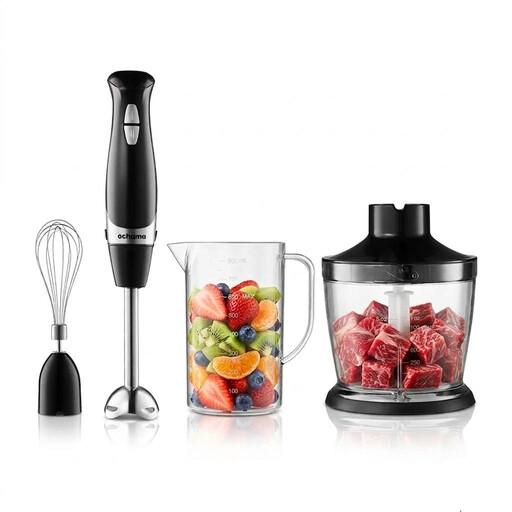
Why it suits this profile: The box includes a whisk, meat chopper, 500 ml chopper and 800 ml beaker for a range of household tasks.
The two speed settings and removable design make its practical capabilities clear, without vague claims that it can do everything.
600 W motor, four functions and removable parts for easier cleaning.
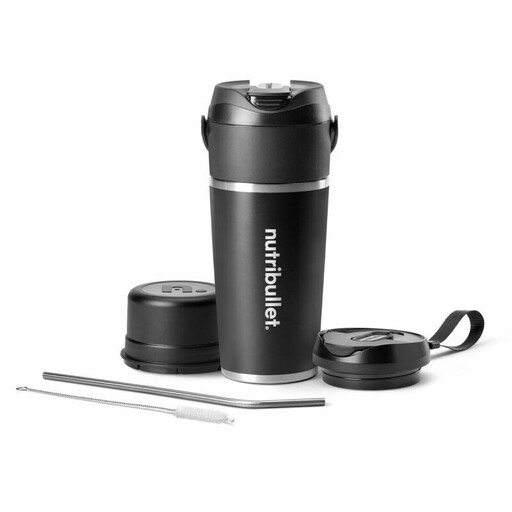
Why it suits this profile: This battery-powered blender has a 590 ml insulated cup, a USB-C charging port and a carry handle for use on the go.
The product details give you clear guidance on the battery, container capacity and more than 14 blending cycles per charge, each lasting 30 seconds.
590 ml stainless steel cup, USB-C charging, drinking lid, straw and cleaning brush.
We’ve put together a comprehensive, regularly updated list of products that meet these strict selection criteria and fully comply with the safety regulations in force in the EU.
A few simple habits can help your blender last longer:
A hand mixer with a whisk is better suited to batter or cream than a basic blending wand. A personal blender is a good choice for chilled individual portions, while a traditional hand blender is more versatile for soups, sauces and purées.
For soft ingredients and occasional blending, 280 to 600 W is often enough. If you regularly blend hard or frozen ingredients, or larger quantities, you could consider a model with 900 W or more. It’s also worth comparing the blade design, operating time and speed control.
It depends on the model. Some appliances are suitable for warm mixtures, while others – particularly compact smoothie blenders – must not be used with hot liquids. Always follow the temperature limit in the instruction manual. A splash guard and a tall container can also help reduce the risk of scalds.
There’s no one-size-fits-all answer. Using it carefully, allowing for the recommended breaks, cleaning it correctly and choosing suitable ingredients can all help extend its life. When buying, look for durable materials, removable parts, available spares and clear safety information.