
Lieferung heute & morgen

Qualitätsgarantie

Willkommens-Angebote freischalten: KOSTENLOSE Lieferung | Bis zu 80 % RABATT | Kostenlose 30-Tage-JoyPlus-Testphase
App herunterladen
A hand blender can purée soups directly in the pan, prepare smoothies, chop vegetables or whip cream. The choice ranges from a basic blender stick to a comprehensive hand blender with accessories. However, differences in motor power, controls, attachments and cleaning can have a greater impact on everyday use than many marketing claims suggest.
A 1000-watt hand blender can offer advantages when processing firm ingredients or larger quantities. However, wattage alone does not determine actual performance. The blade design, blade guard, speed control and recommended operating time are equally important. A 600-watt appliance may be sufficient for soups, sauces and soft fruit, while nuts, frozen fruit or ice require a suitable attachment and an appropriate design.
A hand blender with whisk or hand blender with chopper expands the range of possible uses. Before buying, check whether the attachments are actually included and how much the containers hold. For example, a small chopper is suitable for herbs, onions or small portions, but it does not automatically replace a larger food processor.
A dishwasher-safe hand blender can reduce the effort involved in cleaning. However, dishwasher suitability often applies only to removable parts. The motor unit, cable and controls must not be immersed in water. Dishwasher-safe blades should also be removed carefully, as the blades are sharp. The instructions in the user manual take precedence over general product descriptions.
For occasional tasks such as preparing baby food, mayonnaise, soft fruit or puréed soups, a compact blender stick with lower power consumption is often sufficient. If you regularly process frozen fruit, fibrous vegetables or larger quantities, you may want to consider a model with 900 to 1200 watts and suitable blades.
Power should always be assessed alongside the design:
Take particular care when handling hot liquids. Steam and splashes can cause scalding. The blending foot should be fully immersed before switching the appliance on.
A hand blender with turbo function usually offers an additional, short-term power setting. For creamy sauces or delicate ingredients, a finely adjustable speed is more practical than continuous high power. Multiple settings allow you to adjust the consistency more precisely, but they do not automatically improve processing quality.
If you want to use a hand mixer for puréeing to whip or chop ingredients as well, look for a secure, tool-free attachment system. A whisk is suitable for cream, eggs or light batters. A chopper is designed for smaller quantities of herbs, onions or vegetables. A potato masher or ice crusher is intended for specific tasks and should only be used in accordance with the manufacturer’s instructions.
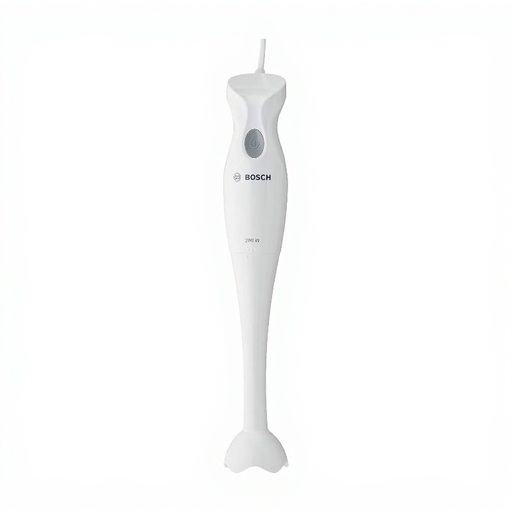
Why this product suits this profile: With 280 watts, a turbo button and a removable blending foot, this lightweight hand blender is designed for classic tasks such as soups, sauces and soft ingredients.
The product details clearly state the 280-watt power rating, the weight of 0.6 kg and the dishwasher-safe removable parts. This makes it easier to assess what the appliance is genuinely designed for.
Low weight, splash guard and removable blending foot with stated dishwasher suitability.
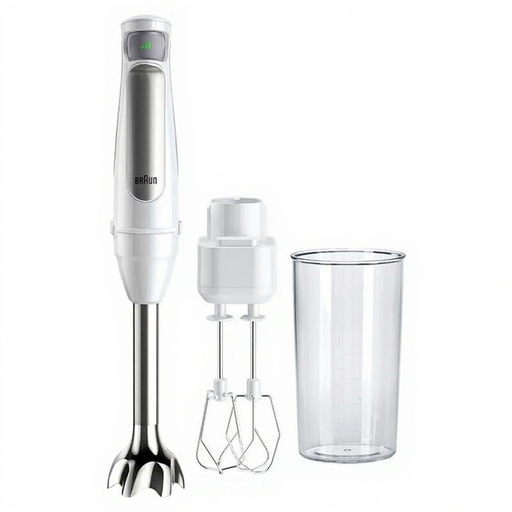
Why this product suits this profile: With 1000 watts, a Turbo Boost function and a stainless steel blade, this powerful hand blender is aimed at households that use their kitchen appliances regularly.
Alongside the wattage, the product documentation specifies a stainless steel blade, six internal ribs and a blending foot stated to be dishwasher-safe. The turbo function is designed to provide extra power at the press of a button.
1000-watt motor, Turbo Boost, stainless steel blade and compatibility with straight Braun attachments.

Why this product suits this profile: This model combines a 1200-watt motor with variable speed control, a turbo function, whisk, chopper and emulsifying attachment.
The contents list names the individual attachments and containers specifically. It also states that the appliance has an overheating protection function and dishwasher-safe removable parts.
1200 watts, variable speed, turbo function, 500-ml chopper, whisk and emulsifying disc.
We have put together a complete, regularly updated list of products that meet these strict selection criteria and fully comply with the safety regulations applicable in the EU.
The electricity costs of a hand blender depend on its power, how long it is used and your electricity tariff. A 1000-watt appliance uses approximately 0.167 kilowatt hours during ten minutes of operation. For short blending processes, consumption remains correspondingly limited. The right filling quantity, breaks during intensive use and cleaning after every use are more important for the appliance’s service life.
Also remember:
For soups, sauces and soft ingredients, 400 to 600 watts is often sufficient. If you regularly process frozen fruit, fibrous vegetables or larger quantities, you may wish to choose a model with 900 to 1200 watts. The blades, blending foot and accessories should be suitable for the task you have in mind.
This depends on the particular model and its user manual. With suitable appliances, the blending foot should be fully immersed, while care must be taken around steam and splashes. Working especially carefully helps prevent scalding. Never blend in a sealed container if hot steam could build up inside it.
It is not possible to state a fixed service life for every model. Gentle operation, regular cleaning, correct filling quantities and sufficient cooling breaks can help extend its useful life. If the appliance makes unusual noises, smells or produces smoke, or if its cable is damaged, stop using it.