
Lieferung heute & morgen

Qualitätsgarantie

Willkommens-Angebote freischalten: KOSTENLOSE Lieferung | Bis zu 80 % RABATT | Kostenlose 30-Tage-JoyPlus-Testphase
App herunterladen
A hand blender can purée soups, blend smoothies, chop vegetables and, with the right attachment, even whip cream or egg whites. However, a low price or a high wattage does not automatically mean you have found the right appliance. What matters is whether the motor, blades, accessories and cleaning requirements suit your cooking habits.
Figures such as 1,200 watts or 15,000 revolutions per minute may appear meaningful. However, they do not tell you on their own how evenly an appliance works or how comfortable it is to use. The blade design, guard, speed control and container also affect the results.
A powerful hand blender is particularly useful if you regularly process fibrous vegetables, nuts or larger quantities. For soups, sauces and soft fruit, a model with a lower power rating may be sufficient.
A 4-in-1 hand blender with a whisk, chopper and measuring beaker offers a range of uses. However, every additional part takes up space and needs to be cleaned. If you mainly purée soups, a simple stick blender may be more practical.
Before buying, it is worth making a quick list:
A permanently attached blending shaft can make cleaning more difficult. Removable parts are usually easier to rinse in everyday use. Even if accessories are dishwasher-safe, you should still check the permitted temperature. For example, the ROUNY set specifies that suitable accessories should be cleaned at below 60 °C.
The permitted operating time is also important. According to the product information, the ROUNY model can be operated for a maximum of one minute, followed by a one-minute pause. If you process large quantities of soup in several batches, you should plan around requirements like these.
Power is specified in watts. It can indicate the size of the motor, but it does not replace checking the actual features. For versatile kitchen tasks, variable speed control or several speed settings are useful because they allow you to adjust the consistency more precisely.
A turbo mode can provide extra power for short periods. When working with hot liquids, the blending shaft should be fully immersed, and you should follow the instruction manual. Boiling liquids can splash and cause scalding.
A stainless steel hand blender has a robust, corrosion-resistant surface at the blending shaft for contact with food. Plastic parts can be lighter, but they should be explicitly suitable for the intended food contact.
Look out for:
A wide blending shaft can be useful for larger quantities. For tall pans and narrow containers, however, the length of the shaft is crucial.
A measuring beaker with a capacity of 600 to 800 ml is suitable for smoothies, sauces or smaller portions. A chopper with a capacity of around 350 to 500 ml is practical for herbs, onions and nuts. Families should check whether the capacity is suitable for the quantities they usually prepare.
Ergonomic handles, an easy-to-reach button and a sufficiently long cable make kitchen tasks easier. For electrical appliances intended for German households, the mains voltage, plug and safety information should also be clearly stated.
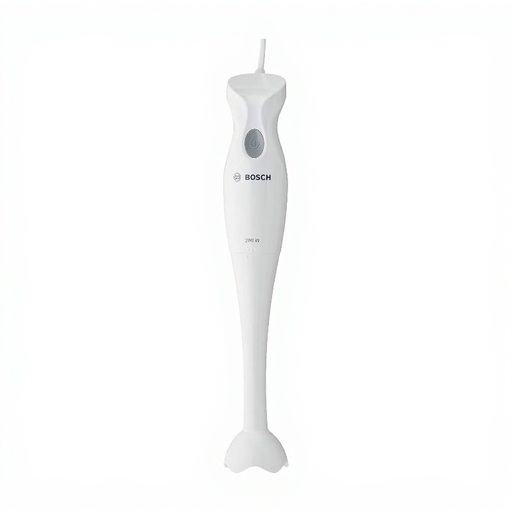
Why this product suits this profile: The 280-watt model focuses on puréeing, blending and smaller kitchen tasks. Weighing 0.6 kg, it is designed to be easy to handle.
The selection of accessories remains straightforward, so you do not pay for or have to store unused attachments.
Lightweight housing, turbo button, splash guard and dishwasher-safe blending shaft.
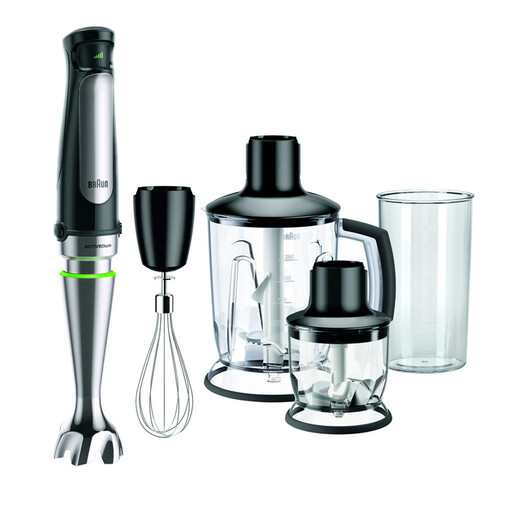
Why this product suits this profile: The 1,000-watt hand blender features SmartSpeed control and several attachments for blending, chopping, whisking and working with a larger container.
The speed control allows you to adjust the power precisely rather than relying solely on one fixed setting.
1,250-ml jug blender, 350-ml chopper, stainless steel whisk and 600-ml measuring beaker; according to the product information, the removable parts are dishwasher-safe.

Why this product suits this profile: The 1,200-watt motor, variable speed and extensive range of accessories are designed for households that regularly purée, chop, emulsify and whisk.
The clearly specified range of accessories and removable stainless steel blending shaft make the appliance’s capabilities easy to understand.
500-ml chopper, whisk, emulsifying attachment, measuring beaker and turbo function; according to the product information, the removable tools are dishwasher-safe.
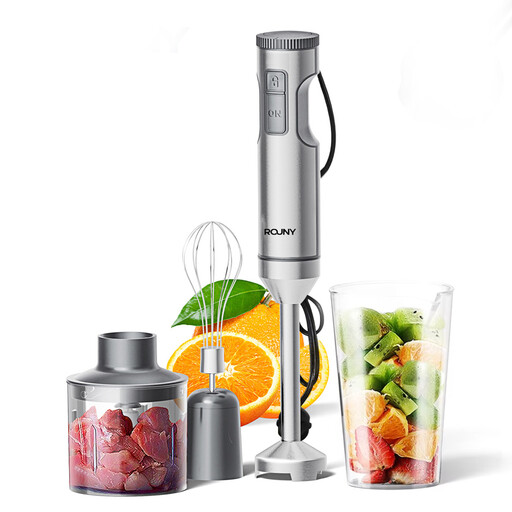
Why this product suits this profile: The set combines a blending shaft, 700-ml measuring beaker, 500-ml chopper and whisk. This covers typical tasks involving soups, sauces, smoothies and desserts.
The specified one-minute operating limit followed by a pause makes the usage requirements clear.
1,000 watts rated power, up to 1,200 watts according to the product information, variable speed control and stainless steel blending shaft.
We have put together a complete, regularly updated list of products that fully meet these strict selection criteria and the safety regulations applicable in the EU.
For sauces, soups and soft fruit, 280 to 400 watts is often sufficient. If you regularly process vegetables, nuts or larger quantities, you may want to choose a model with 600 watts or more. The blade design, speed control and operating time should also be taken into account.
This depends on the instruction manual. Hot liquids can splash and cause scalding. If necessary, allow the soup to cool slightly, use a sufficiently tall container and fully immerse the blending shaft before switching the appliance on. Boiling liquids should not be processed directly unless the manufacturer expressly permits it.
There is no standard lifespan that applies in every case. It depends on how often the appliance is used, the ingredients, cleaning and compliance with the specified operating times. Removable parts should be cleaned and dried thoroughly after every use. The motor housing must not be immersed in water. If you notice unusual noises, smells or overheating, switch the appliance off and have it checked before using it again.