
Lieferung heute & morgen

Qualitätsgarantie

Willkommens-Angebote freischalten: KOSTENLOSE Lieferung | Bis zu 80 % RABATT | Kostenlose 30-Tage-JoyPlus-Testphase
App herunterladen
A hand blender should make light work of puréeing soup, preparing smoothies and chopping vegetables. In practice, though, some buying decisions can lead to disappointment: the appliance splashes, feels heavy to hold or comes with a host of attachments that go unused. As a Joybuy Product Recommendation Officer, I’ll explain the key points to consider so you can distinguish marketing claims from features that really matter.
A powerful hand blender with 1,000 or 1,200 watts can be a good choice for hard ingredients and frequent use. But wattage alone doesn’t tell you how comfortable an appliance is to use. Speed control, blade design, overload protection, operating time and attachments are just as important.
For the occasional soup or soft fruit, an electric hand blender with 280 to 650 watts may be enough. If you regularly process nuts, frozen ingredients or larger quantities, look for a suitable chopper attachment and a motor with the right level of power.
A whisk, chopper, measuring beaker and potato masher can broaden the range of things you can make. However, they also need storage space and add to the cleaning. Before you buy, check:
An attachment is only an advantage if you’ll use it regularly and can fit it without a complicated process.
Blending hot or liquid ingredients can cause splashes. A bell-shaped blending foot or a dedicated splash guard can help reduce the risk, but it’s no substitute for safe handling. Make sure the blending foot is sufficiently submerged before switching the appliance on.
For everyday use, it’s also worth checking whether dishwasher-safe parts are included. The motor unit must not be immersed in water for the models described here. Blades are sharp, so take care when cleaning them and always unplug the appliance first.
Motor power is measured in watts, but it doesn’t tell you everything about how well an appliance will process ingredients. Several speed settings make it easier to adapt to different ingredients and quantities. A turbo mode can be useful for short bursts of extra power.
A model with variable or finely stepped speed control is a good fit for households that switch between creamy soups, dips and coarsely chopped ingredients. Two fixed speeds may be enough for simple tasks and keep the controls straightforward.
Look for stainless steel blades, a secure connection between the motor unit and blending foot, and a sturdy attachment locking mechanism. A metal blending foot is particularly useful if you’ll regularly be blending warm food. Always follow the manufacturer’s safety instructions: hot liquids can splash, so don’t blend them while boiling.
The shape of the blade guard also affects how ingredients reach the blades and how much splashing occurs. A wide blending foot can be useful for larger quantities, while a slim model is easier to use in tall, narrow containers.
For longer tasks, the grip, weight, cord length and button layout can make a real difference. A heavier appliance with a wide range of attachments may appeal to families, but can feel unnecessarily cumbersome for quick jobs.
Before you buy, compare the product details for weight, dimensions and dishwasher-safe components. As a general rule, detach the accessories from the motor unit, unplug the appliance and avoid touching sharp blades directly when cleaning.
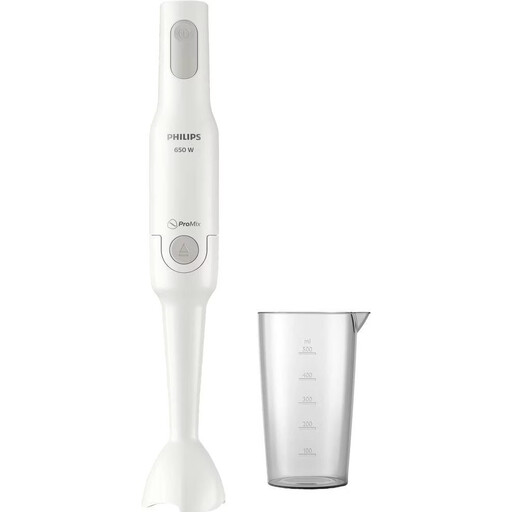
Why it suits this profile: This 650-watt hand blender comes with a blending beaker and focuses on everyday tasks such as puréeing, blending and preparing soups or smoothies.
The package contents are straightforward, with a blending beaker instead of lots of attachments that may go unused. According to the product details, the removable parts are dishwasher-safe.
ProMix technology, One-Button-Release system and 650 watts. A blending beaker is included.
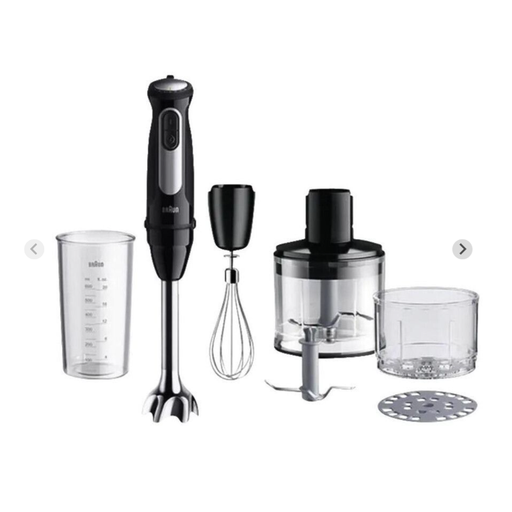
Why it suits this profile: A good choice for anyone who prefers precise settings and several ways to prepare food in one appliance.
The 25 adjustable speeds and turbo function make it easier to adapt to different ingredients. The metal blending foot and EasyClick Plus system are clearly specified design features.
1,000 watts, PowerBell technology, 25 speed settings and dishwasher-safe parts that come into contact with food, according to the product description.
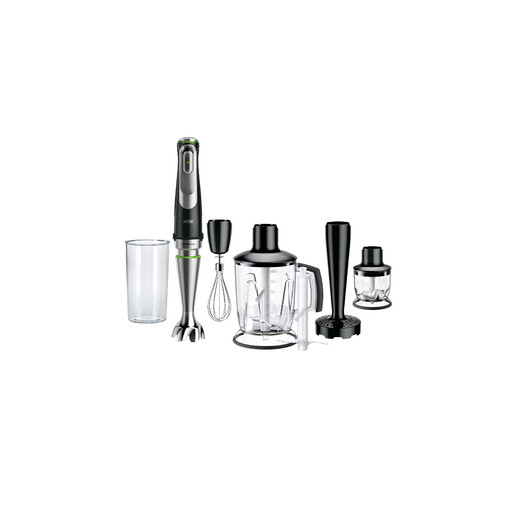
Why it suits this profile: The extensive range of attachments is designed for households that regularly purée, chop, whisk and mash.
The attachments are listed clearly: whisk, chopper, masher, measuring beaker and blade attachments. This makes it easy to check before buying whether the package contents suit your needs.
1,200-watt motor, ActiveBlade technology, two power settings with pulse function and several attachments.
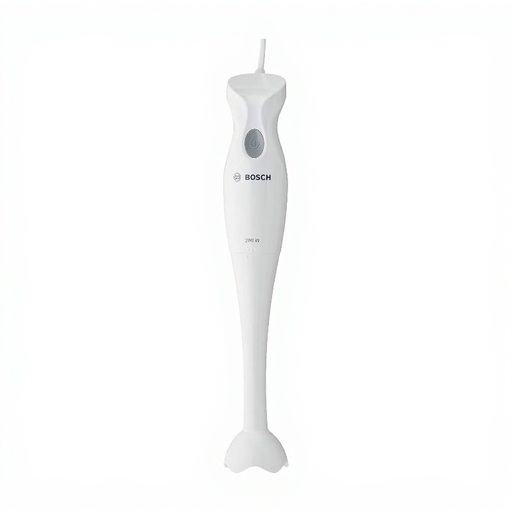
Why it suits this profile: Weighing just 0.6 kilograms and with a compact design, it’s well suited to quick everyday tasks and smaller kitchens.
Instead of a large set of attachments, the focus is on a blending foot, turbo button and removable dishwasher-safe parts.
280 watts, stainless steel blades, splash guard, turbo function and removable blending foot.
We’ve put together a comprehensive, regularly updated list of products that meet these strict selection criteria and the safety regulations in force across the EU.
For soft ingredients, soups and simple smoothies, 280 to 650 watts may be enough. If you regularly chop larger quantities or tougher ingredients, models from around 1,000 watts with suitable attachments are one option. The blades, controls and permitted operating time still matter.
It depends on the manufacturer’s instructions. Hot liquids can splash and cause scalds. If necessary, let the soup cool slightly, use a tall container and make sure the blending foot is sufficiently submerged before switching on. The motor unit must not come into contact with liquid.
There’s no standard lifespan that applies to every hand blender. It depends on how often you use it, the ingredients you process, how you clean it and whether you follow the operating and cooling times. Unplug the appliance before changing attachments, don’t overload the motor and clean the removable parts straight after use.