
Lieferung heute & morgen

Qualitätsgarantie

Willkommens-Angebote freischalten: KOSTENLOSE Lieferung | Bis zu 80 % RABATT | Kostenlose 30-Tage-JoyPlus-Testphase
App herunterladen
A hand blender can blend soups, sauces, smoothies, purées and dressings straight in the pan or in a blending jug. With the right attachments, it can also work as a chopper, whisk or potato masher. There’s a wide choice, from a basic hand blender to a comprehensive hand blender set with several attachments.
However, focusing only on a high wattage or a long list of accessories could leave you with a product that doesn’t suit your needs. The design, controls, cleaning requirements and permitted running time all matter.
Figures such as “1200 W Max” or high speeds can look impressive at first. But they don’t necessarily tell you how the appliance performs under every kind of load. Check whether the manufacturer distinguishes between rated power and maximum power, and whether it specifies a maximum running time.
A 600- or 700-watt appliance may be enough for soups, sauces and soft ingredients. If you often chop firmer foods, a more powerful motor, a sturdy blade and a suitable chopper matter more than a single headline figure.
A 4-in-1 hand blender with a whisk, measuring jug and chopper offers plenty of versatility. But several specialist attachments may be more than you need if you mainly blend soups. Before you buy, check:
An accessory is only an advantage if you’ll use it regularly and can clean it easily.
A blending foot that can’t be removed makes cleaning more difficult. For detachable parts, check whether they’re dishwasher-safe and what temperature they can withstand. The motor unit, cable and mains plug must never be immersed in water.
A stainless-steel hand blender can feel hygienic and durable, particularly around the blending foot and blade. But the quality of the finish matters too: edges, joins and hard-to-reach areas should be easy to clean after every use.
Basic models with a few speed settings are enough for occasional tasks. Variable speed control or several speed settings make it easier to adjust the blender to different consistencies. Lower speeds are useful for delicate mixtures or ingredients that tend to splash, while higher speeds work well for purées and firmer ingredients.
Also check the maximum running time. For example, the ROUNY model specifies one minute of use followed by a one-minute break. Follow this guidance to avoid putting unnecessary strain on the motor. Even a powerful hand blender isn’t designed to run continuously without a break.
A stainless-steel blending foot is handy for hot soups, sauces and wet ingredients. However, always follow the instructions in the user manual when blending hot liquids: not every container is heat-resistant, and steam can cause scalds. Immerse the blending foot deeply enough to help reduce splashing.
A 350- or 500-ml chopper may be enough for single portions. Families often benefit from a larger measuring jug. Here are some examples from our selection:
Choose a capacity that suits the portions you usually make. Overfilling a container can cause splashing and make blending more difficult.
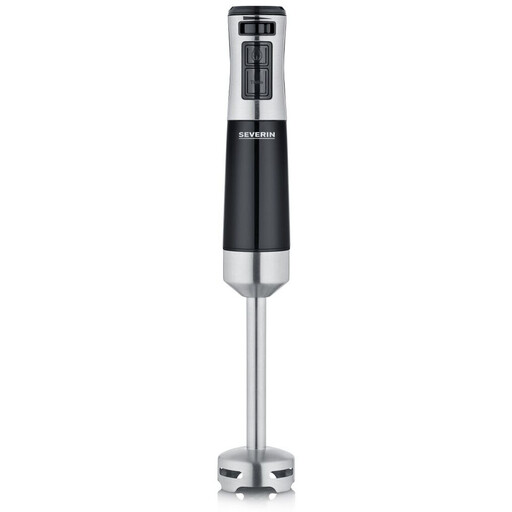
Why it suits this profile: This 600-watt hand blender is designed for everyday tasks such as blending, stirring and making sauces. Variable speed control lets you adjust it to suit different consistencies.
Rather than relying on a high maximum-power figure, it pairs its power rating with variable speed control and a detachable blending foot.
600 W, variable speed control, BPA-free materials and dishwasher-safe detachable parts, according to the product information.
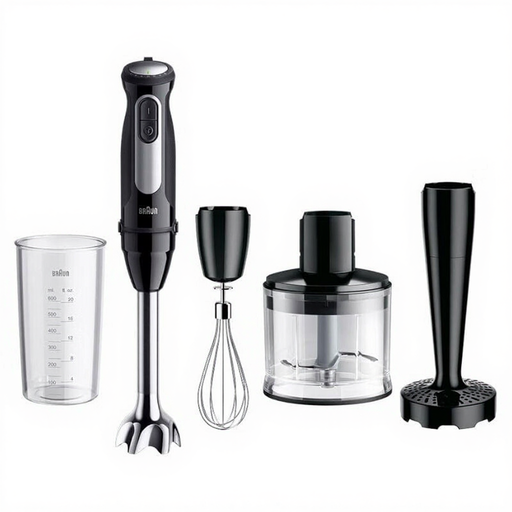
Why it suits this profile: With 25 speed settings plus Turbo and one-handed control, this blender gives you precise control for soups, smoothies, sauces and light whisking.
Variable speed control means you don’t have to rely on Turbo for every task. The EasyClick Plus attachment system also makes it easier to switch between accessories.
1000-watt motor, 25 speed settings plus Turbo, splash protection and dishwasher-safe parts, according to the product description.
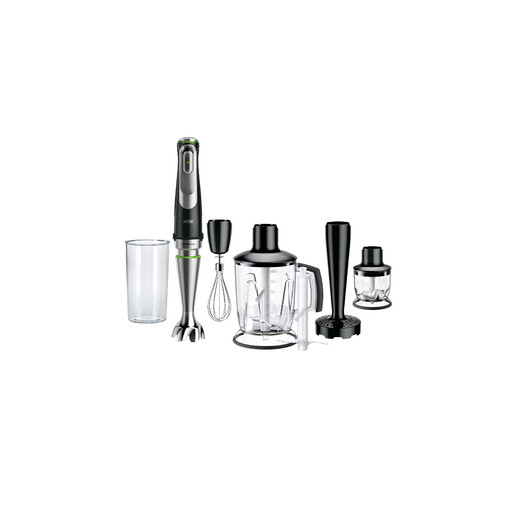
Why it suits this profile: Its extensive range of accessories covers blending, chopping, whisking and mashing potatoes and vegetables, making it a good fit for kitchens where tasks vary often.
Each attachment is designed for a specific task, so you don’t have to use one blending foot for chopping, whisking and mashing.
1200 W, ActiveBlade technology, several attachments, a 600-ml measuring jug and a 1250-ml chopper, according to the product specifications.
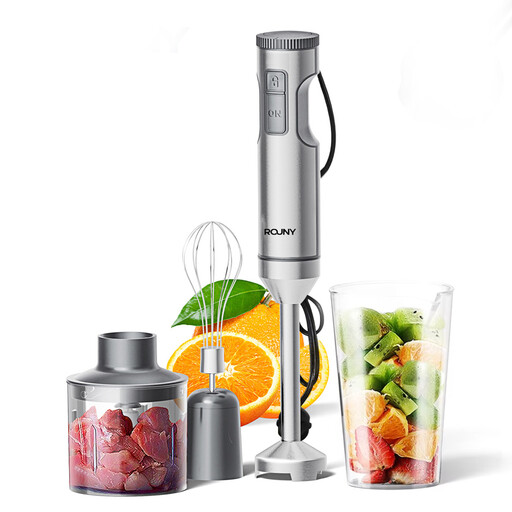
Why it suits this profile: The blending foot, measuring jug, chopper and whisk cover everyday family tasks such as making soups, sauces and smoothies, whisking eggs and chopping small quantities.
The accessory details specify the container capacities and a running limit of one minute, followed by a break.
1000 W rated power, 1200 W maximum power, 15.000 U/min, 700-ml jug, 500-ml chopper and variable speed control.
We’ve put together a comprehensive, regularly updated list of products that meet these strict selection criteria and fully comply with the safety regulations in force in the EU.
For soups, sauces and soft ingredients, 600 to 700 watts may be enough. If you regularly chop nuts or vegetables, or prepare larger quantities, also consider the blade design, container capacity, speed control and running time. Wattage alone doesn’t give you a complete picture of performance.
Its lifespan depends on how often and how heavily you use it, how you clean it and whether you allow it to rest as recommended. Don’t run an appliance for longer than its specified running time or use it with hard items it isn’t designed to handle. Detachable, dishwasher-safe parts can make regular cleaning easier.
You can estimate electricity use from the appliance’s power rating and running time. For example, running a 1000-watt appliance for ten minutes uses about 0.167 kilowatt-hours in theory. In practice, you’ll usually use it for less time. The main factors affecting running costs are therefore how long you actually use it and your current electricity tariff.