
Lieferung heute & morgen

Qualitätsgarantie

Willkommens-Angebote freischalten: KOSTENLOSE Lieferung | Bis zu 80 % RABATT | Kostenlose 30-Tage-JoyPlus-Testphase
App herunterladen
A hand blender can purée soups, blend smoothies, emulsify sauces and chop vegetables for baby food. At the same time, models vary considerably in motor power, operation and accessories. A low-cost purchase is therefore not automatically practical if the blender struggles with firm ingredients or cleaning takes a long time after every use.
A 1000-watt hand blender may initially sound powerful. However, the wattage mainly describes the motor’s electrical power consumption. The results also depend on the blade design, speed control, construction of the blending foot and permitted operating time. A 600-watt model may be sufficient for soups, dips and soft fruit, while hard ingredients or larger quantities require a more powerful model with suitable accessories.
When buying a 4-in-1 hand blender, check carefully which functions are actually included. Some sets combine a blending foot, whisk, measuring jug and chopper. Others include a mincer or potato masher attachment instead. The specific components, container sizes and attachment compatibility are therefore what really matter.
A dishwasher-safe hand blender generally only has dishwasher-safe detachable parts. The motor unit, cable and mains plug must not come into contact with water or be placed in the dishwasher. Before buying, it is worth checking the care instructions: can the blending foot, whisk, blades and containers be removed? Are there hard-to-reach gaps where food residue could collect?
For occasional preparation of creamy soups, milkshakes or simple smoothies, a model rated at around 280 to 600 watts is often sufficient. If you regularly process nuts, frozen ingredients, larger quantities or firm vegetables, choose a more powerful hand blender with a suitable blade and accessory design.
Variable speed control makes it easier to adapt the blender to different ingredients. Lower settings reduce splashing when blending liquids, while a turbo or pulse function provides short bursts of extra power. It is also important to immerse the blending foot fully in the mixture and follow the manufacturer’s instructions regarding operating time.
A stainless-steel blending foot is resistant to heat and temperature changes and, subject to the manufacturer’s approval, may also be suitable for hot food. Plastic can be lighter, but it should be explicitly suitable for the intended application. For a hand blender for soups and smoothies, a sturdy splash guard and suitable bell-shaped design are practical, as they can help reduce splashing when moving the blender up and down.
The blades should be made from rust-resistant stainless steel. Take care when working with hot ingredients: allow the soup to cool slightly, use a sufficiently tall container and do not seal the lid completely if steam needs to escape. Always follow the relevant instruction manual.
A hand blender with accessories can complement several kitchen appliances. A hand blender with whisk is suitable for cream, egg whites and light batters. A hand blender with chopper is designed for herbs, onions, dips and smaller portions. For regular baking, however, a hand mixer with two beaters and dough hooks is often more suitable than a conventional hand blender.
Look for controls that are easy to reach, a well-balanced weight and a secure attachment-changing mechanism. An electric hand mixer with five or more speed settings can perform a different role for dough and creams than a hand blender with a cutting blade.
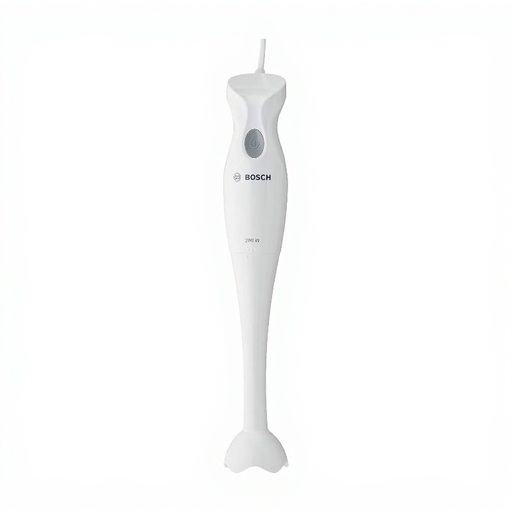
Why this product suits this profile: The 280-watt hand blender is designed for everyday basics such as puréeing, blending and chopping. With a stated weight of 0.6 kg, it is well suited to short, routine tasks.
The technical specifications list power, weight, turbo button and dishwasher-safe blending foot separately, so the features do not have to be judged by wattage alone.
Bell-shaped splash guard, stainless-steel blades, detachable blending foot and a stated weight of 0.6 kg.
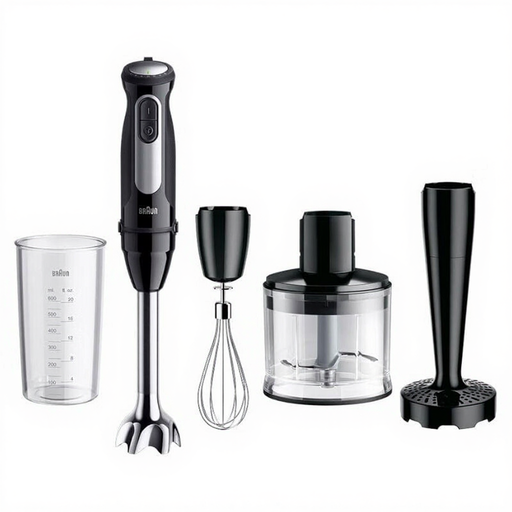
Why this product suits this profile: The combination of a 1000-watt motor, 25 speed settings, turbo function and whisk is aimed at households with a wide range of kitchen tasks.
The variable settings offer more control than a simple on/off operation. According to the product specifications, the detachable accessories are dishwasher-safe.
PowerBell-VPlus system, splash guard, EasyClick-Plus attachment change system, whisk and BPA-free 600-ml measuring beaker.
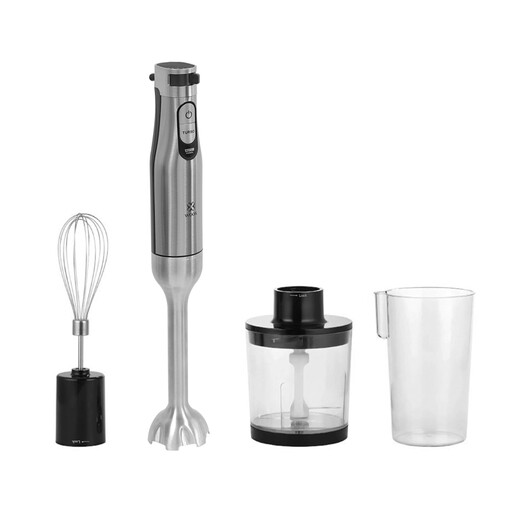
Why this product suits this profile: The 1200-watt set is designed for several tasks: puréeing, chopping, whisking and emulsifying. This makes it a good match for families and keen home cooks who regularly try different recipes.
The functions are linked to specific attachments: blending foot, whisk, 500-ml chopper and 600-ml measuring beaker. This makes it easier to check exactly what is included.
Variable speed control, turbo function, stainless-steel components and detachable parts that are dishwasher-safe according to the product specifications.
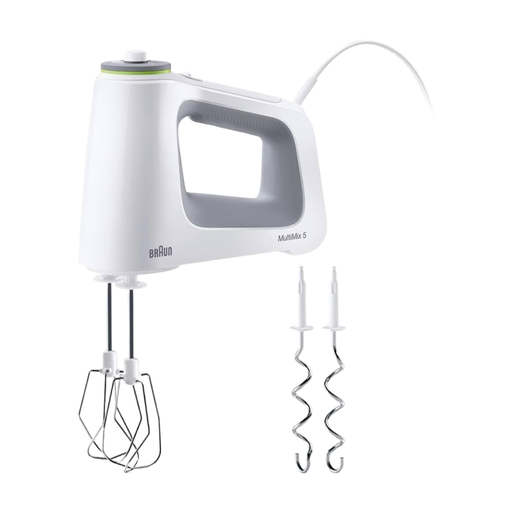
Why this product suits this profile: Anyone who regularly prepares cakes, creams or dough is likely to need a hand mixer with beaters and dough hooks rather than a hand blender alone.
The choice is based on the intended use: nine variable speed settings plus turbo, along with separate beaters and dough hooks.
700-watt motor, ergonomic handle, VarioControl and detachable parts that are dishwasher-safe according to the product specifications.
We have put together a complete, regularly updated list of products that fully meet these strict selection criteria and the safety regulations applicable in the EU.
For soups and smoothies, a sturdy blending foot, splash guard and suitable speed control are important. When working with hot ingredients, the manufacturer should explicitly approve their use. For frozen or very firm ingredients, the blades, motor and container must be approved for this purpose.
Its lifespan depends on how often it is used, the ingredients, cleaning and the breaks between tasks. Overloading, running it for too long and processing hard foods that are not approved for use can put strain on the motor and blades. After use, detachable parts should be cleaned and dried thoroughly.
Electricity consumption depends on the wattage and the actual operating time. A 1000-watt appliance uses approximately 0.167 kilowatt hours over ten minutes of operation. As many blending tasks only take a short time, the duration of use is the key factor in running costs.