
Lieferung heute & morgen

Qualitätsgarantie

Willkommens-Angebote freischalten: KOSTENLOSE Lieferung | Bis zu 80 % RABATT | Kostenlose 30-Tage-JoyPlus-Testphase
App herunterladen
A hand blender can purée soups, blend sauces, make smoothies and, depending on the accessories, chop vegetables or whip cream. But a high wattage or a long list of accessories doesn’t automatically mean you’re making the right choice. What matters is whether the motor, controls, attachments and cleaning requirements suit the way you cook.
A 1000-watt hand blender or 1200-watt hand blender generally has a more powerful motor than a 280- or 350-watt model. But wattage alone doesn’t tell you how well a model will handle particular ingredients. Blade design, speed, container and recommended running time all affect the results.
For soups, sauces and soft vegetables, a compact hand blender may be enough. If you regularly chop nuts, frozen ingredients or larger quantities, look for a suitable chopper attachment and clear guidance on running time.
A hand blender set may include a beaker, whisk, chopper or potato masher. The number of parts matters less than how useful they’ll be in practice:
Before you buy, check which parts are actually dishwasher-safe. The motor housing must never be immersed in water.
A detachable stainless steel blending foot makes cleaning easier. For a dishwasher-safe hand blender, the manufacturer’s guidance usually applies only to certain detachable parts, not the motor unit. Maximum running time is important too. Some models need a break after a short period of use to let the motor cool down.
For occasional blending, 280 to 600 watts is usually enough, depending on the recipe. If you often chop ingredients or work with firmer foods, 1000 to 1200 watts may be a better choice. Variable speed control or several speed settings make it easier to adjust the blender for soup, dips, smoothies or baby food.
A powerful hand blender should also be easy to use. Turbo or pulse functions are handy for short bursts of extra power, but they’re no substitute for the right blade or a suitable chopper.
A stainless steel hand blender has a durable, easy-to-clean blending foot or blade. Plastic parts can also be suitable for everyday use, provided they’re heat-resistant and approved for the intended purpose. When blending hot food, follow the manufacturer’s instructions to help prevent splashes and scalds.
A bell-shaped splash guard or enclosed blade housing can help keep your kitchen cleaner. The blades are still sharp, so don’t touch them while the blender is running or when cleaning it.
If you’ll be using the blender for longer periods, consider its weight, grip, cord length and button layout. A quick-click system for attachments is useful when switching between the blending foot, whisk and chopper. If you mainly bake, a hand mixer with beaters and dough hooks may be a better choice than a traditional hand blender.
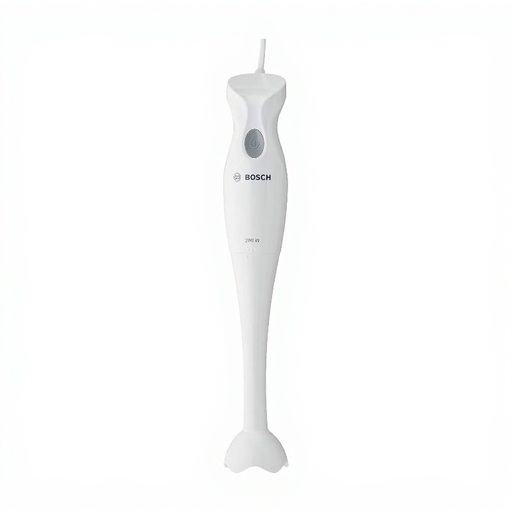
Why this product suits this profile: This lightweight hand blender is designed for everyday tasks such as puréeing, blending and chopping, and weighs 0.6 kg according to the product details.
Its straightforward set of features means you won’t have to weigh up unnecessary attachments. The detachable blending foot is dishwasher-safe, according to the product details.
280-watt motor, turbo button, splash guard and detachable blending foot.
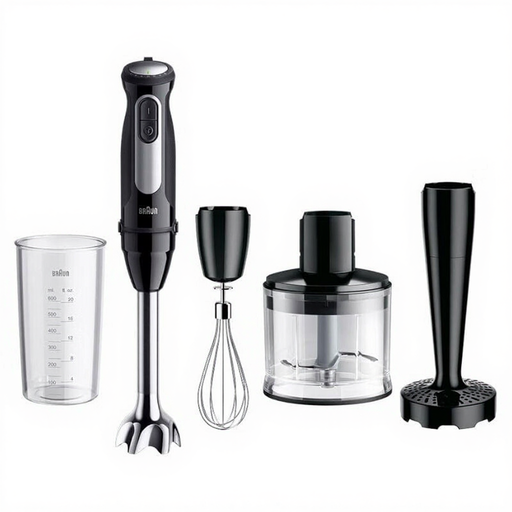
Why this product suits this profile: This model combines 1000 watts with 25 speed settings, a turbo function and a whisk for a range of kitchen tasks.
The speed settings offer more precise control than models with just two speeds. Detachable parts that come into contact with food are dishwasher-safe, according to the product details, making cleaning easier.
PowerBell-VPlus technology according to the product details, 25 speed settings plus turbo, and EasyClick Plus system.
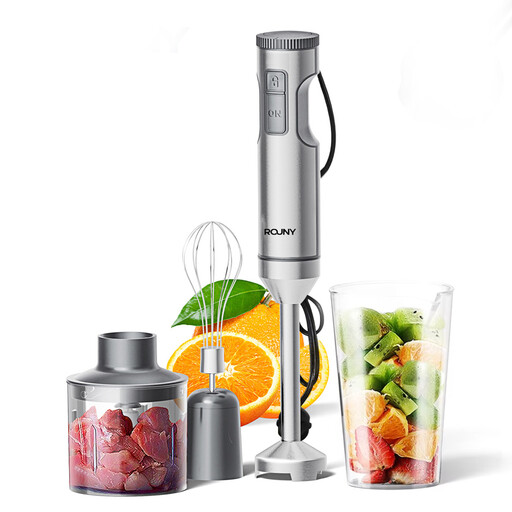
Why this product suits this profile: This set is designed for households looking to blend, chop and whisk as well as purée.
The maximum running time of one minute, followed by a break, is clearly stated. This makes it easier to match use to the food you’re preparing.
1000 watts rated power, up to 1200 watts maximum power, 700 ml beaker, 500 ml chopper and whisk.
We’ve put together a complete, regularly updated list of products that meet these strict selection criteria and the safety regulations applicable in the EU.
A hand mixer uses beaters or dough hooks and is designed for cake batter, whipped cream, egg whites and certain types of dough. A hand blender, on the other hand, is used with liquids and soft ingredients. If you bake often, a hand mixer with dough hooks is the better choice. A hand blender is more practical for soups, sauces and smoothies. A multi-function hand blender can cover some of the same tasks, but it won’t replace every specialist appliance.
For simple soups, sauces and soft vegetables, 280 to 600 watts is often enough, depending on how you use it. If you regularly chop firm ingredients or prepare larger quantities, consider a model with 1000 or 1200 watts. You should also check the running time and included accessories.
Its lifespan depends on how often you use it, how you clean and store it, and how hard you work it. Use the appliance only within its stated running time, let the motor cool down when needed, and clean the attachments after each use. Wipe the motor unit with a damp cloth only.
Running costs depend on the appliance’s power and how long you use it. For short blending jobs, a hand blender usually uses very little electricity. A higher wattage doesn’t automatically mean higher running costs if the appliance works faster as a result. What matters is the actual running time.