
Lieferung heute & morgen

Qualitätsgarantie

Willkommens-Angebote freischalten: KOSTENLOSE Lieferung | Bis zu 80 % RABATT | Kostenlose 30-Tage-JoyPlus-Testphase
App herunterladen
A hand blender can purée soup directly in the pan, prepare baby food, emulsify sauces or process fruit for smoothies. However, not every model delivers the right results in everyday use. It is often not eye-catching advertising claims, but motor runtime, accessories, jug shape and cleaning that determine whether a purchase remains worthwhile in the long term.
A high wattage rating describes the electrical input power, but does not automatically indicate how effectively food is processed. The blade design, power transmission and intended operating time are also important. A powerful hand blender with 1,200 watts may be designed for hard or frozen ingredients, while a lower-wattage appliance may be sufficient for soups and soft ingredients.
It is therefore worth considering the combination of motor power, speed settings, turbo or pulse function and specific usage guidance. The features that matter for short blending tasks are different from those needed for larger quantities or regular chopping.
A hand blender set with a whisk, chopper, measuring jug and potato masher can be versatile. However, every additional attachment takes up space and creates more cleaning work. Before buying, consider whether you genuinely need a hand blender with whisk for whipping or a hand blender with chopper for herbs, nuts and onions.
Compatibility is also important: accessories should click securely into place and be easy to remove for cleaning.
Blades, the blade guard and connection points can collect food residue. A dishwasher-safe hand blender reduces the effort involved, although this usually applies only to detachable parts. The motor unit, cable and mains plug must not be placed in water or in the dishwasher.
A smooth, easily accessible surface and a detachable blending foot are also practical features. When preparing hot food, the blending foot should be fully immersed to reduce splashing. The instructions for the specific model remain the decisive source of information.
For occasional purées, sauces and soft ingredients, models with around 280 to 700 watts may be sufficient. According to the product details, the Bosch MSM 6B100 has 280 watts, a turbo button and a detachable blending foot. Braun models such as the MultiQuick 3 MQ3000WH are rated at 700 watts. The MQ30201M has 900 watts and also includes a 350-ml chopper.
For hard ingredients, larger quantities or frequent use, higher power and several speed options can be useful. Pay attention to the stated operating time: the Braun MultiQuick 3 MQ3000WH, for example, has a maximum operating time of one minute. Longer periods of use require breaks to allow the appliance to cool down.
A stainless-steel blade is resistant to rust and suitable for many typical kitchen tasks. With a hand blender, you should also consider the shape of the blade guard and the arrangement of the blades. A splash-protection design can make it easier to clean the work surface.
For a hand blender for smoothies, a tall, narrow container is often practical. A measuring jug with a scale helps when preparing small portions. For families or larger quantities, a blender with a 1.5-litre jug may be more suitable. According to the product details, the Clatronic UM 3845 has a detachable BPA-free 1.5-litre jug, four stainless-steel blades, three speed settings and an ice-crush function.
A corded blender works without charging breaks and is suitable for regular kitchen tasks. A cordless blender offers greater freedom of movement, but requires a charged battery. The nutribullet Flip NBP016W is a portable model with a 0.59-litre container, USB-C charging and battery operation. It is therefore intended more for individual portions and use on the go than for large quantities of soup.
Always compare the container capacity with your usual needs. A small cup saves space, while a large blending jug means fewer batches are needed for family-sized portions.
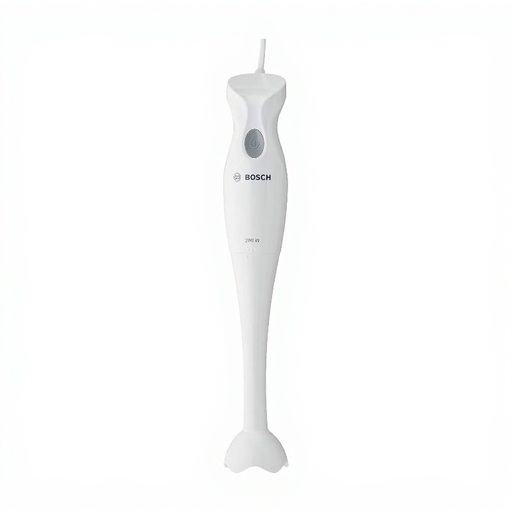
Why this product suits this profile: According to the product details, this compact model is designed for classic tasks such as puréeing, blending and chopping, and weighs 0.6 kg.
The product details clearly state the power rating, turbo button and dishwasher-safe status of the detachable blending foot.
0.6 kg weight, turbo button, splash guard and detachable, dishwasher-safe blending foot.
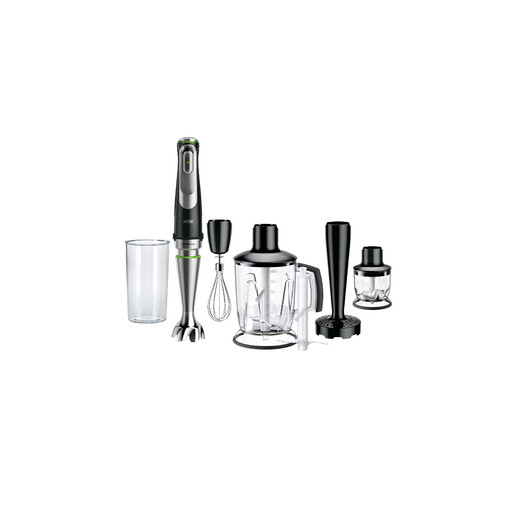
Why this product suits this profile: This set is aimed at households that want to chop, whisk and mash as well as prepare soups and purées.
The accessories and speed options are listed specifically, rather than being promoted only through general claims of versatility.
1,200 watts, EasyClick system, 600-ml measuring jug, whisk, chopper and masher according to the product details.
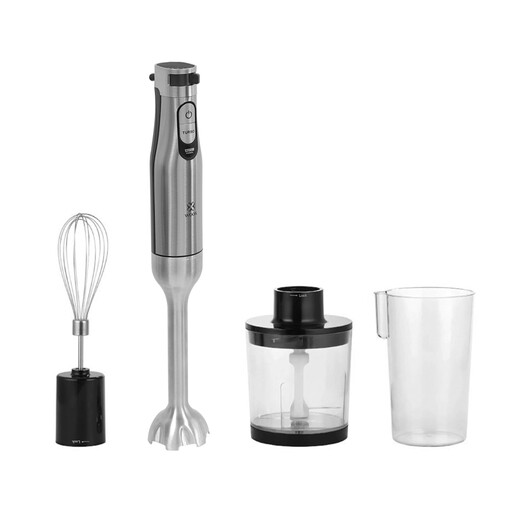
Why this product suits this profile: This set is intended for users who want to combine a hand blender for soups, baby food and smoothies with whisking and chopping functions.
The motor power, variable trigger, turbo function and included attachments are clearly named in the product information.
1,200 watts, whisk, 500-ml chopper, 600-ml measuring jug and detachable, dishwasher-safe parts.
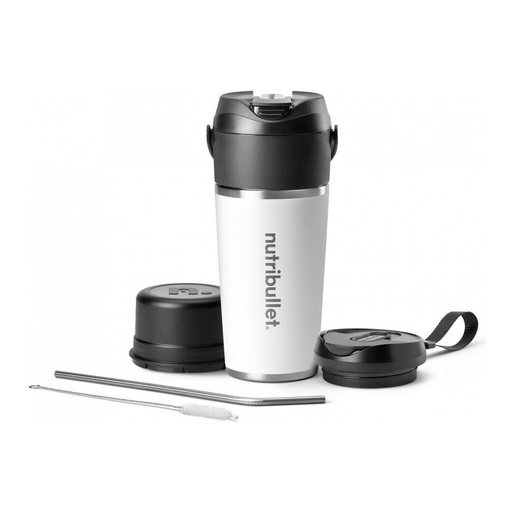
Why this product suits this profile: This battery-powered appliance combines a blending container and drinking vessel, and is designed for individual portions outside the kitchen.
The 0.59-litre capacity and battery operation make the intended use clear: individual portions rather than large family-sized quantities.
USB-C charging, pulse function, ice-crush specification and insulated stainless-steel container according to the product description.
We have put together a complete, regularly updated list of products that fully meet these strict selection criteria and the safety regulations applicable in the EU.
A stick blender is particularly practical when you want to work directly in the pan or prepare small quantities. A classic hand mixer with beaters, on the other hand, is mainly suitable for dough, cream and creams; it cannot completely replace a stick blender.
A blender has a fixed container and is designed for larger portions, smoothies or ice cubes. For small kitchens, soups and flexible quantities, a hand blender generally takes up less space. The key consideration is therefore not just motor power, but how you intend to use it: baby food, sauces and soups are better suited to a stick blender, while large quantities of smoothies are better handled by a blender.
For soft ingredients, sauces and soups, 280 to 700 watts may be sufficient. For frequent chopping, frozen fruit or harder ingredients, higher power ratings and a turbo or pulse function are useful. The permitted operating time should also be checked.
Many models are suitable for soups. However, hot liquids can splash and cause scalding. Use a sufficiently tall container, fully immerse the blending foot and follow the manufacturer’s instructions. The motor unit must not come into contact with liquid.
Its service life depends on how often it is used, the ingredients, cleaning and adherence to the operating time. Overloading, running it dry and incorrect cleaning can damage the appliance. A detachable blending foot, available spare parts and robust accessory connections are practical points to check when buying.