
Lieferung heute & morgen

Qualitätsgarantie

Willkommens-Angebote freischalten: KOSTENLOSE Lieferung | Bis zu 80 % RABATT | Kostenlose 30-Tage-JoyPlus-Testphase
App herunterladen
A hand blender can purée soups directly in the pan, process fruit for smoothies and, with the right accessories, even chop onions or whip cream. However, a low price or high wattage does not automatically mean you are making the right choice. What matters is whether the motor, controls, attachments and cleaning requirements suit your habits.
A high power rating sounds convincing, but on its own it says little about the result. The blade design, shape of the blending foot, motor operation and permitted running time also affect performance. For soups, soft vegetables and fruit, a model with 600 watts is often sufficient. If you regularly chop nuts, frozen ingredients or larger quantities, you should also look for suitable accessories, a sturdy blade mount and sufficient cooling.
A comprehensive hand blender set only makes sense if you will actually use the attachments in everyday life. A hand blender with whisk is suitable for cream, egg whites or light batters. A hand blender with chopper can be useful for herbs, onions and small portions. For large quantities of dough or frequent kneading, however, a food processor is more practical. Unused attachments take up space and add to the cleaning effort.
A blending foot with hard-to-reach areas can make daily use unnecessarily inconvenient. With a stainless steel hand blender, you should therefore check which parts are actually made of stainless steel. Often, the description only refers to the blending foot, while the housing and connecting pieces are made of plastic. The dishwasher-safe hand blender label should also be read carefully: in most cases, it only applies to removable accessories, not the motor unit.
For a hand blender for soups and smoothies, 600 to 900 watts is sufficient for many household tasks. When working with hard ingredients, short operating intervals and the right cutting technology are also important. You should follow the manufacturer’s stated maximum running time so that the motor can cool down between demanding uses.
A hand blender with variable speed allows you to adjust the appliance more precisely to different foods. Low settings reduce splashing when working with liquids and are suitable for delicate mixtures. Higher settings help to purée firm ingredients. A turbo or pulse function is useful for short bursts of power, but it does not replace continuously variable or sufficiently finely graduated speed control.
A removable blending foot makes cleaning and storage easier. When preparing hot food, suitable containers and sufficient splash protection are important. For small quantities, a 350- or 500-millilitre chopper may be enough; larger family portions require correspondingly greater capacity. BPA-free materials are an objective product feature for parts that come into contact with food, but they do not make any claims about health effects.
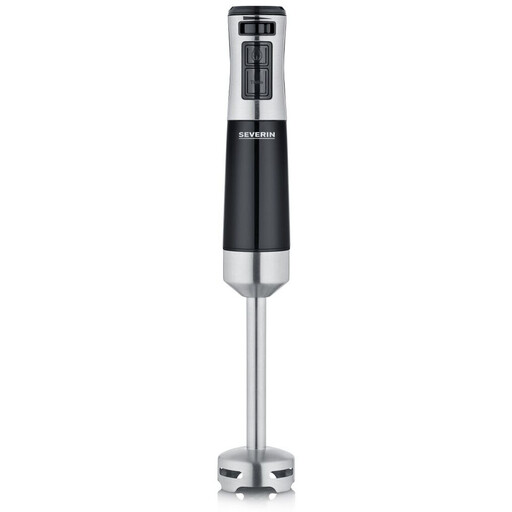
Why this product suits this profile: This compact hand blender is designed for everyday tasks such as soups, sauces, dips, baby food and milkshakes.
The selection focuses on clearly stated 600-watt power, continuously variable speed control and a removable blending foot rather than an unnecessarily large number of attachments.
600-watt motor, continuously variable speed control and removable parts that are dishwasher-safe according to the product description.
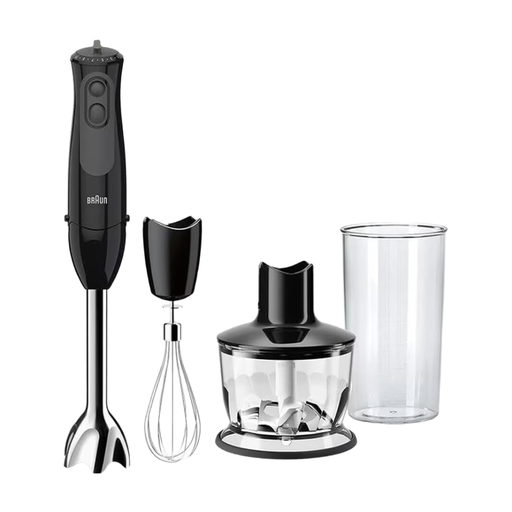
Why this product suits this profile: The 4-in-1 set combines a blending foot, whisk and 500-millilitre chopper for a range of household tasks.
The key attachments are clearly specified and can be changed using the EasyClick system, keeping the set manageable.
900 watts, a 600-millilitre blending beaker and dishwasher-safe accessories according to the product description.
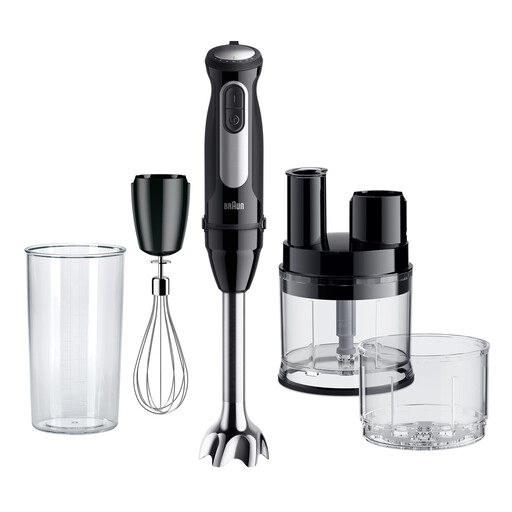
Why this product suits this profile: The 25 speed settings plus turbo allow precise adjustment when preparing sauces, smoothies, dips and chopped ingredients.
The variable control means you are not limited to a high speed for every application. Removable parts also reduce cleaning effort.
1000 watts, 25 settings plus turbo, as well as EasyClick Plus and a stainless steel blending foot according to the product data.
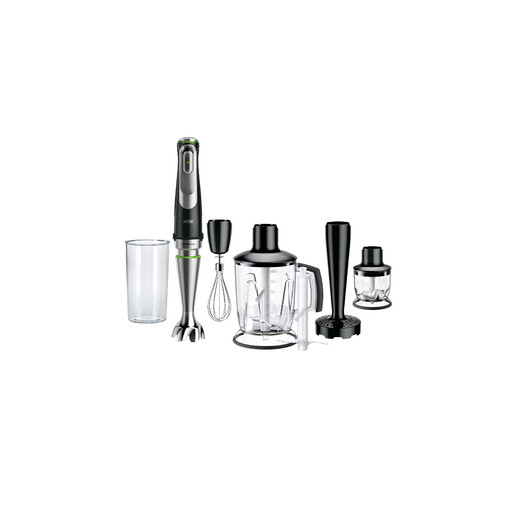
Why this product suits this profile: The extensive range of accessories is aimed at households that regularly purée, chop, whisk and process potatoes or vegetables.
The contents list explicitly names individual attachments such as a whisk, chopper, masher and ice-crushing blade. Buyers can therefore compare them with their actual needs.
1200 watts, removable blending foot, several attachments and a 600-millilitre measuring beaker according to the product description.
Before changing attachments, cleaning the appliance or removing the blending foot, the hand blender must be disconnected from the mains. The motor unit must not come into contact with water. Blades and cutting discs are sharp and should only be handled by the designated plastic or grip surfaces.
When working with hot liquids, use a sufficiently tall container, start at a low speed and work carefully because steam may form. For lower electricity consumption, choosing the right appliance size is particularly important: for small to medium-sized portions, a hand blender is often more practical than a large multi-blender. For regular grating, slicing or preparing larger quantities, however, a separate appliance from the Blending and Grating category may be more suitable.
We have put together a complete, regularly updated list of products that fully meet these strict selection criteria and the safety regulations applicable in the EU.
For soups, sauces, fruit and soft vegetables, 600 watts may be sufficient. If you frequently chop hard or frozen ingredients, a higher power rating is advisable. You should also take the blades, accessories and operating time into account.
This is generally possible if permitted by the operating instructions. A tall, suitable container helps to reduce splashing. The blending foot should be fully immersed; steam and hot liquid must also be handled carefully to avoid possible scalding.
Its service life depends on how often it is used, the ingredients, cleaning and compliance with operating intervals. In everyday use, an appliance will generally last longer if it is not permanently overloaded, the motor unit is kept dry and the blades and attachments are cleaned and stored according to the instructions.