
Lieferung heute & morgen

Qualitätsgarantie

Willkommens-Angebote freischalten: KOSTENLOSE Lieferung | Bis zu 80 % RABATT | Kostenlose 30-Tage-JoyPlus-Testphase
App herunterladen
A hand blender can handle several tasks in the kitchen: puréeing soups and sauces, chopping vegetables, mixing dips or, with the right accessories, whipping cream and egg whites. However, not every appliance will be the right choice. If you focus only on a high wattage or a long list of accessories, you can easily overlook important details relating to operation, cleaning and safety.
A powerful hand blender with 1,000 or 1,200 W can offer extra capacity when working with firm ingredients. However, motor power alone says little about how suitable the appliance really is. The blade design, speed control, container and permitted operating time are also important.
For occasional soups, sauces or soft fruit, an electric hand blender with 280 to 600 W may be sufficient. If you regularly process nuts, frozen ingredients or larger quantities, you should also look for suitable blades and overload protection.
A hand blender set with a whisk, chopper, measuring jug and other attachments is only worthwhile if you will actually use these functions. A 4-in-1 hand blender saves space, but you will need storage space for several separate parts. The attachments should also lock securely into place and be easy to change without using excessive force.
For baking tasks, a hand mixer with beaters and dough hooks is often more practical. A hand blender, on the other hand, cannot replace a countertop blender for large quantities and is not automatically a smoothie maker.
Food residue can collect around blade covers, couplings and seals. Claims such as dishwasher-safe or dishwasher-friendly should apply to the removable parts that come into contact with food. The motor unit, cable and mains plug must not come into contact with water.
The term BPA-free is relevant for plastic parts that come into contact with food. However, it does not replace checks on the build quality, seals or maximum filling capacity.
Wattage is an indication of the electrical power consumed. When choosing an appliance, you should consider it alongside the tasks you plan to carry out:
Several speed settings do not automatically guarantee a smoother result. Easy-to-reach controls and a controlled start are just as important in everyday use.
A stainless-steel blending foot is robust and is often suitable for warm ingredients, provided the instructions allow this. Plastic can be lighter and is sufficient for many cold applications. The blades should be firmly secured and surrounded by a protective guard.
A splash guard reduces mess, but cannot prevent it in every situation. When puréeing soups and sauces, the blending foot should be fully immersed in the liquid. Hot liquids may only be processed if the manufacturer expressly permits this. Steam can create pressure inside closed containers.
Before buying, check:
A hand blender with whisk is suitable for cream, egg whites or light batters. A hand blender with chopper can process onions, herbs or smaller quantities of vegetables. For drinks on the go, compact personal blenders with drinking containers are an alternative to a classic hand blender.
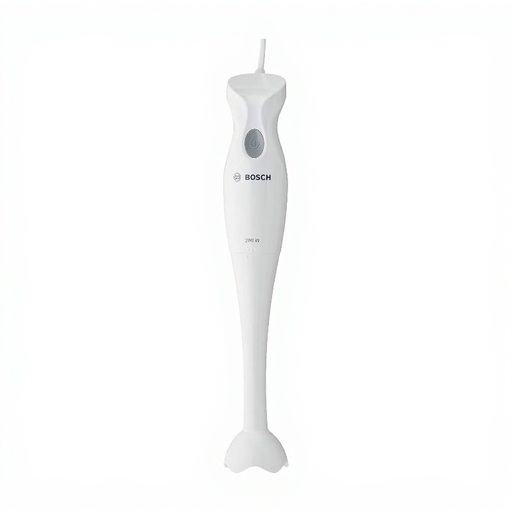
Why this product suits the profile: With 280 W, a turbo button and a removable blending foot, this appliance is designed for classic puréeing and blending tasks.
The range of features remains straightforward, so you do not pay for or have to store a collection of unused accessories.
0.6 kg weight, splash guard, turbo button and dishwasher-friendly blending foot according to the product specifications.
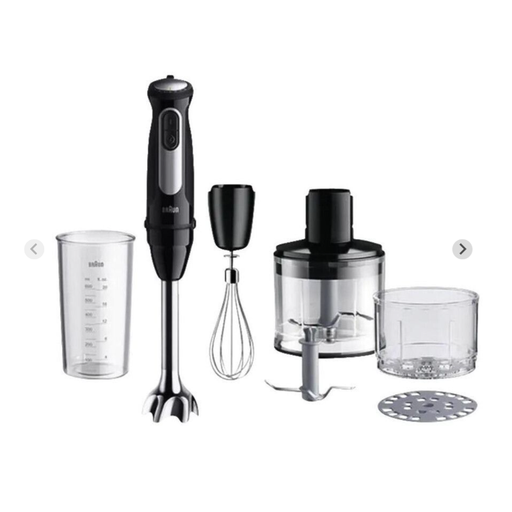
Why this product suits the profile: The combination of 1,000 W, 25 speed settings and a turbo function enables precise control across a wide range of recipes.
The high number of settings is combined with precise speed control rather than relying on a single turbo button.
PowerBell technology, stainless-steel blending foot, BPA-free food-contact parts and dishwasher-friendly removable parts according to the product description.
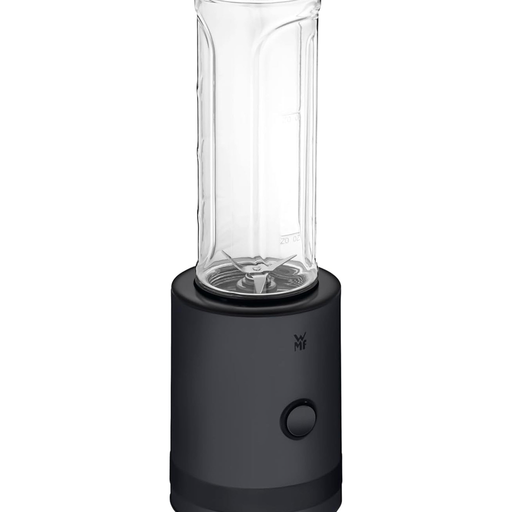
Why this product suits the profile: This compact blender uses 0.6-litre containers which, according to the product description, can also be used as drinking bottles.
It is designed for individual portions, keeping expectations realistic when it comes to large family quantities or soups.
Two 0.6-litre Tritan containers, drinking lids and dishwasher-friendly containers according to the product specifications.
We have put together a complete, regularly updated list of products that fully meet these strict selection criteria and the safety regulations applicable in the EU.
Before using the appliance for the first time, read the manufacturer’s instructions on filling capacity, temperature and operating time. The following points are particularly important for safe operation:
A hand blender is guided directly in a saucepan or container and usually requires little storage space. A countertop blender works in a fixed container and, depending on the model, is suitable for larger quantities. For small kitchens and soups, a hand blender is often more flexible; for making smoothies repeatedly, a personal blender may be more practical.
Its service life depends on the workload, cleaning, storage and compliance with the recommended operating times. Overloading, hard foreign objects and long periods of continuous use can put strain on the motor and blades. A removable design, carefully cleaned seals and suitable replacement parts make long-term use easier.
You can estimate electricity consumption from the power rating, operating time and electricity price. A 1,000 W appliance running for five minutes theoretically uses around 0.083 kWh. As hand blenders are usually used only for short periods, ongoing electricity costs generally matter less than the purchase price, accessories and replacement parts.