For single servings
You want to blend stoned peaches into a smoothie for yourself in a suitable container, while keeping the amount of accessories you need to store to a minimum.


For a single-serving peach smoothie, a hand blender with a suitable blending cup and an easy-to-clean blending foot is a good place to start. Extra accessories are most worthwhile if you’ll use the additional attachments regularly. If you’re using frozen ingredients, check that the specific model and attachment are approved for them.
You want to blend stoned peaches into a smoothie for yourself in a suitable container, while keeping the amount of accessories you need to store to a minimum.
You often make small portions and value a detachable blending foot, simple controls and cleaning that fits into your daily routine.
You’d like to use frozen fruit or ice from time to time, so you check that the specific appliance and attachment are approved for the job.
Start by comparing the container and blending foot for your portion, then consider cleaning and accessories. For frozen ingredients, you’ll also need to check the instructions for the specific model.
| What matters | What to check before buying | Who is it important to? |
|---|---|---|
| Container and single servings | Check what’s included, the container shape and its stated capacity; make sure the blending foot and the amount you’ll actually fill it with are a good match. | If I’m blending one portion, I want to work directly in a suitable container and store as few accessories as possible. Around 36% of consumers put the container and single-serving size first. |
| Cleaning and ease of use | Check whether the blending foot is detachable and which parts can be cleaned, and how, according to the instructions. | If you often make small portions, easy cleaning could be the deciding factor. Around 29% of consumers prioritise cleaning and ease of use. |
| Frozen fruit and ice | Check the instructions for the exact model and attachment combination, as well as the guidance on ingredients and operating time. | If you’re planning to use frozen fruit or ice, check whether the blending foot or chopper you’ll use is approved for them. Around 21% of consumers prioritise suitability for frozen ingredients. |
| Other uses and accessories | Compare what’s included with the specific model and think about which additional attachments you’ll actually use. | If you’re planning to make more than just smoothies regularly, extra attachments could be useful. Around 14% of consumers put versatility first. |
The electrical power rating alone doesn’t tell you how finely a particular smoothie will be blended.
Compare test results for the specific model, taking account of the blending container, blending foot and ingredients you plan to use, rather than choosing on wattage alone.
Philips warns against using certain choppers to process ice cubes, as this can blunt the blades. This warning doesn’t automatically apply to every blending foot or model.
Check the instructions for the specific attachment and the frozen ingredients you want to use.
For a single peach smoothie, the blending foot and a suitable container are the main things you need. Other attachments are only useful if you have plans to use them.
More accessories take up extra storage space and add more parts that may need cleaning. Before buying, think about the recipes you’d like to make with them.
The ErgoMixx MSM66110 is one example of a hand blender supplied with a blending beaker and detachable blending foot.
MultiQuick models come in different versions, so it’s important to check the full model name when choosing one.
The SM 3773 is one example of a hand blender supplied with a container and lid, which the manufacturer describes as suitable for blending individual portions.
The Kult X hand blender set is worth considering if you plan to use the same appliance for more than just smoothies.
For ProMix models, model-specific instructions and support information can help you understand the features and attachments.
This selection includes hand blenders and sets for blending fruit or making smoothies. Check the container, accessories and suitability for your ingredients for each specific model.
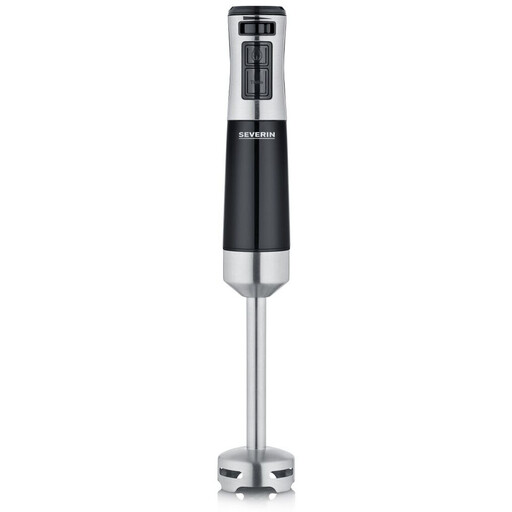 No image available
The product name lists puréeing and fruit as uses. For a single serving, you’ll need to have a suitable blending container.
Specifications include 600 W, variable speed control and a detachable blending foot.
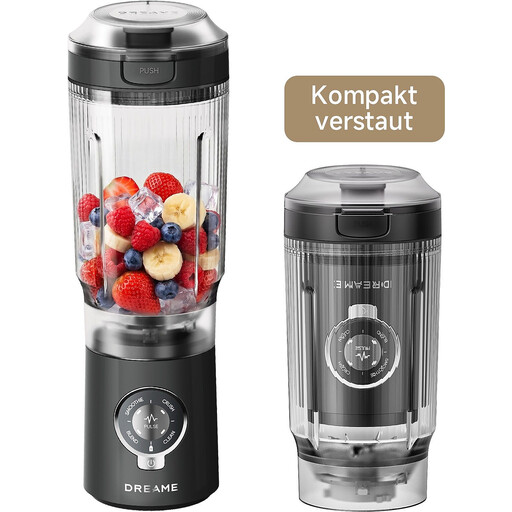 No image available
The product name lists smoothies and puréeing as uses, and mentions a blending container with a drinking lid. Check that the capacity suits your portion.
Specifications include 0.88 l capacity, 120 W, a lithium-ion battery, USB-C charging and stainless-steel blades. The product name also lists ice crushing; check the instructions for the specific appliance and the ingredients you plan to use.
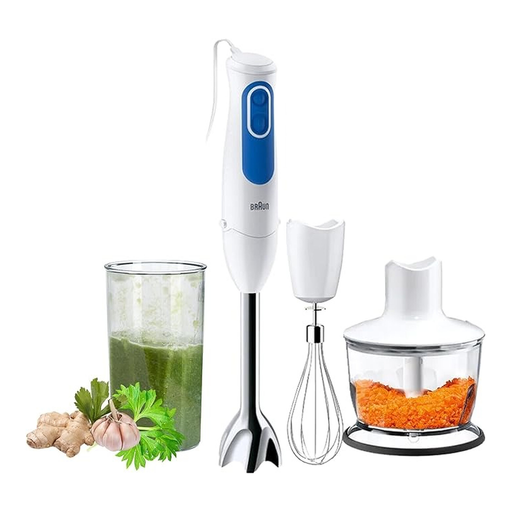 No image available
The product description lists blending and shakes as uses. If you need a blending container, check what’s included with the specific version.
The product name lists 700 W.
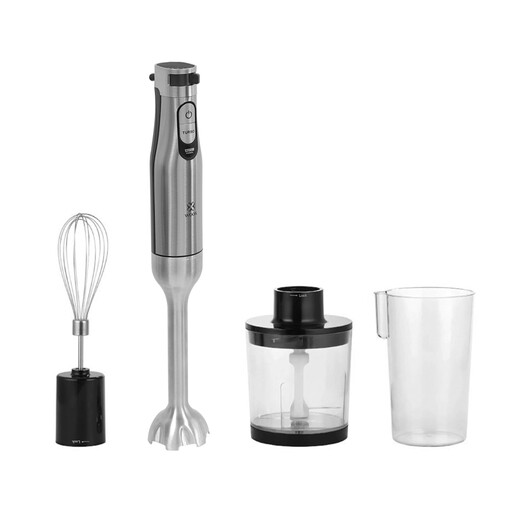 No image available
The product description lists smoothies as one of its uses. This set is a better fit if you’d like to use the other attachments as well as the blending foot.
Specifications include 1.200 W, variable speed control using the trigger, and a chopper, whisk and milk frother. The extra parts need storage space and may mean more cleaning.
Yes, use the flesh without the stones. The German consumer advice centre describes removing the stones as part of preparing peaches for further use; this doesn’t mean peach stones are approved for chopping.
No, you shouldn’t assume that they’re approved for use with every model. Check the instructions for the specific blending foot and, if applicable, the chopper. Philips explicitly advises against using certain choppers for ice cubes, including one listed for the HR2531/00.
No. Bosch confirms that the MSM66110 has a detachable blending foot, but that doesn’t mean it’s dishwasher-safe. Follow the instructions for the blending foot, beaker and motor unit supplied with the version you buy.
Statutory rights cover faults and apply against the retailer; a manufacturer’s guarantee is an optional extra with its own terms and conditions. The German consumer advice centre distinguishes between these two claims, so don’t confuse them if a product develops a fault.
The relevant EU rules on CE marking apply to electrical and electronic equipment. The European Union explains that the manufacturer uses the marking to declare that the product meets the applicable requirements. It isn’t an independent quality mark for smoothies, nor does it confirm that a particular listing complies.