
Lieferung heute & morgen

Qualitätsgarantie

Willkommens-Angebote freischalten: KOSTENLOSE Lieferung | Bis zu 80 % RABATT | Kostenlose 30-Tage-JoyPlus-Testphase
App herunterladen
A hand blender can purée soups, emulsify sauces, chop vegetables or whip cream. However, not every model is suitable for every household. If you only look at wattage or a long list of accessories, you can easily overlook important details relating to operation, cleaning and usage limits.
As a Joybuy Product Recommendation Officer, I filter the relevant product information according to practical criteria. This makes it easier for households, home cooks, keen bakers and families to identify which hand blender, hand mixer or hand blender set best suits their everyday needs.
A 1,000- or 1,200-watt motor can provide more power reserves when processing harder ingredients. However, the blade shape, blade guard, speed control and permitted operating time are also important. A small container, poorly designed blade cover or inadequate cooling can limit the appliance’s practical performance.
When choosing a powerful hand blender, you should therefore look beyond motor power alone. Also check whether the speed can be adjusted precisely and whether a turbo or pulse function is available for your intended uses.
A hand blender with accessories may include a whisk, chopper, measuring beaker, potato masher or emulsifying disc. This only represents good value if you will actually use these attachments. For regular baking, a mixer with whisk and dough hooks is more useful than an extensive set without the right mixing attachments.
Also consider capacity. A 350- or 500-millilitre chopper is suitable for smaller portions, while a 1.25-litre container may be more practical for family-sized portions.
With a dishwasher-safe hand blender, only the removable accessories are usually intended for cleaning in the dishwasher. The motor unit, cable and mains plug must not be immersed in water. Always follow the manufacturer’s instructions, particularly for plastic parts, seals and blades.
For occasional puréeing of soft ingredients, 280 to 600 watts may be sufficient. If you regularly prepare soups, dips, nuts or fibrous vegetables, you may benefit from 700 to 1,200 watts and variable speed control. Wattage refers to the electrical power consumption, not directly to the power delivered by the blades.
Look out for:
A multifunctional hand blender with multiple settings allows finer adjustment than a model with just two speeds. For simple tasks, however, fewer controls may be easier to understand and use.
A stainless-steel blade is durable and suitable for contact with food, provided the manufacturer specifies it for this purpose. The shape of the blade guard affects how effectively ingredients are directed towards the blade and how much the surrounding area is splashed.
For hot food, you should follow the instructions in the user manual. If necessary, allow very hot liquids to cool slightly and use a sufficiently tall container. The blending foot must be fully immersed in the food before you start the motor.
For a hand blender set, the following attachments are particularly useful:
Check which parts are made from stainless steel, which materials are stated to be BPA-free and whether the removable components are dishwasher-safe. A quick-release system can make the appliance easier to use, but it does not replace checking that all attachments lock securely into place.
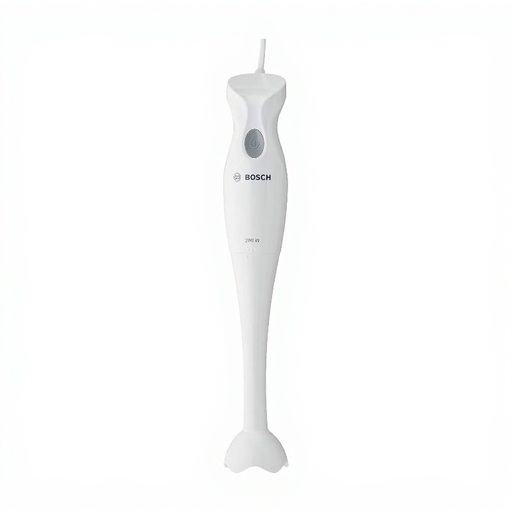
Why this product suits this profile: With 280 watts of power, this hand blender is designed for classic tasks such as puréeing and blending, and weighs 0.6 kilograms according to the product information.
The straightforward selection of accessories reduces the risk of paying for attachments you will not use. The splash guard helps you work more cleanly.
Low weight, turbo button, plus a removable blending foot that is dishwasher-safe according to the product information.
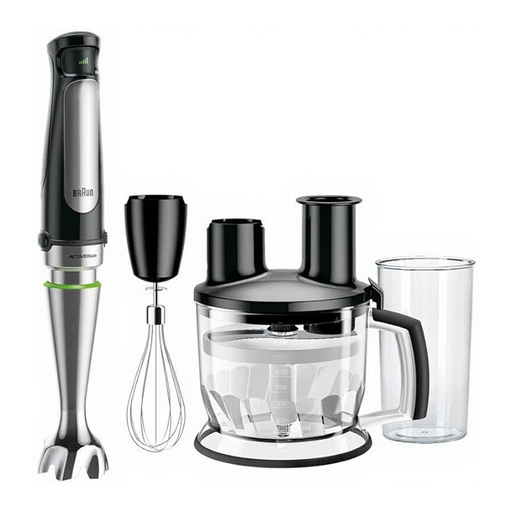
Why this product suits this profile: The stated 1,000-watt motor, three speed settings and extensive range of accessories are designed for households with a variety of kitchen tasks.
The measuring beaker, whisk and 1.25-litre food processor cover different applications instead of simply promoting a high wattage.
ACTIVEBlade technology according to the product description, plus Easy SmartSpeed and a stainless-steel whisk.

Why this product suits this profile: The 1,200-watt motor, variable speed control and extended XL blending foot are designed for larger quantities and frequent preparation.
The accessories are clearly described: the chopper, whisk, emulsifying disc, masher and measuring beaker are intended for different tasks.
Variable speed control, turbo function and removable parts that are dishwasher-safe according to the supplier.
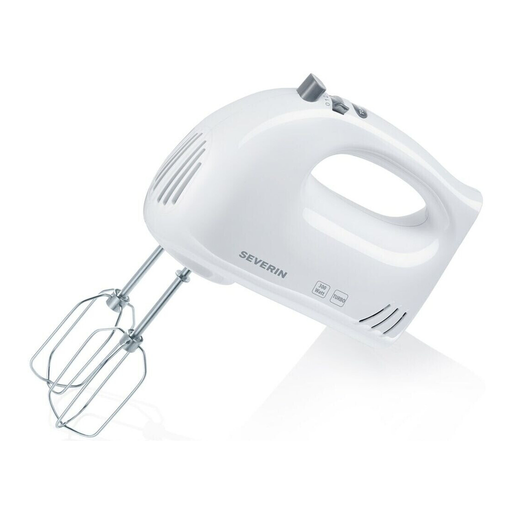
Why this product suits this profile: This electric hand mixer is designed for whisking, mixing and kneading, complementing a hand blender when baking attachments are needed.
The five settings plus turbo allow you to start slowly, reducing splashes when working with dry ingredients or liquid mixtures.
300-watt motor, two beaters, two dough hooks and an integrated eject button.
We have compiled a complete, regularly updated list of products that fully meet these strict selection criteria and the safety regulations applicable in the EU.
A hand blender uses a vertical blending foot and is suitable for soups, sauces, smoothies and purées. A hand mixer is used with beaters or dough hooks in a bowl and is designed for whisking, mixing and kneading.
If you need both appliances, a multifunctional model with the right attachments can save space. However, check the weight, range of accessories and cleaning requirements. A wider range of functions often also means more individual parts to store and clean.
For soft foods and occasional puréeing, 280 to 600 watts is often sufficient, depending on the recipe. If you regularly chop ingredients or prepare larger quantities, 700 to 1,200 watts may be more suitable. Blade design, speed control and operating time should always be considered as well.
There is no universal lifespan that applies to every model. It depends on how often the appliance is used, the ingredients, cleaning and whether the manufacturer’s instructions are followed. Overloading the appliance, running it continuously in turbo mode and allowing liquid to reach the motor unit can shorten its service life.
Electrical power consumption is measured in watts. Actual consumption depends on the operating time: a 1,000-watt appliance running for six minutes uses approximately 0.1 kilowatt-hours in theory. Short operating times generally limit electricity consumption more than wattage alone.