For individual smoothie portions
You mainly want to blend banana and liquid in a suitable beaker at your holiday home, without having to store a large set.


For making individual banana smoothies in a holiday home, a corded hand blender with a matching blending beaker and detachable blending foot is a sensible place to start, provided there’s a socket within reach of your blending area. A set is more worthwhile if you’ll actually use the extra attachments. A cordless model may suit you if there’s no socket nearby, although its blending performance can’t be judged on cordless design alone.
You mainly want to blend banana and liquid in a suitable beaker at your holiday home, without having to store a large set.
If you blend regularly and want to keep washing up to a minimum, a detachable blending foot and the cleaning instructions for the specific model matter more than a long list of accessories.
You want to blend without relying on a nearby socket, or use the same appliance for other kitchen tasks. Cordless operation and extra attachments meet different needs.
First, check that the beaker and blending foot suit your portions. Then decide whether easy cleaning, a flexible blending location or other kitchen tasks are your priority.
| Priority | What to check when buying | Who is it important to? |
|---|---|---|
| Beaker and small portions | Check whether a blending beaker is included with the specific model, whether its size suits your portion and how easily the blending foot can be manoeuvred inside it. | If I usually blend just one portion, the beaker and quantity need to match. Around 36% of consumers prioritise portion size and smoothie results. |
| Less washing up | Check whether the blending foot detaches and what the cleaning instructions say about each part. | If I want to wash up quickly after blending, a simple design matters. Around 29% of consumers put easy cleaning first. |
| Blending location and power supply | Compare the length of the cord with your actual blending location; for cordless models, check the charging requirements for the specific appliance. | If there’s no socket near my blending area, being able to position the appliance flexibly is important. Around 21% of consumers make this their main priority. |
| Other kitchen tasks | Compare the exact items included with the food you plan to prepare at your holiday home. | If I want to chop ingredients or whip cream as well as make smoothies, extra attachments may be useful. Around 14% of consumers prioritise other kitchen tasks. |
The wattage indicates the appliance’s electrical power input. Blending results and ease of use should be assessed separately.
Compare test results and ease of use for the exact model variant rather than relying on the wattage alone.
Extra attachments give you more options, but they aren’t automatically necessary for making individual smoothies.
First decide what you want to prepare, then check exactly what’s included.
Extra parts take up storage space and also need cleaning after use.
With a corded appliance, the socket location and cord length determine where you can blend. With a cordless model, you also need to consider charging and the specific blending results.
Measure the distance to the socket at your intended blending location, or check the product-specific charging information for a cordless model.
For the ErgoMixx MSM66110, Bosch lists a blending/measuring beaker, a detachable metal blending foot and a 140 cm cord. These are specific features of this model, not a description of every appliance from the brand.
The MultiQuick range includes hand blenders with varying specifications. Braun lists 21 speeds and a 1,000-watt motor for the MQ 5235 BK.
Philips offers hand blender variants with different accessories, including a Viva variant with a drinking beaker. If a particular set of accessories matters to you, check the details for the specific model.
According to ESGE, the ESGE ZauberStab M250 basic pack includes a multi-blade, a whisk, a beater disc and a beaker. Its contents therefore differ from those of a basic hand blender.
WMF offers Kult X hand blenders and sets. The Kult X Mix & Go, however, is a smoothie maker, not a hand blender.
This Joybuy selection includes hand blenders for smoothies. For a small holiday-home kitchen, check in particular whether there’s a blending beaker, whether the blending foot detaches and whether you’ll actually use the included accessories.
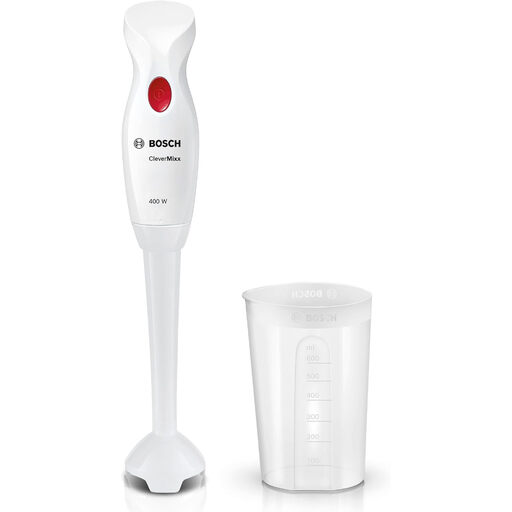 No image available
For small smoothie portions: according to the product details, a blending/measuring beaker and a detachable blending foot are included.
400 W; 4-blade knife; detachable blending foot and beaker.
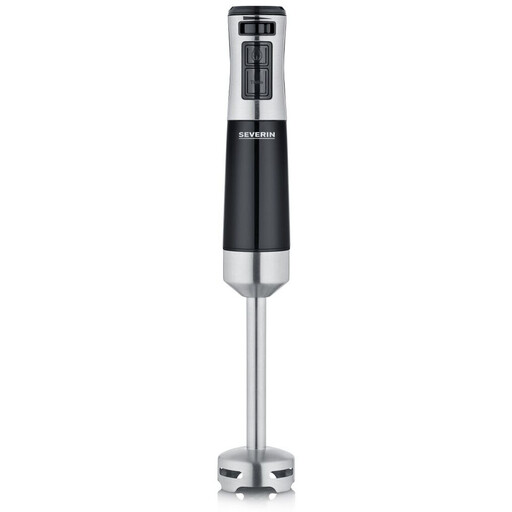 No image available
The product description lists smoothies and fruit drinks as suitable uses.
600 W; stepless speed control; detachable blending shaft.
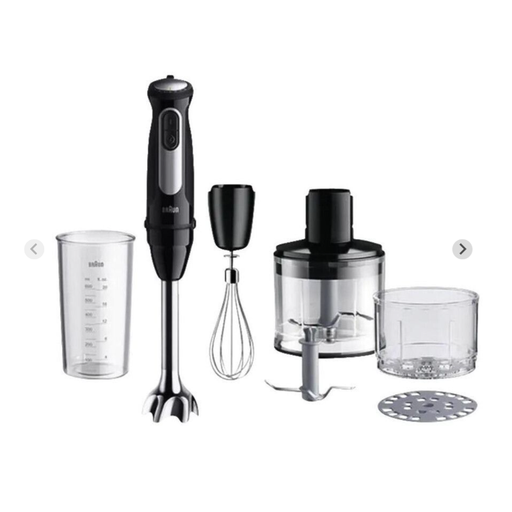 No image available
The product description lists smoothies as one of the uses for this hand blender.
Metal blending shaft; 25 speed settings; Turbo function.
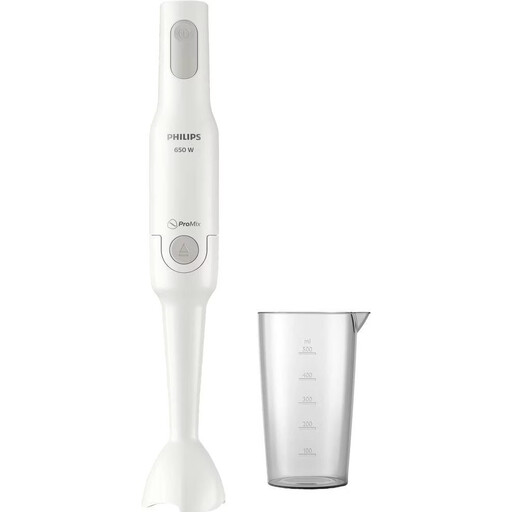 No image available
According to the product details, a blending beaker is included for making smoothies.
650 W; ProMix technology; one-button release.
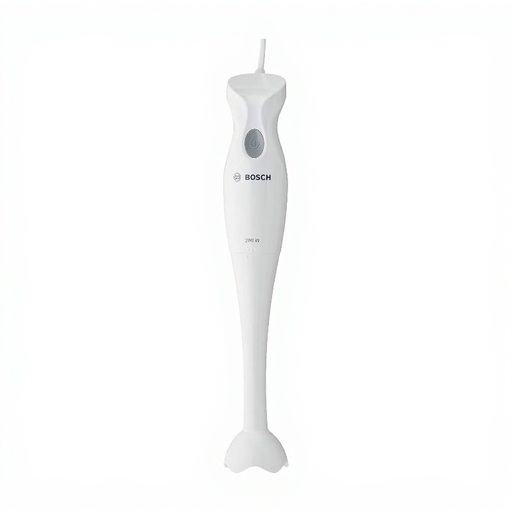 No image available
For blending soft ingredients; the product description recommends using a tall, narrow container.
280 W; detachable blending foot; splash-proof bell guard.
No. If you only want to blend, a basic appliance and a suitable blending beaker may be enough. Extra parts are mainly useful if you want to take on other tasks, such as chopping or whisking.
There’s no one-size-fits-all answer: check the cleaning instructions for the specific model and treat the blending foot, beaker and motor housing as separate parts. For example, the Bosch MSM66110 is documented as having a detachable blending foot.
For new goods, the statutory warranty claim is generally against the seller and lasts for two years; this is separate from a manufacturer’s guarantee. The Verbraucherzentrale explains that for purchases made from 31 July 2026, the period extends to three years if the item is repaired rather than replaced because of a defect within the two-year warranty period.
Electrical appliances covered by the EU Low Voltage Directive must meet the relevant safety and CE conformity requirements. The European Commission gives a voltage range of 50 to 1,000 V AC for the directive; parts that come into contact with food must meet the applicable EU requirements. A CE marking is the manufacturer’s declaration, not proof that the product has undergone independent testing.