
Lieferung heute & morgen

Qualitätsgarantie

Willkommens-Angebote freischalten: KOSTENLOSE Lieferung | Bis zu 80 % RABATT | Kostenlose 30-Tage-JoyPlus-Testphase
App herunterladen
Dry hands are often caused by frequent handwashing, disinfectant, cold weather, dry indoor air or occupational demands. A suitable hand cream for dry hands should therefore not only have a pleasant scent, but also match your skin condition, how often you use it and how quickly you want it to absorb.
However, some common marketing claims can lead to poor purchasing decisions. A “light” texture may not provide enough care for very dry hands, while a rich formula may feel inconvenient during the working day. Terms such as “natural”, “Cica” or “with hyaluronic acid” also reveal little about individual skin compatibility on their own. The complete product description and INCI list are what really matter.
Perfume can enhance the user experience, but it is not essential for moisturising the skin. If you have sensitive skin or a known sensitivity to fragrance ingredients, a fragrance-free hand cream may be the more practical choice. Products containing fragrance should be clearly labelled and should not automatically be considered unsuitable – personal skin compatibility remains the deciding factor.
A quick-absorbing hand cream or non-greasy hand cream is comfortable to use when you are out and about or at work. However, if your hands are very rough or cracked, a lighter texture may not provide the level of comfort and care you want. A richer formula is often suitable for overnight use, while a thinner cream may feel more comfortable during the day.
Urea, glycerin, panthenol, ceramides, shea butter and plant oils can perform different functions in a skincare formula. However, simply naming an ingredient is not proof that it will have a particular effect for everyone. With hand cream containing urea, you should also check the concentration. For example, the products listed here specify 5% urea; other formulas contain no stated urea content.
For slightly dry hands, a classic moisturising cream containing glycerin or plant oils is often sufficient. If you have very dry hands, richer formulas with shea butter, urea or ceramides may be more appealing. For rough or cracked skin, apply the cream regularly, particularly after washing your hands.
If you have open areas, persistent redness, itching or skin changes that appear inflamed, cosmetic skincare is not automatically enough. In such cases, the underlying cause should be assessed by a medical professional.
Checking the INCI list shows whether the product contains ingredients such as fragrance, essential oils, alcohol or specific preservatives. For sensitive skin, short, easy-to-understand formulas and products without added fragrance can provide a useful starting point.
Claims such as “vegan” should be checked against the product information. Kamill Classic Hand Cream is described as having a vegan formula without animal-derived ingredients. Mixa Shea Nourish Hand And Nail Cream is also described as a product for daily hand and nail care; if vegan suitability is important to you, check the specific information on the packaging.
A 30–50 ml tube fits easily into a handbag or desk drawer. Sizes of 75–150 ml are often more practical for regular use at home. According to the manufacturer, concentrated products may already be used in small amounts. Nevertheless, follow the recommended directions on the packaging.
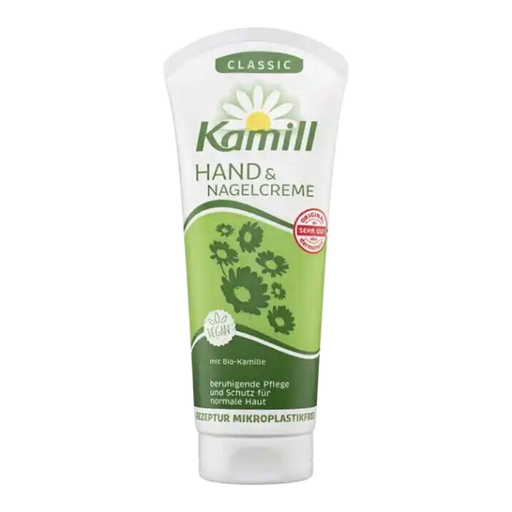
Why this product suits this profile: The 100 ml size is suitable for everyday use. It is described as having a vegan formula with organic camomile and quick absorption.
The product information does not present a complex combination of active ingredients as the sole reason to buy. Instead, it highlights specific features such as the size, vegan formula and non-greasy texture.
100 ml contents, vegan product claim, camomile extract and information indicating dermatological testing.
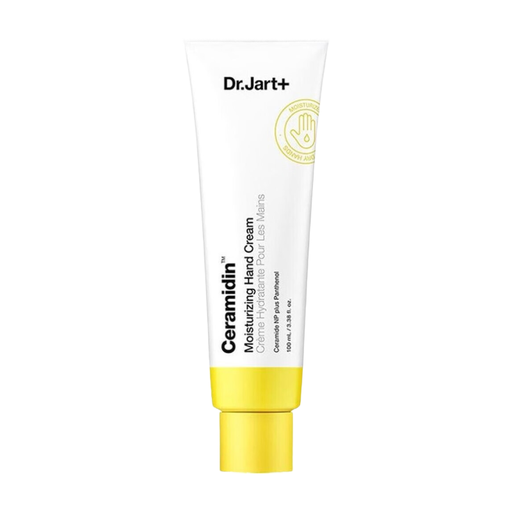
Why this product suits this profile: The cream is intended for regular use and, according to the product information, contains provitamin B5 or panthenol.
Its absorption is specifically described as quick. This makes it easier to compare the texture with your everyday routine than relying on general skincare claims.
100 ml contents, panthenol listed as an ingredient and use as required.
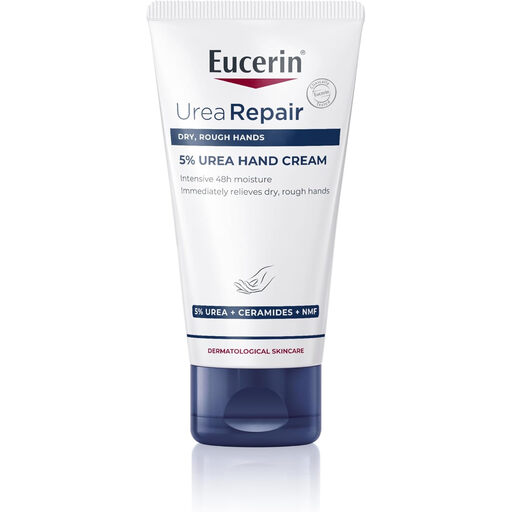
Why this product suits this profile: Its compact format and stated 5% urea formula are suitable for people who moisturise their hands frequently or need a small tube to take with them.
The urea content is clearly specified, so buyers do not have to rely solely on general terms such as “intensive hand care”.
5% urea, ceramides and 30 ml contents; according to the product information, suitable for the daily care of very dry hands.
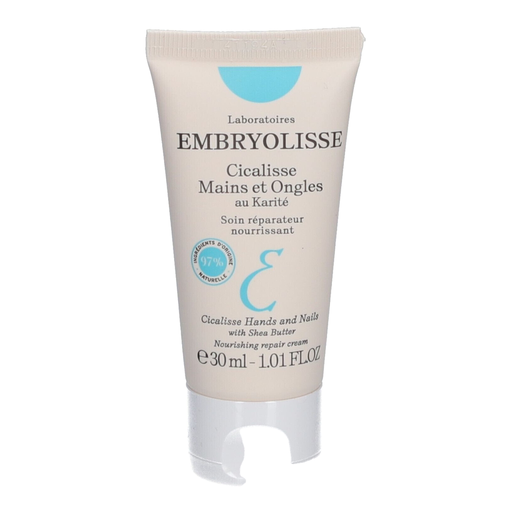
Why this product suits this profile: The product description specifically mentions hands, nails and cuticles. The 30 ml format is suitable for taking with you.
It is not limited to use on the palms of the hands. If you have dry cuticles, you can take the stated areas of use into account directly.
Shea butter and glycerin are listed; the texture is described as rich and quick-absorbing.
We have put together a complete, regularly updated list of products that fully meet these strict selection criteria and the safety regulations applicable in the EU.
Look for a richer texture and recognised moisturising ingredients such as glycerin, urea, shea butter or ceramides. If you have severely irritated, open or persistently cracked areas, your skin should be assessed by a medical professional.
This depends on your skin condition and how much it is exposed to stress. You can reapply cream after washing your hands or whenever your skin feels dry. With concentrated products, the product information may state that a small amount is sufficient.
Fragrance-free products can be a sensible option if you do not tolerate fragrance ingredients well. However, there is no universal guarantee of compatibility. The complete INCI list and a cautious patch test provide a better basis for making a decision.