
Lieferung heute & morgen

Qualitätsgarantie

Willkommens-Angebote freischalten: KOSTENLOSE Lieferung | Bis zu 80 % RABATT | Kostenlose 30-Tage-JoyPlus-Testphase
App herunterladen
By: Joybuy Product Recommendation OfficerDate: August 28, 2026
Rough, tight, or even cracked hands are more than just a cosmetic issue. They can be painful and disruptive in daily life, especially when hands are under severe stress from work, frequent washing, or cold weather. The market for hand creams is vast, but the search for a truly effective solution often leads to dead ends. This guide will help you see through marketing claims and make an informed decision.
Before we turn to effective solutions, it's important to understand the typical mistakes that lead to disappointing results.
To find a hand cream that actually helps, you should pay attention to the formulation. Three parameters are of central importance here.
Urea is a substance naturally found in the body and a key component of the skin's Natural Moisturising Factor (NMF). In hand creams, urea serves two important functions:
Imagine the skin barrier as a brick wall, where the skin cells are the bricks and lipids like ceramides are the mortar. If this mortar is brittle, the skin loses moisture and becomes susceptible to irritation. A hand cream with ceramides helps to fill these gaps, repair the skin barrier, and strengthen its resilience. This is especially important for a hand cream for cracked hands.
On already damaged skin, fragrances and certain alcohols can lead to burning, redness, and itching. A fragrance-free hand cream minimises this risk and is therefore the safer choice for sensitive skin, for those prone to eczema, or for individuals with certain underlying medical conditions. A hand cream for diabetics should also be free of potential irritants, as the skin is often particularly sensitive in these cases.
Instead of making a blanket recommendation, we have identified products tailored to specific needs and user profiles.
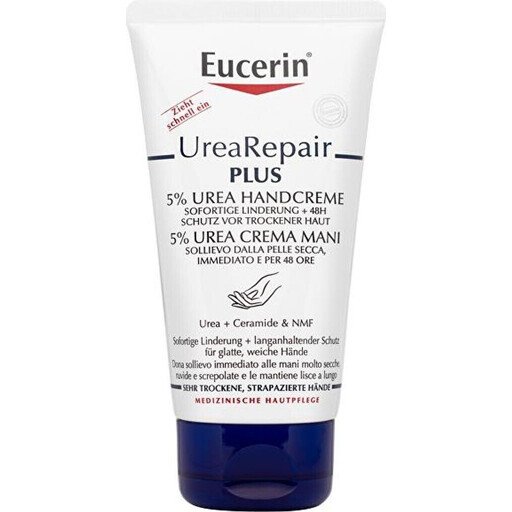
Why This Fits Their Persona: Ideal for individuals whose hands are under extreme stress from their profession (e.g., in healthcare, trades) or frequent washing and who need reliable, fast-absorbing care for daily use.
This cream bypasses the luxury trap by focusing on a clinically relevant combination of 5% Urea and Ceramides, rather than expensive fragrances or elaborate packaging.
The formula is fragrance-free and absorbs quickly without leaving a greasy film. According to the manufacturer, it is also suitable for adjunctive care, e.g., for psoriasis and diabetes.
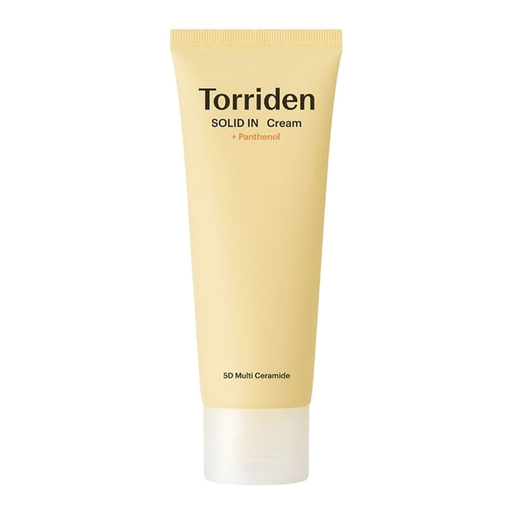
Why This Fits Their Persona: Suitable for users whose main concern is a weakened, sensitive skin barrier and who are looking for targeted, nourishing care for restoration.
Instead of offering a non-specific "all-in-one" solution, this cream delivers a highly concentrated formula with a 5D-Ceramide Complex specifically aimed at repairing the skin barrier.
The formulation with Panthenol and Allantoin soothes irritation, while the texture provides rich nourishment without leaving a sticky feeling. It strengthens the skin for the long term.
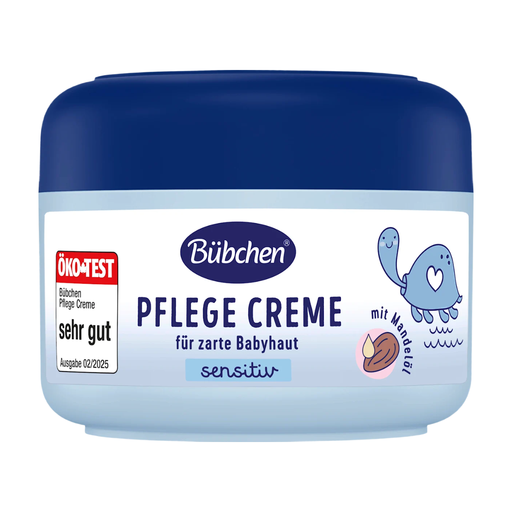
Why This Fits Their Persona: Perfect for households looking for a very mild, reliable, and universally applicable care cream for the sensitive skin of adults and children.
This cream resists the "natural is better" fallacy by relying on a minimalist, fragrance-free formula and avoiding potentially irritating essential oils or plant extracts.
The combination of shea butter and almond oil provides gentle care and protects the skin. Its dermatologically tested compatibility makes it a safe choice for the whole family.
We have compiled a complete, real-time list of products that fully satisfy these strict selection criteria and UK safety regulations.
For very dry hands, it is recommended to apply it after every hand wash and as needed in between. A generous application before bed can support the skin's regeneration overnight. Consistency is often more crucial than quantity.
Not necessarily. A concentration of 5% urea is generally sufficient for the daily care and moisturisation of dry hands. A concentration of 10% urea has a stronger keratolytic (skin-smoothing) effect and is particularly suitable for extremely rough, flaky, or calloused skin areas, for example, on the knuckles. For moisturising alone, a 5% formulation is often more pleasant and completely adequate.
Yes, in many cases, that is possible. Products formulated for cracked hands, especially those with urea and ceramides, can also be effective on dry and cracked heels. However, for very thick calluses on the feet, there are special foot creams that often contain even higher concentrations of urea (10% or more) or other active ingredients like salicylic acid.