
Lieferung heute & morgen

Qualitätsgarantie

Willkommens-Angebote freischalten: KOSTENLOSE Lieferung | Bis zu 80 % RABATT | Kostenlose 30-Tage-JoyPlus-Testphase
App herunterladen
Dry, rough or cracked hands are often caused by frequent washing, hand sanitiser, cold weather, dry indoor air or manual work. Hand cream can help keep your skin moisturised and replenish its natural oils as part of your daily routine. But a big promise on the packaging isn’t the only thing to consider.
Three common pitfalls can lead to the wrong choice:
For normal to slightly dry skin, a moisturising hand cream containing ingredients such as glycerin is often enough. Glycerin helps bind water in the upper layers of the skin and is found in many formulas.
For very dry or stressed hands, consider richer formulas containing shea butter, oils, dimethicone or ceramides. Take claims such as repairing hand cream at face value: the term usually describes the product’s skincare focus, but doesn’t prove medical effectiveness.
If you have sensitive skin, check the INCI list. A fragrance-free hand cream may be a good option if you want to avoid fragrances. If you have known allergies, also check for any listed fragrance allergens or plant-based ingredients that may affect you.
A urea hand cream contains urea at a stated concentration. Urea is often used in products for dry skin, but the texture can vary considerably between formulas. Take particular care when checking suitability if your skin is broken, irritated or sore.
A hand and nail cream may be suitable for caring for your hands and cuticles, provided it is specifically intended for both areas. Ingredients such as glycerin, shea butter or panthenol may form part of its skincare formula. Always assess claims about skin renewal or protection against the product description and its specific ingredients.
A fast-absorbing hand cream is handy at work, after washing your hands or when you’re out and about. Richer creams are often better suited to an evening routine or very dry skin, but may remain noticeable on your skin for longer.
The right size depends on where you’ll use it:
Also check the expiry information, batch number and INCI list on the packaging. Product information may change between batches. If you’re looking for a vegan hand cream, check the manufacturer’s vegan labelling: “plant-based ingredients” doesn’t automatically mean the whole product is vegan.
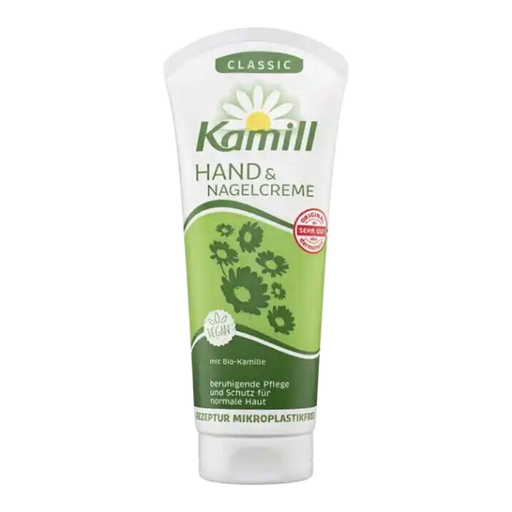
Why this product suits this profile: This 100 ml tube is aimed at shoppers looking for an everyday hand and nail cream with a vegan formula. According to the product description, it contains organic camomile and is free from colourants, parabens, paraffin, mineral oil and PEG emulsifiers.
The product information lists specific exclusions rather than making only a general skincare claim. Its texture is described as fast-absorbing and non-greasy.
Vegan formula according to the supplier, organic camomile and a 100 ml size for regular use.
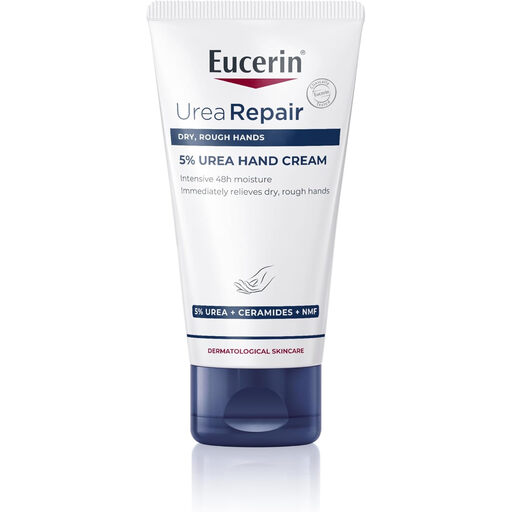
Why this product suits this profile: The 30 ml tube clearly lists its ingredients, including 5% urea, Ceramide NP and glycerin. Its size makes it suitable for taking out with you or adding to your skincare routine at home.
The urea concentration is stated clearly, making it easier to compare the formula with other products than if you were relying on vague skincare claims.
5% urea, Ceramide NP and a 30 ml size; according to the product information, it is intended for regular care of dry hands.
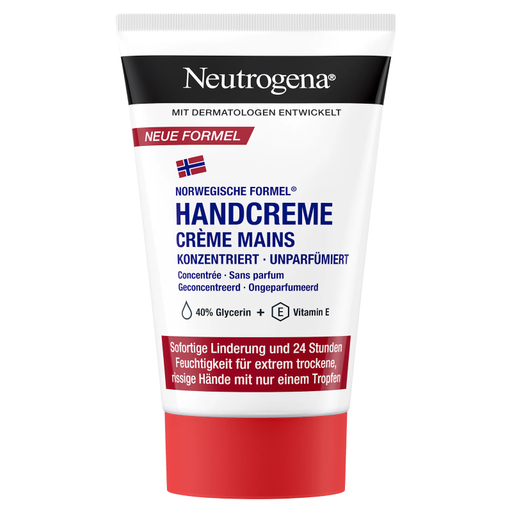
Why this product suits this profile: If you wash your hands frequently, work in an office or prefer a fragrance-free hand cream, this compact 50 ml tube could be a good fit. The stated formula includes glycerin and vitamin E components.
The product name explicitly states that it is fragrance-free, helping to address a common concern when choosing a cream for sensitive skin.
Fragrance-free formula, concentrated application according to the product information and a handy travel size.
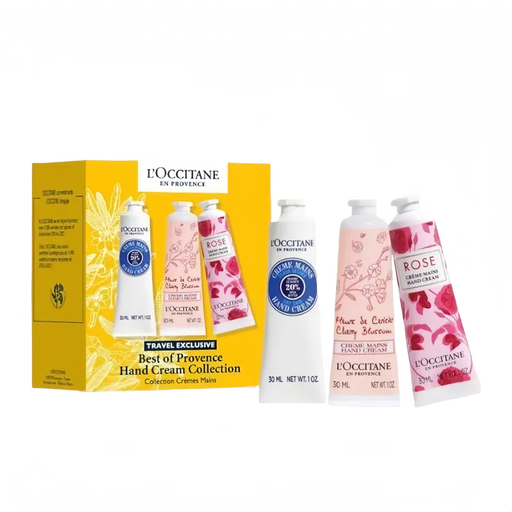
Why this product suits this profile: The set contains six 30 ml tubes, including two varieties with shea butter. Their small sizes are handy for your handbag or travel bag, or for splitting up as gifts.
The number and size of the tubes are clearly stated, making it easier to weigh up the contents of the set against your actual needs before buying.
Six travel-sized creams, including shea butter hand creams; according to the supplier, the formula contains 20% shea butter.
We’ve put together a complete, regularly updated list of products that meet these strict selection criteria and fully comply with the safety regulations in force in the EU.
Apply hand cream to clean, dry hands, massaging it in especially around your knuckles, fingertips and cuticles. After washing your hands, it’s a good idea to reapply if your skin feels dry.
If you have sensitive skin, start by applying a small amount to a limited area. Stop using the cream if you experience redness, stinging or itching, and follow the warnings on the packaging. Hand cream is for external use only and should not get into your eyes.
It depends on your skin and your daily routine. Reapplying after washing your hands or whenever your skin feels dry may help. Keeping a small tube by the sink, at work or in your bag makes it easier to use hand cream regularly.
Look for a richer texture and ingredients such as glycerin, shea butter, urea, ceramides or dimethicone. If your skin is very irritated, painful or repeatedly cracked, ask a doctor to investigate the cause. Cosmetic hand cream is not a substitute for medical advice.
Check the information on the packaging, particularly the symbol showing how long the product can be used after opening and the best-before date. Store the tube or jar in a dry place, away from direct sunlight, and follow the manufacturer’s instructions.