Small filter servings and limited space
If you usually grind coffee for yourself and want to put the grinder away after use, a hand grinder could be a good fit. Remember to allow space for the handle, too, and check its capacity.


If you usually grind coffee for one and want to put the grinder away after use, a compact hand grinder could be a good fit. If you grind often or make several cups, an electric grinder can save you the effort of turning a handle. The key things to consider are a grind setting suitable for filter coffee, the amount you need to grind, and the space available for filling and cleaning. A small body alone doesn’t tell you whether a grinder will fit your kitchen.
If you usually grind coffee for yourself and want to put the grinder away after use, a hand grinder could be a good fit. Remember to allow space for the handle, too, and check its capacity.
If you grind often or make several cups, compare electric grinders by how easy it is to adjust the grind and whether their dosing and filling capacity suit your routine.
If cleaning and repairability matter to you, check the specific model to see which parts can be removed and whether compatible spares are available.
A good fit if: You grind small amounts for filter coffee, want to put the grinder away and don’t mind turning the handle.
Worth bearing in mind: Larger amounts may mean filling and grinding more than once. HARIO Europe gives the Mini-Slim + a capacity of 24 g of ground coffee.
A good fit if: You grind regularly or make coffee for several people, and want to avoid the effort of turning a handle.
Worth bearing in mind: You’ll need a power socket and space to position and fill the grinder. The number of settings alone doesn’t tell you how good the results will be.
A good fit if: Simple electric operation matters more to you than being able to set the same grind consistently using numbered steps. On the Melitta Amigo, the length of time you hold the button controls the grind.
Worth bearing in mind: Forbrugerrådet Tænk distinguishes burr grinders from blade grinders in its comparison, noting that blade grinders produce less consistent particle sizes.
| What matters | What to check before buying | Who will find this important? |
|---|---|---|
| Storage and limited worktop space | Measure the space needed to position and use the grinder, and check whether the handle can be stored with it. Packaging dimensions aren’t the same as the grinder’s dimensions. | If I want to put the grinder away after making a small serving, every bit of free space matters. Around 31% of consumers put storage and limited worktop space first. |
| A suitable, repeatable grind for filter coffee | Melitta recommends settings 6–26 for the Calibra; Baratza lists 40 grind settings for the Encore. The number of settings alone doesn’t prove that a grinder is suitable for filter coffee. | If I want to make filter coffee with a suitable, repeatable setting, the range of usable grind sizes matters more to me than a high number of settings. Around 31% of consumers prioritise the grind for filter coffee. |
| Frequent grinding or several servings | Compare the amount you usually grind at a time with the grinder’s capacity, and check whether a dosing function suits your routine. | If I grind often or make several cups, I want to reduce the manual effort and avoid having to refill the grinder repeatedly. Around 23% of consumers focus mainly on larger amounts or frequent grinding. |
| Cleaning and spare parts | Check the manual to see which parts can be removed or washed, and whether spare parts fit the exact model variant. | If I want to clean the grinder regularly and repair it when needed, I need clear care instructions and parts that fit my exact model. Around 15% of consumers put maintenance and spare parts first. |
The number of settings alone doesn’t tell you how suitable the ground coffee will be for filter coffee.
Look for a filter setting that’s clearly described, and only rely on independent test results if they relate to the exact model you’re considering.
A grinder needs to fit the available space when you’re filling, grinding and cleaning it. HARIO Europe explicitly labels the published dimensions for the Mini-Slim + as box dimensions.
Measure the space needed to position and use it, and don’t mistake packaging dimensions for the grinder’s dimensions.
For example, HARIO Europe lists replacement handles according to the shape of the shaft. A handle for a hexagonal shaft isn’t compatible with certain models that have a pentagonal shaft.
Before buying, check the full model number and the stated compatibility of the part.
Hario’s Mini-Slim + is a manual grinder for smaller amounts. HARIO Europe gives it a capacity of 24 g of ground coffee.
According to the German manufacturer’s website, the electric Encore has 40 grind settings and is designed with filter coffee in mind.
The Calibra is an electric grinder with an adjustable conical burr and dosing by weight, cup count or grinding time. The smaller Amigo uses blades, with the grind controlled by how long you grind for.
The C40 Mk4 Nitro Blade Black is a manual grinder. Comandante states that each of the two included collection jars has a capacity of 40 g.
This selection includes electric and manual coffee grinders. Some models are listed for pour-over or drip coffee. Check that the grind settings, capacity and dimensions suit your brewing method and available space.
 No image available
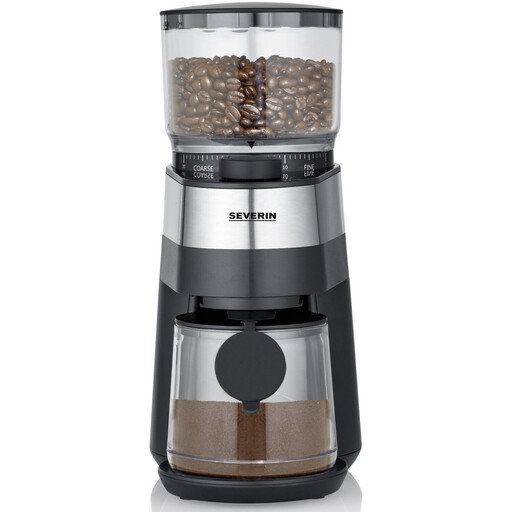
An electric option to consider if you want to compare grind settings and dosing for several cups.
Disc burrs with 30 grind settings; dosing for 2 to 12 cups. Stated dimensions: 19,50 × 13,50 × 29,80 cm; power: 140 W.
 No image available
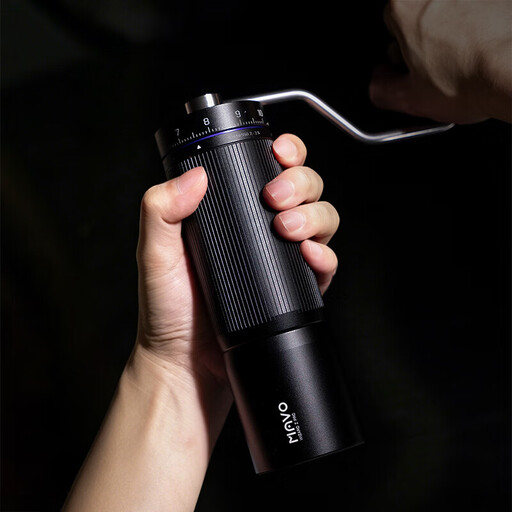
A hand grinder for anyone who prefers to grind without electricity and needs to factor the handle into their available storage space.
43 mm conical burr; 100 settings per rotation. Stated height: 170,5 mm; total length with handle: 175 mm. Grinding is manual.
 No image available
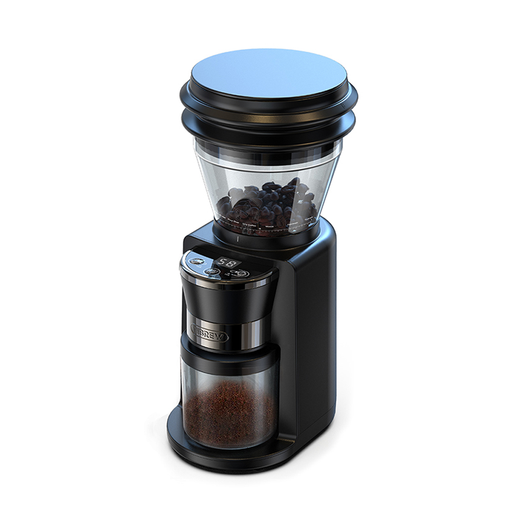
An electric grinder to compare if you want to use a range of settings and choose between manual and automatic modes.
40 mm conical burr with 31 grind settings; six-setting memory function. Manual and automatic modes are listed.
 No image available
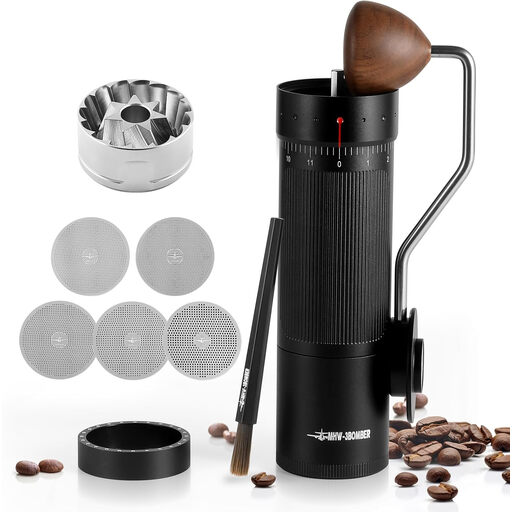
A manual option if you’re looking for a grinder for drip coffee and the stated container capacity suits your serving size.
Conical burr with external grind adjustment; five sieves. The magnetic collection cup holds around 20 g according to the product details. Stated dimensions: 20 × 5 × 19 cm. Grinding is manual.
 No image available
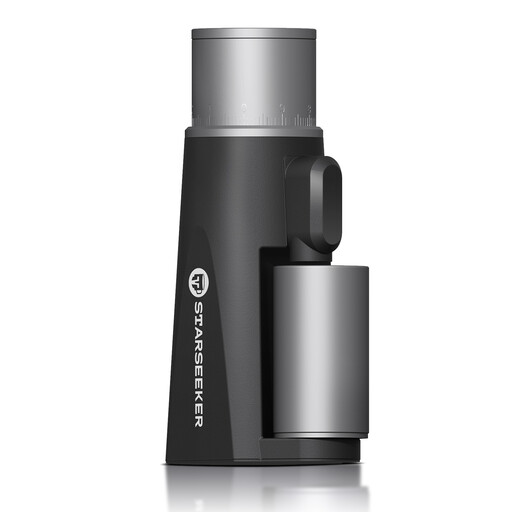
An electric grinder for pour-over to consider if you want a compact design with a specified grind setting.
38 mm conical burr with 100 grind settings; the product details state that it doesn’t need to be plugged in while in use. Stated dimensions: 100 × 67 × 195 mm. The description says it’s optimised for medium and dark-roasted beans; very lightly roasted beans may jam at a fine espresso grind.
Use the instructions for your exact grinder as a starting point. Melitta recommends settings 6–26 for the Calibra; this doesn’t apply to other models. Then adjust the setting to suit your brewing method.
Not necessarily. Comandante advises against soaking the C40 or cleaning it in a dishwasher. HARIO Europe says the burr assembly on the Mini-Slim + can be taken apart and washed. Follow the care instructions for your exact model.
If you buy as a consumer from a trader, the seller is generally responsible for your statutory rights if the goods are faulty. This is separate from any additional manufacturer’s guarantee. Your Europe says goods bought in the EU are covered for at least two years from receipt. For Germany, § 477 BGB also sets out a presumption for faults that appear within one year, subject to the exception specified there.
Check the electrical specification, markings and safety information in the specific listing. The EU Low Voltage Directive covers electrical equipment rated at 50 to 1,000 V AC or 75 to 1,500 V DC. A similar model name alone doesn’t tell you which specification applies to a particular listing.