Occasional brownie bakers
If you mainly make small batches of brownies, you may want to prioritise beaters, an easy-to-control low speed setting and care instructions over accessories for doughs you rarely make.


For smaller batches of brownies, the key things to look for are suitable beaters, an easy-to-use low speed setting and cleaning requirements that fit your routine. A high wattage alone is no guarantee of better brownies. If you also want to make firmer doughs, check whether dough hooks are included and the quantities recommended for that particular model. Follow the recipe for mixing order: one brownie recipe from REWE suggests mixing the ingredients slowly at first, then increasing the speed.
If you mainly make small batches of brownies, you may want to prioritise beaters, an easy-to-control low speed setting and care instructions over accessories for doughs you rarely make.
If you also want to make firmer doughs with the same appliance, check whether dough hooks are included and what quantities are recommended for that specific model.
For quick baking sessions, the weight, handle, storage and cleaning of removable attachments can have a greater impact on everyday use than extra features.
For lunchbox brownies, first check that the beaters and low speed setting are suitable for your recipe. Then use the care instructions and how you plan to use the mixer for other doughs to help narrow down your options.
| What you need | What to check when buying | Who is this important to? |
|---|---|---|
| Mix brownie batter with control | Check that beaters are included and that the low speed setting is easy to use; follow the mixing order in the recipe. | If I want to mix the ingredients for a small batch of brownies gently at first, I look for beaters and a suitable low speed setting. Around 36% of consumers prioritise controlled mixing. |
| Easy-to-clean attachments | Check the care instructions for the attachments supplied with the specific model; never immerse the motor unit in water. | After a small baking session, I want to be able to clean the removable tools easily. Around 29% of consumers prioritise cleaning the attachments. |
| Handling and storage | Check the weight, handle, switch position and cable length against your bowl, worktop and plug socket. | If I want to handle the mixer comfortably at my worktop and put it away afterwards, ease of use and storage space matter. Around 21% of consumers say these are their main concerns. |
| Other, firmer doughs | Check for dough hooks and quantity recommendations for the specific model; don’t assume they apply to other models. | If you often make firmer doughs as well as brownies, you’ll need the right tools and clear quantity recommendations. Around 14% of consumers prioritise being able to make other types of dough. |
The rated power alone doesn’t tell you how well a particular batter can be mixed with control.
First check the beaters and low speed setting, then follow the recipe for speed and mixing time. Only prioritise extra kneading functions if you plan to make other types of dough.
Care instructions vary by model and attachment. Tefal’s product page for the HT450B gives conflicting information about whether it is dishwasher-safe; Philips does not list any dishwasher-safe parts for the HR3741/00.
Before buying and cleaning, check the instructions for the exact model variant and its attachments.
Krups lists the GN9101 and GN9121 as different models; the GN9121 is also listed with a hand blender attachment.
Compare the full model number and what’s included rather than relying on the ‘3Mix 9000’ series name alone.
The MFQ3010 is a straightforward model to compare if you usually mix smaller quantities.
The HR3741/00 is worth comparing if you’re looking for several speed settings and a turbo function.
The MultiMix 3 HM 3100 WH offers a useful point of comparison for grip and balance.
According to the product information, the Prep’Mix HT450B comes with beaters, dough hooks and five speed settings.
The 3Mix 9000 GN9101 is a useful model to compare if you want to make other types of dough as well as brownies.
The HM 3832 offers another point of comparison for speed settings, grip and accessories.
This selection includes hand mixers with beaters for brownie batter and other mixing tasks, as well as hand blenders with a whisk attachment. Bear in mind that hand blenders are not traditional hand mixers and may have different controls depending on the model.
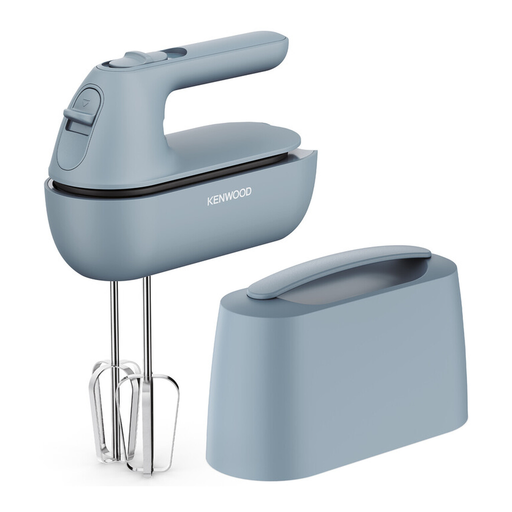 No product image available
The listed speed settings and attachments may suit brownie recipes that call for a slower start, as well as occasional tasks involving other doughs.
Five speed settings with a soft-start function; beaters and dough hooks. The attachments are described as dishwasher-safe.
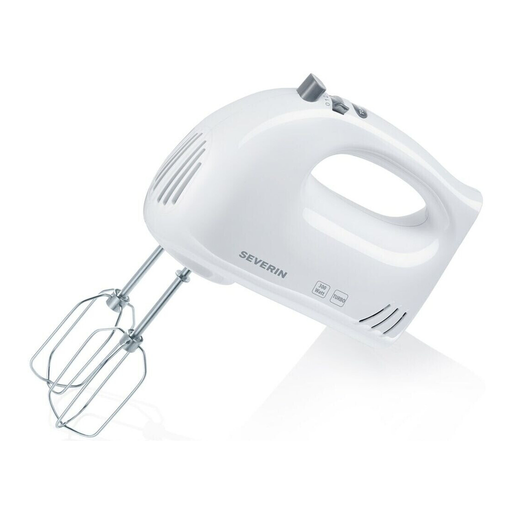 No product image available
An option if you’d like dough hooks as well as beaters for other baking tasks.
Approx. 300 W, five speed settings and turbo; beaters and dough hooks. The product description lists a weight of 798 g and an ergonomic handle.
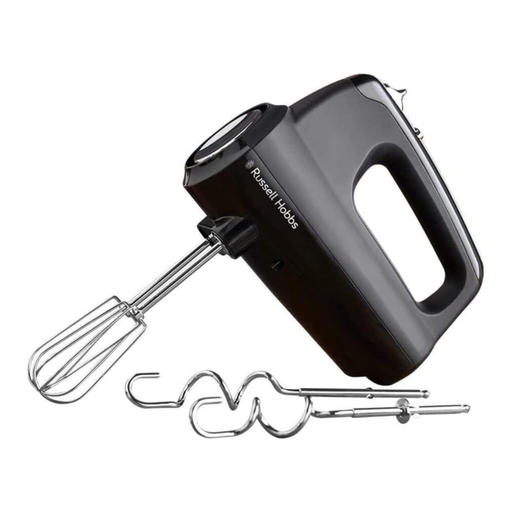 No product image available
Five speed settings and turbo give you a choice of options for mixing stages that need to be adjusted according to the recipe.
Beaters and dough hooks; both types of attachment are listed as dishwasher-safe. Includes an eject button and an upright storage position.
 No product image available
For mixing tasks where a whisk attachment is all you need; this model is listed as a hand blender, not a traditional hand mixer.
Normal and turbo modes; whisk attachment. The product name also mentions a 500 ml chopper, a 500 ml beaker and a 1.5 m cable.
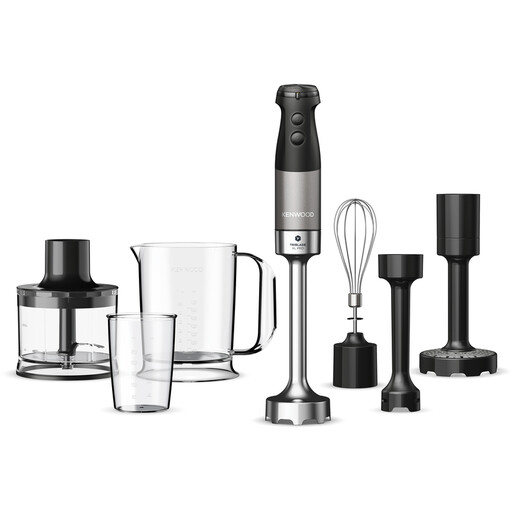 No product image available
An option to compare if you’re looking for a hand blender with a whisk attachment; it is not a traditional hand mixer.
Includes a whisk attachment and variable speed settings. Removable parts are described as dishwasher-safe.
No. A higher rated power alone doesn’t guarantee better brownies. First check the beaters and controls, then follow the recipe for speed and mixing time. For example, a REWE brownie recipe says to mix the ingredients first on a low setting and then on a higher one.
Unplug the appliance before cleaning and don’t immerse the motor housing in water. Clean removable tools according to the instructions for the specific model variant, and don’t assume that dishwasher instructions for attachments also apply to the main unit.
If there’s a fault, contact the seller about your statutory consumer rights, which are separate from any voluntary manufacturer’s warranty. According to the Verbraucherzentrale, the first step may be to have the item repaired or replaced.
For products covered by relevant harmonised EU rules, the manufacturer uses the CE marking to declare that the applicable requirements have been met. It is not an independent assessment of mixing performance; according to the EU information page, no central EU body issues a general CE certificate.
Electrical appliances should not go in household waste; they must be collected separately. The Umweltbundesamt lists local recycling centres and take-back options at retailers. Check which collection point is available in your area before you go.