
Lieferung heute & morgen

Qualitätsgarantie

Willkommens-Angebote freischalten: KOSTENLOSE Lieferung | Bis zu 80 % RABATT | Kostenlose 30-Tage-JoyPlus-Testphase
App herunterladen
A reliable hand mixer is an indispensable tool in any kitchen, whether for whipping airy cream, creating smooth cake batter, or preparing bread dough. But the market is flooded with models whose marketing promises often create more confusion than clarity. Many buyers focus on superficial features, only to discover after purchase that the appliance isn't up to the task. This guide will help you identify the crucial criteria and avoid common purchasing pitfalls.
Before we dive into the key features, let's look at the typical pitfalls that often lead to purchase regret. By understanding these, you can search more effectively for a durable and functional appliance.
To find the right model for your needs, you should focus on objective, practical criteria. The following three points are crucial for your appliance's performance and longevity.
Raw wattage is just a guideline. What's more important is how efficiently the motor transfers power to the attachments. A well-engineered electric hand mixer with 300 to 500 watts can often outperform a poorly built 700-watt model. Look for solid construction and a robust gearbox that delivers high torque even at low speeds for kneading dough. Models from established brands like Braun hand mixers often prioritise motor longevity.
The most important accessories are the whisks and hand mixers with dough hooks. These should be made of high-quality, rust-proof stainless steel. Sturdy wires on the whisks and a robust, twist-resistant design for the dough hooks are crucial for good results and a long lifespan. Some models offer additional accessories, like an immersion blender attachment, which increases the appliance's versatility and makes it an all-rounder for cooking and baking.
Good control over speed is essential. A low starting speed prevents flour or liquids from splattering out of the bowl. Multiple, well-defined levels allow for precise adjustments for any ingredient. An additional turbo function can be useful for short bursts of power. Ergonomics are just as important: the appliance should fit comfortably in your hand, the controls should be easy to reach, and the weight should be distributed to make work easier, not harder.
Instead of making a one-size-fits-all recommendation, we've selected models that match specific user profiles and their needs.
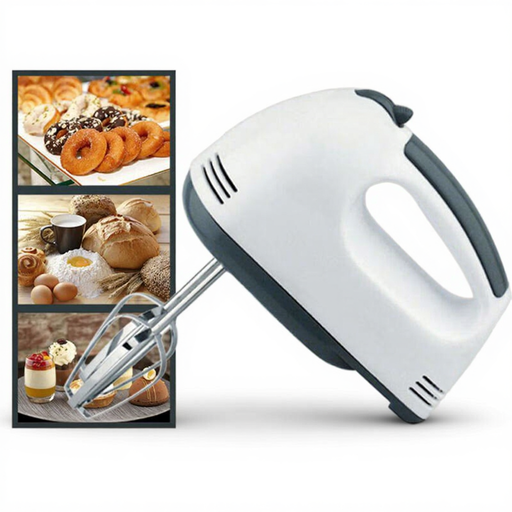
Why This Fits Their Persona: This model is a practical choice for those who bake occasionally and need a straightforward appliance for basic tasks like whipping cream or mixing light batters without a major investment.
It sidesteps the high-wattage trap. At 180 watts, it focuses on the essentials, instead offering seven speed settings for fine control over simple tasks.
Its main advantage is its value for money. It includes both whisks and dough hooks and offers a level of speed control that is uncommon in this price range.
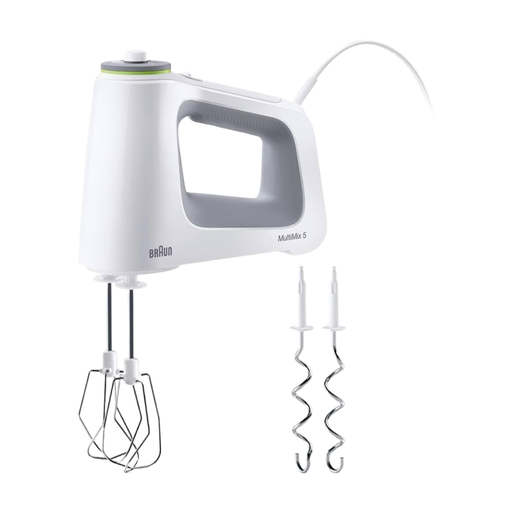
Why This Fits Their Persona: This appliance is designed for those who bake regularly and tackle demanding projects. Its powerful motor and robust construction are suitable for heavy doughs, while its thoughtful ergonomics make even long baking sessions comfortable.
It actively solves the ergonomics problem: the SmartMix technology with its vertical motor shifts the weight into the bowl, reducing strain on the wrist. Here, the high wattage is functional and supported by high-quality engineering.
The seamless speed adjustment (VarioControl) via a dial allows for extremely precise control. The 700-watt motor provides ample power reserves for any task.
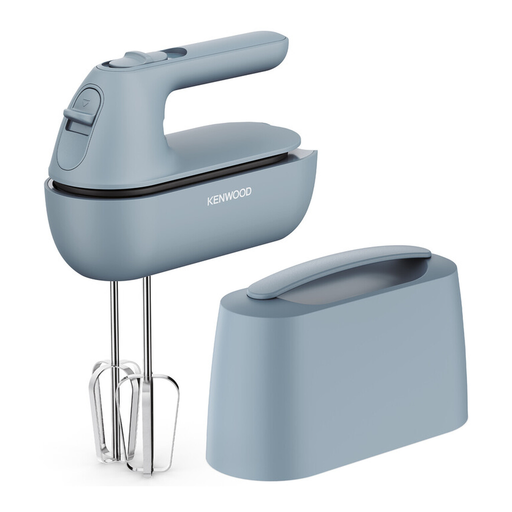
Why This Fits Their Persona: Ideal for users who value a tidy kitchen and simple handling. This model offers solid performance for everyday tasks while solving the problem of scattered accessories.
It addresses the pitfall of inferior accessories by housing the high-quality stainless steel and aluminium attachments in a protective storage case. This prevents damage and loss.
The all-in-one storage solution is its standout feature. The appliance, cord, and accessories are stored compactly and kept within reach. The SureEject system prevents accidental ejection of the attachments.
We have compiled a complete, up-to-date list of products that fully meet these strict selection criteria and rigorous safety standards.
1. How many watts should a good hand mixer have? There's no one-size-fits-all answer. For most applications like cake batter or whipped cream, a high-quality appliance with 300 to 500 watts is perfectly sufficient. The motor and gearbox design are more important than the raw wattage figure. For very frequent kneading of heavy yeast or bread doughs, a model with over 500 watts and a robust build can be advantageous.
2. Can you knead heavy bread dough with a hand mixer? Yes, it's possible with the right appliance. Always use the dough hooks for this task and choose a model with a powerful motor and a sturdy gearbox. Start on a low speed and do not overload the mixer. Pay attention to the manufacturer's specifications for maximum capacity and operating time. However, for very large quantities or extremely stiff doughs, a stand mixer is often the better choice.
3. How do you clean an electric hand mixer properly? Always unplug the mixer before cleaning. The beaters and dough hooks can be ejected at the push of a button and are dishwasher-safe on most models. The motor housing itself must never be submerged in water. Simply wipe it down with a damp cloth and then dry it. Make sure no moisture gets into the ventilation slots.