
Lieferung heute & morgen

Qualitätsgarantie

Willkommens-Angebote freischalten: KOSTENLOSE Lieferung | Bis zu 80 % RABATT | Kostenlose 30-Tage-JoyPlus-Testphase
App herunterladen
A reliable hand mixer is an indispensable tool in any kitchen. Whether you're whipping fluffy cream, mixing cake batter, or kneading yeast dough, the right appliance saves you time and effort. However, the wide range of models with different power levels, attachments, and ergonomic features can be overwhelming.
This article serves as your guide. We'll walk you through the key criteria for choosing a hand mixer and present a selection of models that cater to various needs—from compact, entry-level devices to powerful all-rounders.
Before making a decision, it's helpful to understand a few technical specifications and their practical benefits. When doing your research, which often starts with a search for a "hand mixer review," the following points are particularly relevant.
The motor's power, measured in watts (W), is a key indicator of a hand mixer's performance.
whipping cream or mixing liquid batters, models with 300 to 400 watts are often sufficient.Also, pay attention to the number of speed settings. Multiple speeds allow for precise adjustments depending on the ingredients. An additional turbo function provides a short burst of power when needed. A "soft start" (or slow-start) feature prevents flour or liquids from splattering out of the bowl at the beginning.
A hand mixer should fit comfortably in your hand, especially during extended use. Pay attention to the weight of the device and the design of the handle. Some manufacturers, like Braun, use special motor designs to better distribute the weight and reduce strain on your wrist. The controls should be easily accessible with your thumb without needing to change your grip.
The included attachments determine the appliance's versatility. Standard equipment includes:
kneading dough.Additionally, some models come with handy extras. A hand mixer with a bowl offers the convenience of hands-free operation. The mixing bowl often rotates automatically, ensuring even mixing. Other models stand out with integrated storage solutions where attachments and the cord can be stored compactly.
Here is a selection of models that are appealing for different user profiles due to their specific features and functions.
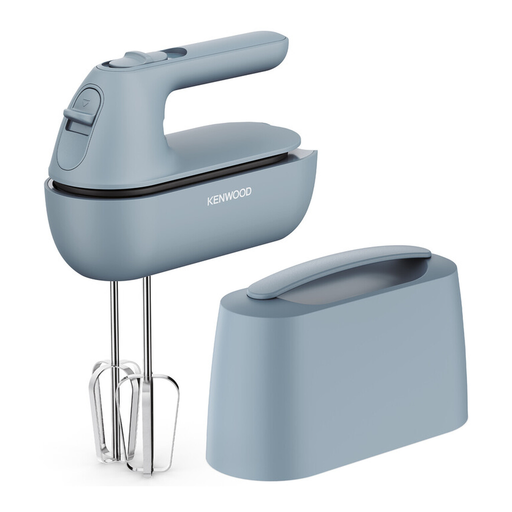
Why it stands out: The Kenwood Hand Mixer is distinguished by its clever storage design. All attachments and the cord fit into a compact case that attaches directly to the mixer body.
Pros:
Who is it for? This model is ideal for users with limited kitchen storage, for beginners, or for anyone who values a tidy and practical solution. Its power is well-suited for everyday baking and cooking tasks.
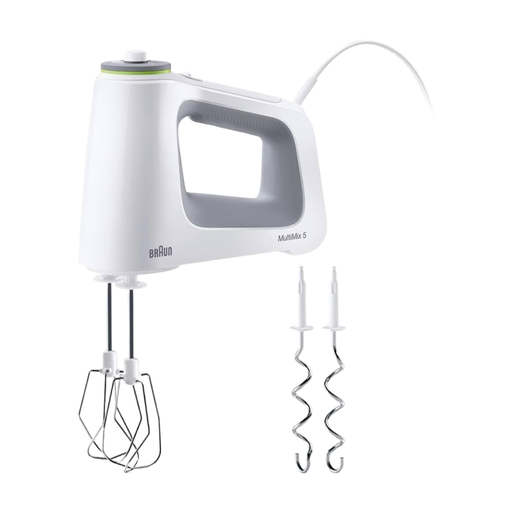
Why it stands out: The Braun Hand Mixer focuses on ergonomics and power. Its SmartMix technology, which positions the motor vertically above the attachments, directs the weight into the bowl. According to the manufacturer, this reduces wrist strain by up to 40%.
Pros:
Who is it for? The MultiMix 5 is the right choice for ambitious home bakers who frequently work with heavy doughs and are looking for a particularly ergonomic and powerful appliance. The precise control and strong motor make it a reliable partner for demanding recipes.
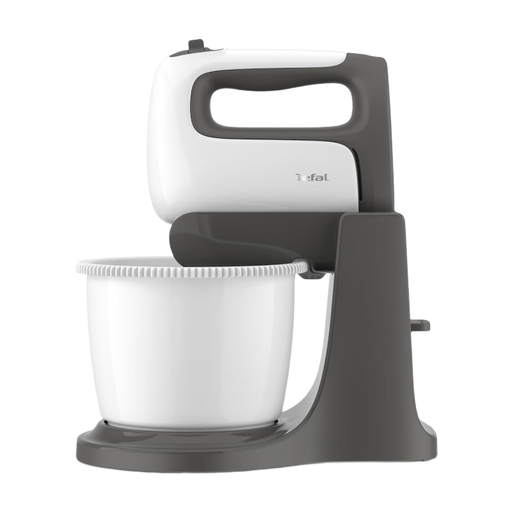
Why it stands out: This model from Tefal is a hybrid of a hand and stand mixer. The hand mixer with a bowl allows for hands-free operation, as the 2.5-litre mixing bowl rotates automatically to ensure consistent results.
Pros:
Who is it for? The Tefal Prep'Mix+ is perfect for users who appreciate the convenience of a stand mixer but don't have the space for a full-sized kitchen machine. It is ideal for preparing cake batters, creams, or egg whites that require a longer mixing time.
If the models presented here don't exactly meet your needs or if you'd like to compare more appliances, you can find a wider selection in our category.
? Discover more hand mixers and kitchen gadgets here
The required wattage depends on its intended use. For light tasks like whipping cream or mixing liquid batters, 300–400 watts is sufficient. If you plan to regularly knead heavy doughs like bread or pizza dough, you should consider a model with at least 500 watts, or even better, 700 watts, to avoid motor overload.
Yes, it's possible, provided the appliance has sufficient power and sturdy dough hooks. A high-performance hand mixer with 500 watts or more can easily handle smaller quantities of bread dough (approx. 500 g of flour). With lower-powered models or less robust dough hooks, there is a risk of the motor overheating or the hooks bending.
A hand mixer is a compact, handheld device that is ideal for quick mixing and kneading tasks and is easy to store. A stand mixer (or kitchen machine) is a stationary appliance with a large mixing bowl and a more powerful motor. It can process larger quantities and often offers more attachments (e.g., meat grinder, blender attachment). A hand mixer with a bowl represents a middle-ground solution, combining the convenience of hands-free operation with a more compact design.