
Lieferung heute & morgen

Qualitätsgarantie

Willkommens-Angebote freischalten: KOSTENLOSE Lieferung | Bis zu 80 % RABATT | Kostenlose 30-Tage-JoyPlus-Testphase
App herunterladen
A hand mixer is a staple in many British households, yet people often choose one based on wattage, design or a prominent turbo button. These features alone do not show whether a device is suited to your recipes. If you regularly bake cakes, whip cream or knead yeast dough, you should compare the attachments, speed control, ease of use and cleaning requirements above all.
An electric hand mixer with a high wattage can offer advantages for demanding tasks. However, the wattage initially describes the motor’s electrical power consumption, not necessarily its actual mixing performance. The design, power transmission, permitted operating time and suitable attachments are equally important.
For occasional mixing of cake batter or cream, a model with 180 to 300 watts may be sufficient. If you work with firm doughs more frequently, you should also look for a powerful hand mixer with sturdy dough hooks and clear usage instructions.
A hand mixer with 5 speed settings may be sufficient for many recipes. A slow start setting helps incorporate flour and dry ingredients without them spraying out of the bowl. A hand mixer turbo function, on the other hand, provides a higher speed for short periods, but does not replace finely graduated speed control.
What matters is whether the speed can be adjusted precisely and whether the device starts up in a controlled manner at a low setting. Seven settings, as found on the SOKANY model, can provide a finer choice. However, extra settings are only useful if they can be selected easily and sensibly in everyday use.
A hand mixer with beaters is suitable for cream, whisked egg whites and light creams. A hand mixer with dough hooks is designed for firmer doughs. Before buying, check whether two suitable attachments of each type are included and what materials they are made from.
Cleaning is also often underestimated. If a hand mixer has dishwasher-safe attachments, always follow the manufacturer’s instructions carefully. As a rule, this feature applies only to removable beaters, whisks, dough hooks or bowls – not to the motor housing.
Match the power to your baking habits:
A device should not be used for longer or under heavier loads than specified in the operating instructions. For example, the SOKANY SK-133 states that heavy doughs should not be processed for longer than 3 to 5 minutes at a time. Information like this is more important when choosing a hand mixer than wattage considered in isolation.
Stainless-steel beaters are resistant to many common dough ingredients. For coated or plastic components, follow the care instructions. An integrated release button makes it easier to switch between whisks and dough hooks.
Also make sure that the attachments lock securely into place. The device must be switched off and unplugged before changing attachments. Moving parts must not come into contact with fingers, hair or kitchen utensils during operation.
A hand mixer is usually held freely while mixing. An ergonomic handle, balanced weight distribution and easily accessible speed control can therefore affect comfort during use. Weight is particularly important when processing large quantities or several doughs one after another.
Models with a standing position, cable compartment or storage box are practical. The Kenwood QuickMix Go comes with a bag in which the mixer, attachments, cable and measuring spoon can all be stored together. In smaller kitchens, this can reduce the need to search for individual parts.
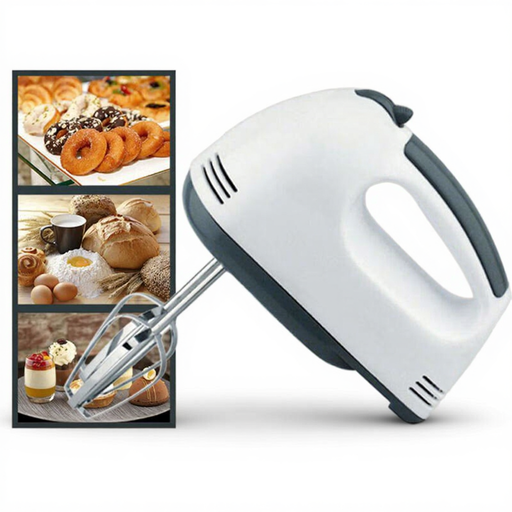
Why this product suits this profile: This model offers seven speed settings, two beaters and two dough hooks for typical home baking tasks.
The seven settings allow for more precise selection than a device with only a few fixed settings. However, the stated 180-W power output should still match the intended quantity of dough.
Two beaters and two dough hooks; according to the product information, the attachments are removable and dishwasher-safe.
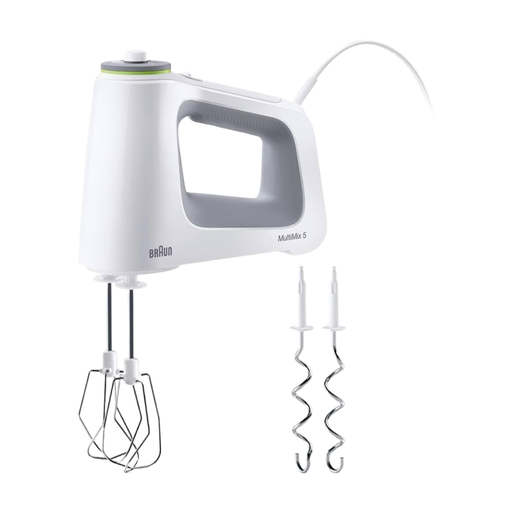
Why this product suits this profile: This hand mixer combines 700 watts, nine speed settings with a turbo function and stainless-steel attachments.
The VarioControl system supports gradual adjustment instead of relying exclusively on the turbo setting. According to the description, the housing should also be easy to clean.
700-watt motor; according to the product information, the removable beaters and dough hooks are dishwasher-safe.
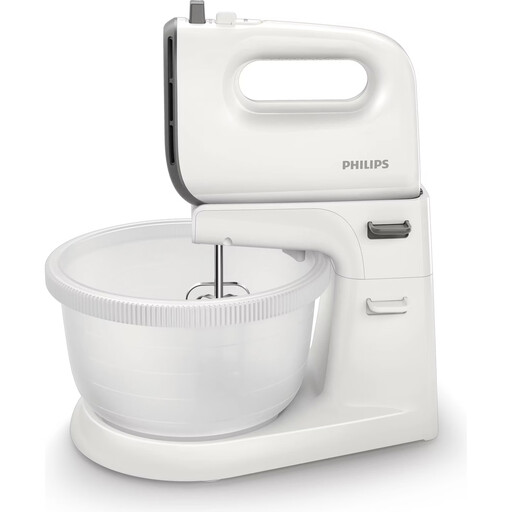
Why this product suits this profile: The combination of 450 watts, an automatic 3-litre mixing bowl, beaters and dough hooks is aimed at households with regular baking tasks.
The bowl helps guide the ingredients and rotates automatically during operation. This means you do not have to move the mixer continuously around every part of the bowl.
3-litre mixing bowl; according to the product description, the removable parts are dishwasher-safe.
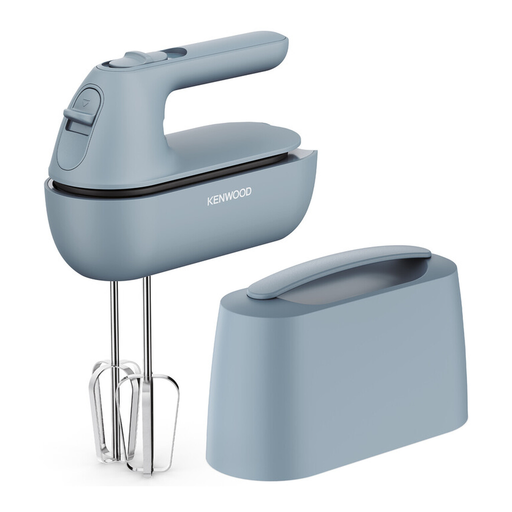
Why this product suits this profile: This 350-watt model has five speed settings, beaters, dough hooks and a combined storage solution.
The attachments and cable can be stored together in the supplied bag. This reduces loose parts in drawers and makes preparation easier.
Five speed settings with slow start; according to the product information, the attachments are dishwasher-safe.
We have put together a complete, regularly updated list of products that fully meet these strict selection criteria and the safety regulations applicable in the EU.
A classic hand mixer uses beaters and dough hooks, making it suited to baking and dough-related tasks. An electric stick blender, by contrast, usually has a cutting blade and is suitable for puréeing soups, sauces or smoothies. The Philips HR2531/00, for example, is a 650-watt stick blender with a mixing beaker, but it is not a substitute for a hand mixer with two beaters when baking.
A kitchen mixer or food processor can be useful for larger quantities and longer preparation times, but it requires more worktop space. For occasional or medium-sized baking quantities, a hand mixer is usually more compact and quicker to get ready for use.
For cream, whisked egg whites and light cake batter, models with lower power may be sufficient. For frequent preparation of firm doughs, 300 watts or more can serve as a useful guide. However, the attachments, build quality, speed control and operating time specified by the manufacturer remain decisive.
Its service life depends on how often it is used, the type of dough, cleaning and whether it is operated within its limits. Avoid overloading the device, observe the recommended breaks and clean the motor housing only with a damp cloth. Attachments should only be removed once the device has come to a complete stop and has been unplugged.
Consumption depends on the motor power and the actual running time. A 350-watt device used for ten minutes consumes approximately 0.058 kilowatt hours in theory. In practice, a hand mixer usually runs for only a few minutes per recipe. Actual power consumption may vary depending on the model and load.