
Lieferung heute & morgen

Qualitätsgarantie

Willkommens-Angebote freischalten: KOSTENLOSE Lieferung | Bis zu 80 % RABATT | Kostenlose 30-Tage-JoyPlus-Testphase
App herunterladen
A hand mixer is one of those compact kitchen appliances that comes in handy regularly for baking and cooking. It whips cream, mixes cake batter and, with the right attachments, kneads firmer mixtures too. But choosing a cheap model or one advertised as powerful doesn’t always lead to the right purchase. What matters is the technical specification, the attachments included and what you’ll use it for.
A high wattage may sound impressive, but it doesn’t tell you on its own how well an electric hand mixer will handle different ingredients. The gears, beaters, cooling system and controls all affect how practical it is for everyday use. A 300-watt hand mixer may be powerful enough for cream, egg whites, icing and light cake batter. If you regularly knead heavy bread dough, a stand mixer with a bowl may be a better fit.
So, don’t just look at the motor power. Consider the combination of power, attachments and recommended uses.
A hand mixer with lots of speed settings isn’t necessarily more practical. The lowest setting should let you mix slowly, and it should be easy to move up to higher speeds. A turbo function can provide a short burst at the highest speed, but it doesn’t replace a well-balanced range of settings.
For everyday use, 5 speed settings plus turbo offers a good balance of simplicity and versatility. Always start on a low setting to avoid splashes and clouds of flour.
A hand mixer for baking should come with at least beaters and dough hooks. Beaters are suitable for whipping and mixing light ingredients, while dough hooks are designed for firmer doughs. If dough hooks aren’t included, or they’re made from flimsy materials, the mixer may not be suitable for bread and yeast dough.
Also check whether the attachments can be removed easily using the eject button, and whether the product information says they’re dishwasher-safe.
For occasional kitchen tasks, a model with around 300 to 350 watts may be a good choice. This should cover whipping egg whites, cream and icing, as well as mixing cake and pancake batter. If you regularly prepare larger quantities or heavy doughs, check the manufacturer’s stated maximum dough capacity.
A compact hand mixer takes up little space and is quick to get ready. However, you’ll need a separate bowl, and you’ll have to hold the mixer while it’s running. If you bake frequently and work with large quantities, a stand mixer with a bowl is a different type of appliance to consider.
Variable speed control makes it easier to adjust the mixer to different consistencies. Low speeds are suitable for combining flour and liquids, medium speeds for mixing, and higher speeds for whipping.
Think of the turbo function as a short-term boost. It can be useful if you want to whip a mixture more quickly at the end. For continuous use, the regular speed settings are what count.
Stainless steel attachments stand up well to everyday ingredients and are easy to clean after use. Hand mixer bodies are often made from plastic, which helps keep the appliance relatively light.
Look for:
Before changing attachments, switch off the hand mixer and unplug it. Wait until all moving parts have come to a complete stop.
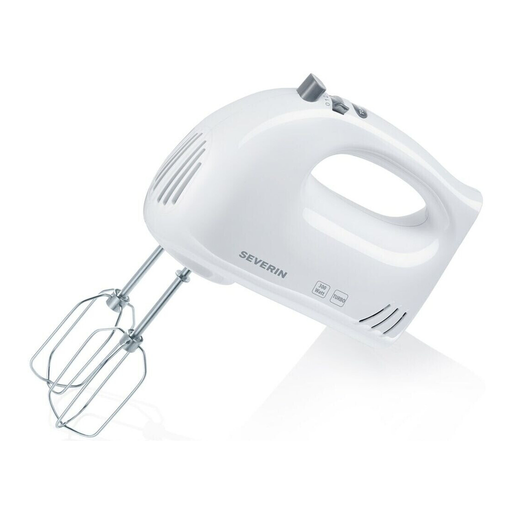
Why this product suits this profile: This model is aimed at households looking for a compact hand mixer for everyday baking and mixing. It has five speed settings, a turbo function, two beaters and two dough hooks.
It’s not limited to just one type of attachment. The stated 300 watts, five speed settings and included pair of dough hooks make it clear what the mixer is designed for.
Ergonomic handle, stainless steel attachments, built-in eject button and a stated weight of around 798 grams.
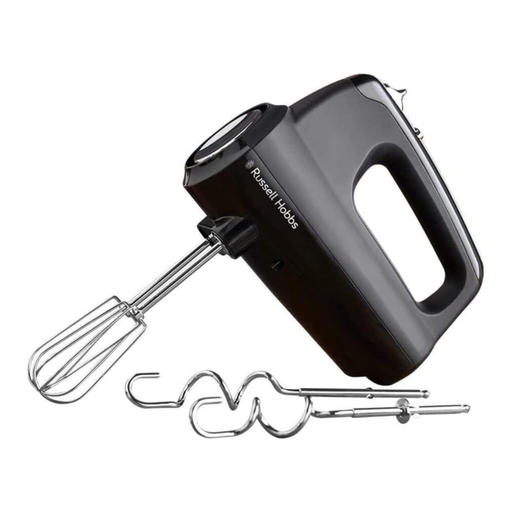
Why this product suits this profile: If clear product specifications and space-saving storage matter to you, this model comes with five speed settings, a turbo function, beaters and dough hooks.
The product specifications state 350 watts, five speed settings and dishwasher-safe attachments. That covers several key buying criteria.
The stated features include an eject button, a heel rest for standing the mixer upright, two beaters and two dough hooks.
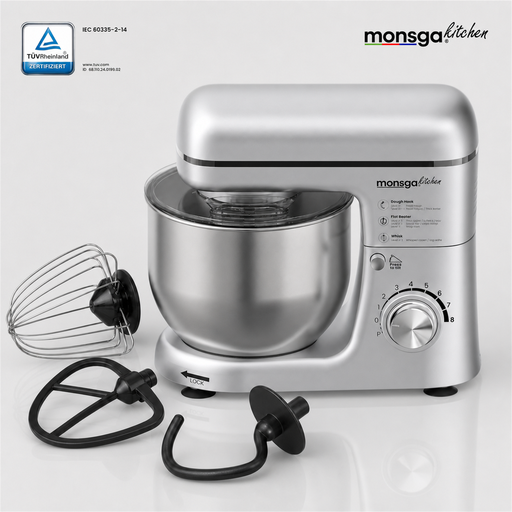
Why this product suits this profile: For large quantities and regular dough-making, a stand mixer with a 6-litre bowl is a suitable alternative to a traditional hand mixer.
The large bowl means you don’t have to hold the appliance throughout operation. However, you should still bear in mind the recommended working capacity of 5 litres.
According to the product description, it comes with a 6-litre stainless steel bowl, 8 speed settings, dough hooks, a whisk, a flat beater and a splash guard.
We’ve put together a complete, regularly updated list of products that meet these strict selection criteria and fully comply with the safety regulations in force in the EU.
Fit the attachments securely before switching the mixer on, and start at a low speed. For firm dough, use the dough hooks and a moderate speed. Don’t exceed the quantities specified by the manufacturer.
After use:
Never immerse the motor unit in water or any other liquid. Don’t continue using damaged attachments, cables or housing parts.
Around 300 to 350 watts may be enough for cream, egg whites, icing and light cake batter. If you regularly knead heavy doughs, wattage isn’t the only thing to consider. A stand mixer with a bowl and a suitable dough capacity may be a better choice.
Its lifespan depends on how often you use it, the amount of dough you make, how you clean it and whether you use it correctly. Avoid overloading it, stick to the recommended quantities and only change attachments after unplugging the mixer. Check the manufacturer’s information for specific details about the lifespan of each model.
Energy use depends on the mixer’s power and how long you run it. Most hand mixers are only used for a few minutes at a time for everyday recipes, so the amount of energy used per task is limited. For a more precise estimate, multiply the stated wattage by the usage time in hours.