
Lieferung heute & morgen

Qualitätsgarantie

Willkommens-Angebote freischalten: KOSTENLOSE Lieferung | Bis zu 80 % RABATT | Kostenlose 30-Tage-JoyPlus-Testphase
App herunterladen
A hand mixer should knead dough, whip cream and blend ingredients evenly. However, many households buy a model whose attachments are rarely used, or whose power is not suited to the tasks it is intended for. A high wattage alone also tells you little about how comfortable a mixer is to use or how well it performs day to day.
Three common buying mistakes are particularly worth avoiding:
A traditional hand mixer uses two beaters or dough hooks in a bowl. It’s particularly suitable for:
A hand blender, on the other hand, has a blending foot with blades. It’s designed for soups, sauces, smoothies, purées and dips. Depending on the set, a hand blender with chopper can also process herbs, vegetables or smaller quantities of other ingredients.
If you bake often, you’ll usually need a hand mixer with beaters and dough hooks. A hand blender is more practical for soups, baby food, mayonnaise and smoothies. A combination appliance can handle several tasks, but takes up more storage space and has more individual parts.
The wattage indicates electrical power consumption, but doesn’t automatically tell you how well the mixer will perform in the bowl. Around 300 to 500 watts may be enough for occasional whipping and light mixtures. If you often prepare firm doughs, larger quantities or thick ingredients, look for a more powerful motor, sturdy dough hooks and clear instructions on how to use the appliance.
Several speed settings are useful. A slow start helps prevent splashes when mixing flour, liquids or cream. A turbo function can briefly provide maximum speed, but shouldn’t be seen as a replacement for adjustable speed control.
A hand mixer with dough hooks is designed for working with dough, while a hand mixer with beaters is better suited to light mixtures. For hand blenders, the following attachments are worth considering:
Check whether the attachments are easy to release and fit securely. An easily accessible release button makes changing attachments simpler, but shouldn’t be easy to press accidentally while the appliance is running.
Removable parts made from stainless steel or heat-resistant plastic are usually easier to clean. A dishwasher-safe mixer is convenient, but only the attachments specifically listed as dishwasher-safe should go in the dishwasher. Never immerse the motor unit, cable or plug in water.
Blades and beaters can cause injury. Unplug the appliance before changing attachments, cleaning it or removing stuck ingredients. Take care with hot liquids, as they can splash and produce steam. Many instruction manuals recommend allowing boiling liquids to cool first and observing the maximum operating time.
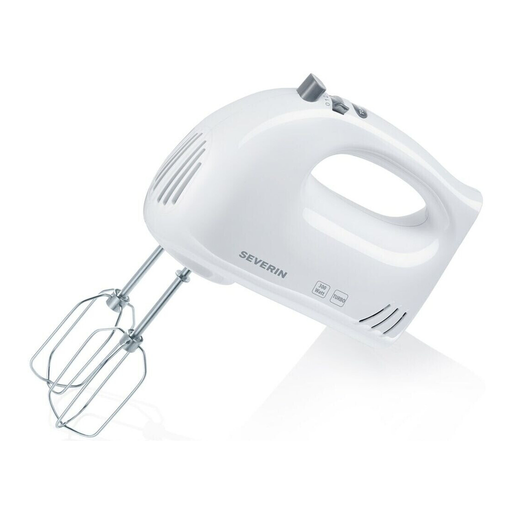
Why this product is a good match: Five speed settings, a turbo function, two beaters and two dough hooks cover the typical baking tasks you’ll tackle at home.
It focuses on the attachments you’re likely to use regularly, rather than adding extras for the sake of it. The release button makes changing attachments easier.
300-watt motor, five speed settings plus turbo, stainless steel beaters and dough hooks.
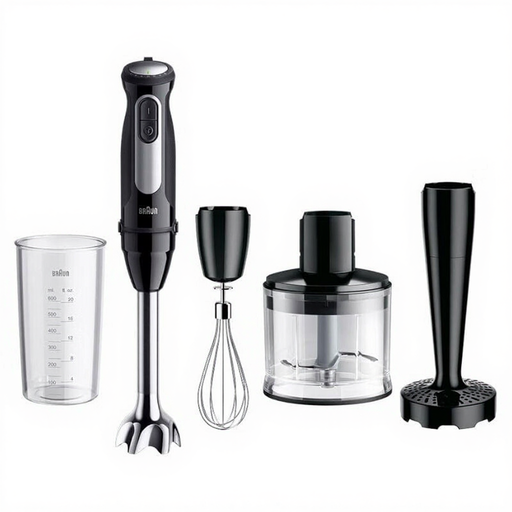
Why this product is a good match: Its 25 speed settings plus turbo make it easy to fine-tune the consistency of sauces, purées, smoothies and light mixtures.
Its speed control offers more than a simple turbo setting. Removable parts identified as dishwasher-safe make cleaning easier.
1,000-watt motor, 25 speed settings plus turbo, with a mixing beaker and whisk included.
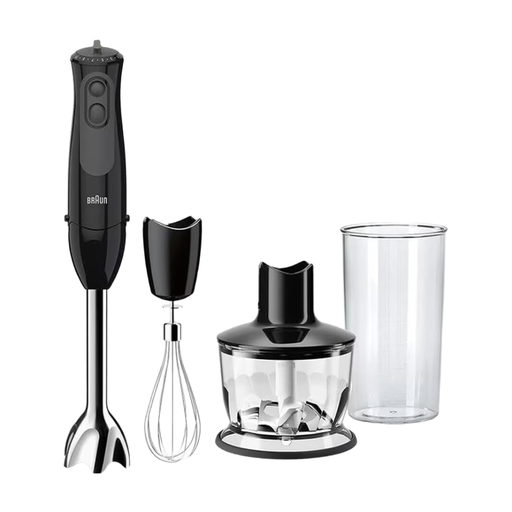
Why this product is a good match: The set combines a blending foot, whisk and 500 ml chopper for soups, dips, herbs and smaller quantities of ingredients.
Each attachment is designed for specific tasks. The chopper won’t replace a food processor, but it can handle smaller portions.
900-watt motor, 11 speed settings plus turbo, and dishwasher-safe attachments according to the product information.
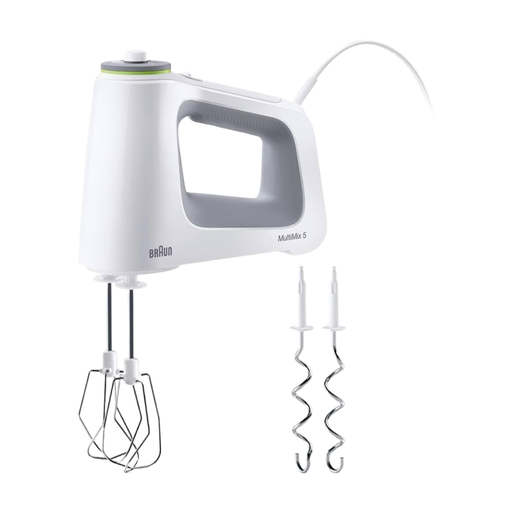
Why this product is a good match: Two beaters and two dough hooks make it well suited to households that regularly bake cakes and prepare creams and doughs.
It focuses on mixing and kneading. Stepless VarioControl speed adjustment gives you finer control than a few fixed settings.
700-watt motor, nine speed settings plus turbo, and dishwasher-safe attachments according to the manufacturer.
We’ve put together a complete, regularly updated list of products that meet these strict selection criteria and the safety requirements applicable in the EU.
For whipping cream, whisking egg whites and making light cake mixtures, models rated at 300 to 500 watts are often enough. If you regularly work with dough or want a versatile appliance, a more powerful mixer rated at 700 watts or more may be a better fit. Attachments, gearing, speed control and the permitted operating time are still important factors.
Its lifespan depends on how often you use it, the quantity of dough, how you clean it and how you store it. Overloading it with very stiff mixtures, running it continuously for too long or cleaning it incorrectly can put strain on the motor or attachments. Always follow the instructions in the relevant manual.
A hand mixer is usually only used for a few minutes at a time. Its actual energy consumption depends on its power rating and how long it runs. A model with a higher wattage will generally use more electricity over the same period, but it may not need to run for as long. For everyday use, choosing an appliance that suits your needs is more important than going for the highest number on the rating plate.