
Lieferung heute & morgen

Qualitätsgarantie

Willkommens-Angebote freischalten: KOSTENLOSE Lieferung | Bis zu 80 % RABATT | Kostenlose 30-Tage-JoyPlus-Testphase
App herunterladen
A hand mixer is one of those kitchen appliances that regularly comes into its own when baking. It whips cream, mixes cake batter and, depending on the attachments, can also knead heavier mixtures. However, electric hand mixers vary considerably when it comes to motor power, weight distribution, attachments and cleaning.
Anyone who focuses only on a high wattage or a large number of speed settings can overlook important details. Three common buying patterns are particularly likely to lead to disappointment:
For occasional mixing of pancake batter or cream, models in the region of around 300 to 350 watts are often sufficient. If you regularly prepare cake batter, buttercream or firmer doughs, you may benefit from an appliance with 450 to 700 watts.
However, wattage is not the only measure of quality. You should also look for:
A hand mixer with a turbo function provides extra speed for short periods. It does not replace a suitable standard speed and should not be used continuously.
A hand mixer with beaters is designed for cream, egg whites, creams and light batters. For firmer mixtures, two dough hooks are useful. Before buying, check whether both types of attachment are included and what material they are made from.
Stainless-steel attachments are durable for everyday kitchen use and are generally easy to clean. If the hooks have a coating, follow the manufacturer’s care instructions to prevent damage to the surface.
A reliable release mechanism is also important. An eject button or EasyClick system makes changing attachments easier, but it should only be operated when the appliance is switched off and unplugged from the mains.
A hand mixer is usually moved freely over the bowl while mixing. This means that not only the overall weight is relevant, but also how that weight is distributed. A vertically positioned motor can distribute the strain on your hand differently from a classic housing design.
Practical features include:
When you see the description dishwasher-safe hand mixer, always read the product details carefully. For the recommendations below, dishwasher-suitability refers to the removable parts, not the motor housing.
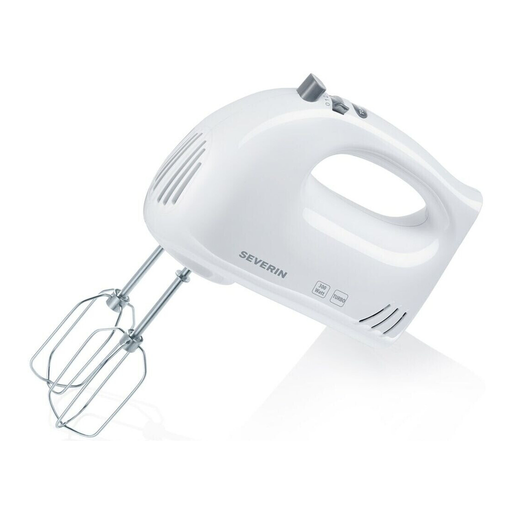
Why this product suits this profile: Five speed settings, a turbo function and two types of attachment cover typical baking and cooking tasks without relying on additional features.
The specifications are clearly stated: a 300-watt motor, five settings plus turbo, as well as stainless-steel beaters and dough hooks.
Ergonomic handle, eject button and compact housing for everyday applications.
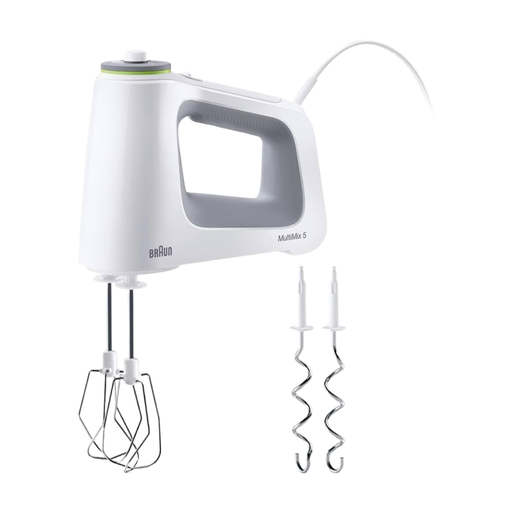
Why this product suits this profile: This model combines a 700-watt motor with continuously variable VarioControl and a design that distributes the weight over the bowl.
As well as its power, the controls and maintenance requirements are clearly described: nine continuously variable speeds, turbo, EasyClick and removable dishwasher-safe parts.
700-watt motor, soft-grip handle, two beaters and two stainless-steel dough hooks.
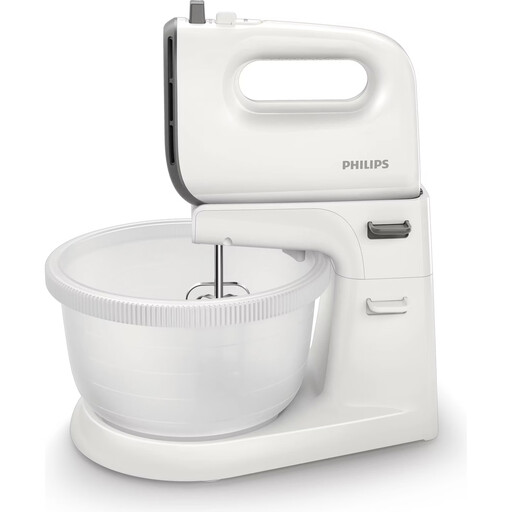
Why this product suits this profile: The combination of a 450-watt motor, supplied 3-litre mixing bowl and automatically rotating bowl is designed for households that bake frequently.
The bowl is included in the package. This means you do not necessarily have to choose a compatible mixing bowl separately.
Conical beaters, turbo function, suction feet and removable dishwasher-safe parts.
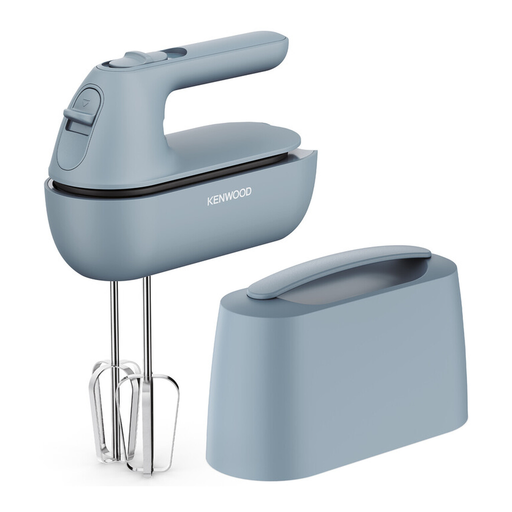
Why this product suits this profile: This model comes with a storage case featuring cable storage, making it suitable for kitchens where attachments need to be kept neatly organised.
The attachments do not have to be left loose in drawers: the case, clip and cable compartment are included as a storage solution.
Five speed settings with slow start, two beaters, two dough hooks and removable dishwasher-safe parts.
We have put together a complete, regularly updated list of products that fully meet these strict selection criteria and the safety regulations applicable in the EU.
When working with dry ingredients, always start on a low setting. This creates less flour dust and distributes the mixture more evenly. Keep your hands, hair, clothing and kitchen utensils away from the rotating beaters and dough hooks.
Before changing any attachment, switch off the appliance and unplug it from the mains. After use, the removable parts can be cleaned in warm soapy water or in the dishwasher, according to the manufacturer’s instructions. Wipe the motor housing only with a slightly damp cloth.
For light tasks, 300 to 350 watts are often sufficient. For frequent use with firm batters or dough, models with 450 to 700 watts offer more power reserve. The key factor remains the combination of motor, attachments, speed control and ease of use.
Its service life depends on use, cleaning, load and storage. Overloading, running the appliance for long uninterrupted periods and allowing liquid to enter the motor housing can shorten its functional life. Always follow the instructions provided by the relevant manufacturer.
A hand mixer is usually operated for only a few minutes per use. Actual consumption depends on the wattage and running time. Higher power does not automatically mean higher overall consumption if the appliance completes a task more quickly. The decisive factor is the actual length of use.