Lemon cake bakers
You want to make your cake batter in a bowl and add the ingredients at different speeds as you work through each stage of the recipe.


For the lemon cake batter described here, a hand mixer with suitable beaters and easy-to-adjust speed settings is a good starting point. Dr. Oetker’s lemon cake recipe adds the ingredients in several stages, mixing the flour and lemon juice in briefly at a medium speed. Weight, grip and cleaning become more important if you mix for longer or want to make cleaning easier. Dough hooks and the stated quantities matter most if you also make firmer doughs.
You want to make your cake batter in a bowl and add the ingredients at different speeds as you work through each stage of the recipe.
You want to put the appliance, cable and attachments away easily after baking, and care about weight and ease of use while mixing.
You want to use the same hand mixer for firmer doughs too, so you compare the attachments and the quantities specified for each model.
For lemon cake batter, start by checking the beaters and how easy the speed settings are to use. Dr. Oetker’s recipe involves several mixing stages; weight, cleaning and any extra attachments can then help you choose a model that suits your day-to-day needs.
| What matters | What to look for | Who it matters most to |
|---|---|---|
| Mixing cake batter with control | Check that beaters are included and that the low, medium and higher speed settings are easy to use. | If I add ingredients in stages as the recipe instructs, I want to be able to choose the right speed. Around 42% of consumers put control while mixing first. |
| Ease of use and storage | Compare the weight, grip, cable management and options for storing the appliance and attachments together. | If you hold the mixer while mixing and have limited drawer space, ease of use and storage are especially important. Around 25% of consumers prioritise these features. |
| Easy-to-clean attachments | Check the care instructions for each beater and distinguish them from those for the motor unit. | If I want to minimise hand-washing after baking, the care instructions for the attachments I’ve used are key. Around 17% of consumers put easy cleaning first. |
| Other types of dough | Check for dough hooks, the stated quantities for the type of dough you want to make, and the instructions in the manual. | If you want to make firmer doughs as well as cake batter, you’ll need the right attachments and clear guidance on quantities. Around 16% of consumers prioritise this added versatility. |
For the cake batter described here, the more immediate things to check are whether the beaters are suitable and whether you can control the speed. Wattage alone doesn’t tell you how well the cake will turn out.
Start by comparing the attachments, speed control and ease of use. Check guidance on firmer doughs if you actually plan to make them.
Manufacturer guidance varies by model and attachment. Philips does not list any dishwasher-safe parts for the HR3741/00; Bosch says that parts of the MFQ4030 are dishwasher-safe.
Before cleaning, check the care instructions for the exact model number and each attachment.
If the parts you’ve used are not approved for the dishwasher, you’ll need to wash them by hand.
Kenwood lists stainless-steel kneaders for the QuickMix Go HMP40.000GY, while a similarly named Joybuy product description lists coated aluminium dough hooks. Model variants and attachments can therefore affect your choice.
Before buying, compare the full model number, what’s included and the material specifications for the exact version.
You use the mixer to prepare the cake. Whether the cake needs to be kept chilled during transport depends instead on the ingredients and whether it has a potentially perishable topping.
Plan transport and storage separately from your hand mixer purchase. The Federal Institute for Risk Assessment recommends keeping perishable foods chilled when you’re out and about.
If the cake contains perishable ingredients, you may need a separate way to keep it chilled in transit.
The Styline MFQ4030 is an example of a hand mixer supplied with beaters, dough hooks and model-specific quantity guidance.
The 5000 Series HR3741/00 is a useful comparison point for beaters, speed settings and the stated appliance weight.
According to the manufacturer, the 3Mix 9000 GN9101 is also designed for firmer doughs and comes with beaters and dough hooks.
The QuickMix Go HMP40.000GY is designed so that the appliance and attachments can be stored together.
The MultiMix 5 HM 5100 is worth comparing if the weight distribution described by the manufacturer matters to you while mixing.
The products below are hand mixers for cake batter. Depending on the model, they may also offer combined storage, additional dough-hook attachments or different care requirements.
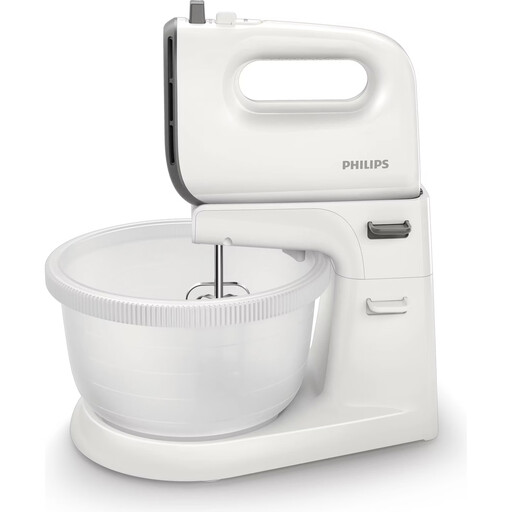 No image available
For cake batter that involves several mixing stages, the product description lists variable speeds and double beaters.
Described as having an automatically rotating 3-litre bowl, a turbo function, an eject button and removable dishwasher-safe parts.
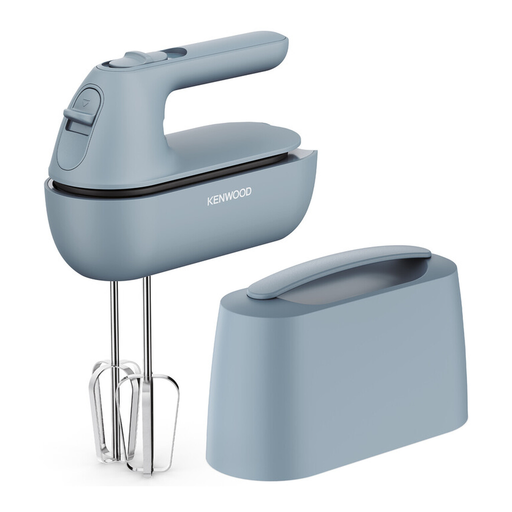 No image available
For cake batter and limited storage space, the product description lists a slow start and a storage solution for the appliance and attachments together.
Described as coming with beaters, five speeds and dishwasher-safe mixing attachments.
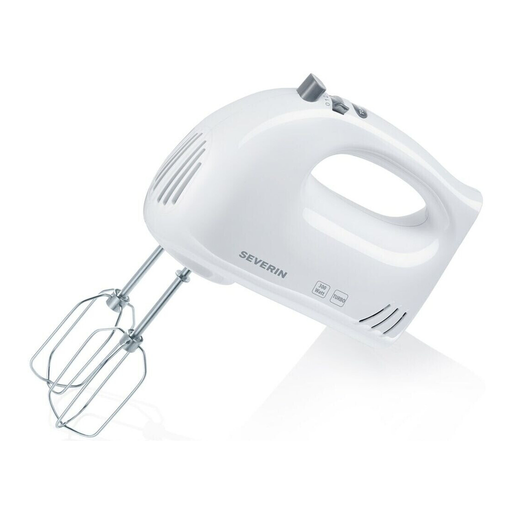 No image available
For cake batter and other doughs, the product description lists beaters and dough hooks.
Described as having approx. 300 W, five speeds, a turbo function, two beaters, two dough hooks and a stated weight of 798 g. It also has an eject button and an ergonomic handle.
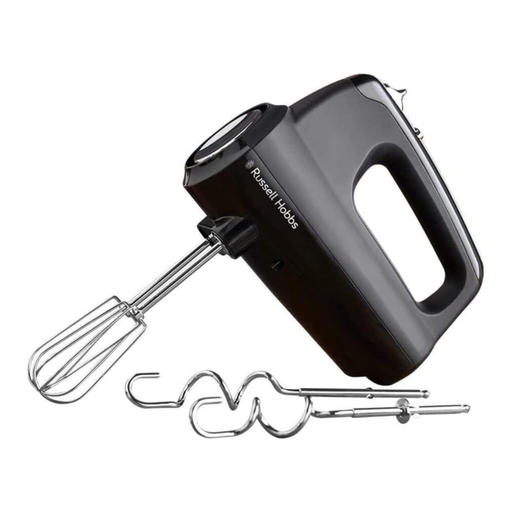 No image available
For cake batter that needs mixing at different speeds, the product description lists two beaters.
Described as having five speeds, a turbo function, an eject button, and dishwasher-safe beaters and dough hooks. The appliance can be stood upright.
For the lemon cake batter described here, you’ll need beaters and easy-to-use speed settings. Dr. Oetker’s recipe mixes the eggs at a high speed, then adds the flour and lemon juice in portions, mixing briefly at a medium speed. Dough hooks aren’t needed for these steps.
It depends on the exact model and attachment. Bosch describes parts of the MFQ4030 as dishwasher-safe; Philips does not list any dishwasher-safe parts for the HR3741/00. Always follow the care instructions for the specific version.
This depends particularly on the topping and filling. The Federal Institute for Risk Assessment recommends keeping perishable foods chilled when you’re out and about; for storing them in the fridge, it specifies 2 °C to no more than 7 °C. Assess the ingredients separately from your choice of mixer.
Your statutory rights against the seller are separate from any voluntary guarantee. The Consumer Advice Centre explains that if a product is faulty, the first options to consider are repair or replacement. Check any additional guarantee terms separately.
No. The CE marking is not the same as an independent safety certification mark. According to the European Union, it means the manufacturer declares that the product complies with the applicable EU requirements; the Federal Institute for Occupational Safety and Health also distinguishes CE marking from a test mark.
No. Electrical waste must be collected separately from unsorted household rubbish. The German Environment Agency lists recycling centres as a way to return old appliances; retailers’ take-back terms vary.