
Lieferung heute & morgen

Qualitätsgarantie

Willkommens-Angebote freischalten: KOSTENLOSE Lieferung | Bis zu 80 % RABATT | Kostenlose 30-Tage-JoyPlus-Testphase
App herunterladen
A hand saw for wood may seem straightforward at first glance: choose the blade, check the handle and get started. In practice, however, models differ considerably in terms of tooth pattern, cutting length, materials and safety. A blade that is too short makes sawing boards more difficult, while a coarse pruning saw is imprecise for fine woodworking.
Three common purchasing mistakes in particular can lead to unnecessary expense:
If you are looking for a manual saw for the garden, camping or workshop, you should therefore first compare the technical specifications with the intended use.
The tooth pattern affects how quickly and controllably a saw can be guided through the material. A coarse tooth pattern with fewer teeth per inch, often referred to as TPI, is more suitable for branches and fast cuts. A finer tooth pattern allows for more controlled cutting when working on thinner boards or carrying out more precise tasks.
The specifications should always be considered in relation to the blade length. A 50-cm wood saw with 7 TPI is designed for medium-sized to larger woodworking tasks. By contrast, a compact pruning saw with a blade length of around 19 cm is suitable for tree care, smaller branches and mobile use.
A saw with a bi-metal blade combines different metals. According to the product description, the WORKPRO model has high-speed steel teeth, while the back is made from a flexible alloy. This construction is designed to combine tooth hardness with flexibility.
Other models use steel or hardened SK-5 carbon steel. The FLORA GUARD model is specified as having a hardened SK-5 blade. However, the material alone does not guarantee a particular cutting performance; tooth shape, manufacturing quality and correct use are also important. Buyers should therefore look beyond terms such as “premium” and check the specific material details and intended use.
An ergonomic handle should remain secure and comfortable in your hand, even during longer tasks. TPR, or thermoplastic rubber, is used as the handle material on several of the models listed here. A non-slip surface can improve control, but it does not replace a stable stance and suitable protective equipment.
Portability is also important for gardeners and landscapers. A folding saw protects the teeth when folded and fits into a tool bag, rucksack or, in some cases, onto a belt. A long hand saw, on the other hand, offers greater reach and a longer cutting stroke, but requires more storage space.
The following models are matched to different requirements. The information is based on the respective product descriptions and does not replace checking material compatibility before purchase.
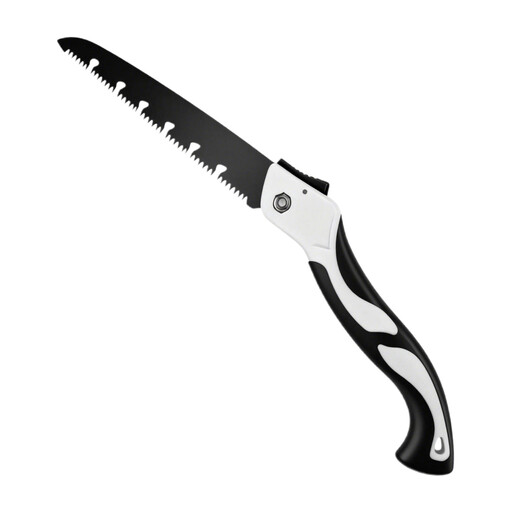
Why this product suits this profile: The 190-mm blade and folding design are suitable for occasional garden tasks, smaller woodworking projects and mobile use when camping.
The folding function protects the teeth during storage. Before sawing, the blade is unfolded and locked in place, preventing a loose blade.
Coarse teeth for wood and branches; soft, non-slip handle and compact storage.
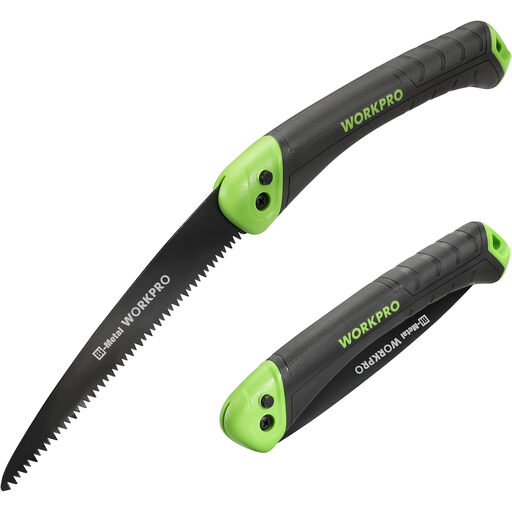
Why this product suits this profile: The stated bi-metal construction, adjustable blade position and TPR handle will appeal to users who look for several technical features in a garden saw.
The product data specifies the blade material, locking mechanism and dimensions. At 230 mm when folded and 410 mm when unfolded, it is easier to assess the storage space required.
Bi-metal blade with high-speed steel teeth; adjustable angle and safety-locking system.
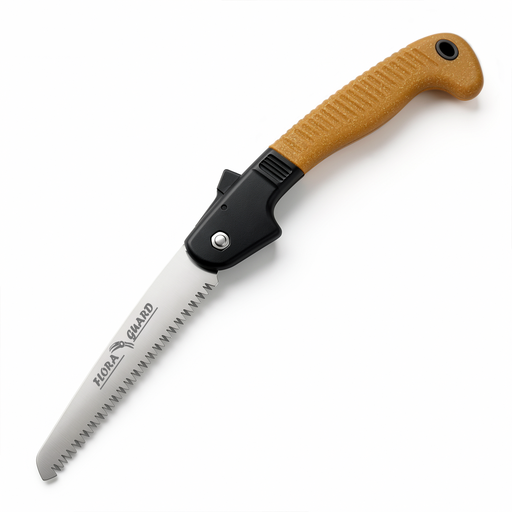
Why this product suits this profile: According to the product description, this model is designed for garden maintenance, bushcraft, camping, hiking and cutting wood or branches.
The blade is stated to be made from hardened SK-5 carbon steel. The safety lock prevents the saw from remaining open when folded.
7-inch blade, folding construction and soft cork TPR handle; cleaning and light oiling are recommended for maintenance.
We have put together a complete, regularly updated list of products that fully meet these strict selection criteria and the safety regulations applicable in the EU.
Before every use, check the blade for rust, bent sections, damaged teeth and a secure connection to the handle. With a folding saw, the locking mechanism must engage fully. Safety glasses and suitable gloves reduce the risk posed by wood chips and sharp edges. Saw with a stable stance and keep a sufficient distance from your hands and body.
After use, remove wood dust, resin and moisture. A dry cloth is sufficient for basic cleaning; with steel blades, a thin layer of oil can reduce contact with moisture. Store the saw in a dry place and ensure that children cannot access the blade. Blunt or damaged blades should no longer be used.
For thicker branches, a pruning saw or tree saw with coarse teeth is generally more suitable than a fine-toothed wood saw. The branch diameter, blade length and ability to guide the saw safely are key considerations. When working at greater heights, you should also check whether a specialist telescopic saw is required.
A folding saw can be used for smaller boards and pieces of wood, provided the manufacturer specifies wood as a suitable material. However, its shorter blade limits the cutting length. For longer boards or regular board-cutting tasks, a traditional hand saw with a longer blade is often more practical.
Service life depends on the type of wood, amount of cutting, pressure applied, maintenance and storage. Resin, moisture and sideways loads can put additional strain on the blade. Regular cleaning, dry storage and an even cutting motion without excessive pressure can help preserve the hand saw’s useful life.