
Lieferung heute & morgen

Qualitätsgarantie

Willkommens-Angebote freischalten: KOSTENLOSE Lieferung | Bis zu 80 % RABATT | Kostenlose 30-Tage-JoyPlus-Testphase
App herunterladen
A hand saw is ready to use straight away, without relying on a battery, mains socket or charger. However, not every model delivers clean cuts or comfortable handling. The key is choosing a design, tooth configuration and blade material that suit the task at hand. Firewood, boards, branches, plastic and soft metals each have different requirements.
This buying guide helps DIY enthusiasts, garden owners, keen gardeners and outdoor users avoid common purchasing mistakes and choose a manual saw based on clear, easy-to-understand criteria.
Descriptions such as “sharp”, “fast” or “for all materials” reveal little about a saw’s actual suitability. Coarse teeth can work quickly on branches and rough timber, but they do not automatically leave a fine cut. For indoor woodworking, specifications such as teeth per inch (TPI) are more useful.
A short folding saw is easy to transport, but may require more strokes when cutting thicker branches. A long wood saw offers a greater cutting length, but is less compact. Before buying, you should therefore consider the material’s diameter and the amount of working space available.
A slippery handle, an unprotected blade or a lock that does not engage securely can make a saw more difficult to use. With a folding saw, the blade should lock firmly in place when open. A fixed garden saw, on the other hand, needs a secure cover or a suitable storage location.
A longer blade is not automatically better. For carrying in a rucksack or toolbox, a portable saw with a folding mechanism is usually more practical.
Hardened steel, SK5 steel and bi-metal constructions are commonly used for different applications. With bi-metal blades, hard teeth are combined with a more flexible backing material. For a saw for gardening and camping, this can provide a well-balanced combination of flexibility and durability.
The manufacturer’s specific intended-use information remains important. A saw for wood and branches should not be used on metal unless this is expressly permitted. Conversely, a small bi-metal hacksaw may be less suitable for woodworking than a specially designed hand saw for wood.
A TPR, rubber or cork handle can improve grip security. A knuckle guard reduces contact between your hand and the front section of the blade. With folding saws, you should also check the safety lock.
After each use, remove resin, dust and moisture. The blade should be stored dry and, on models suitable for this, lightly oiled from time to time. Blunt, bent or damaged blades should no longer be used.
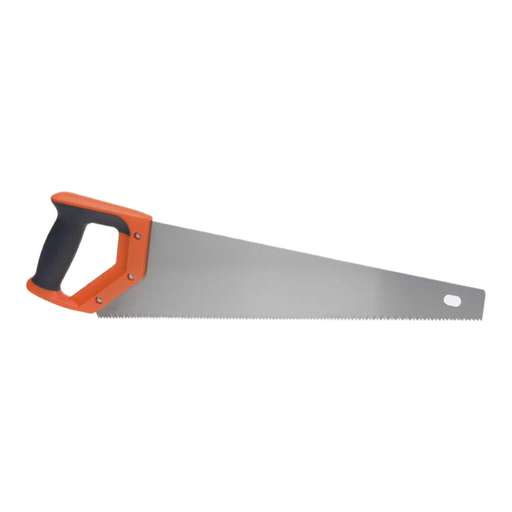
Why this product suits this profile: The 50-cm blade and seven teeth per inch are designed for medium-sized to larger woodworking tasks. The TPR handle supports controlled guidance during DIY projects.
The blade length, tooth configuration and handle material are clearly specified. A protective cover makes safe storage easier.
50 cm length, steel blade, TPR handle and a weight of 0.353 kg.
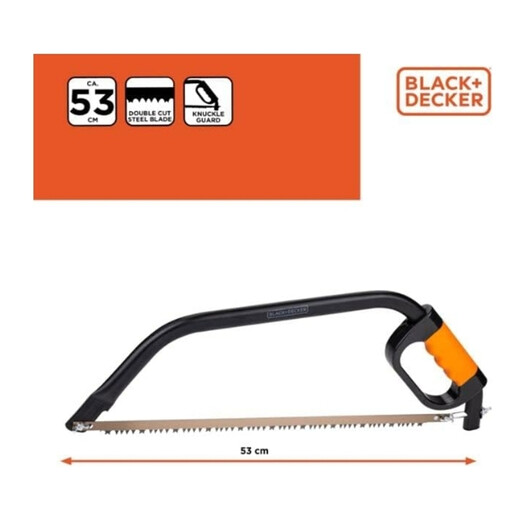
Why this product suits this profile: The 53-cm steel construction is designed for longer applications. The knuckle guard and comfort handle make it easier to use for overhead work or extended periods.
The product details specify the blade material, frame length, weight and knuckle guard, rather than making only general performance claims.
Hardened, double-ground steel blade, 53 cm frame length and a weight of 561 g.
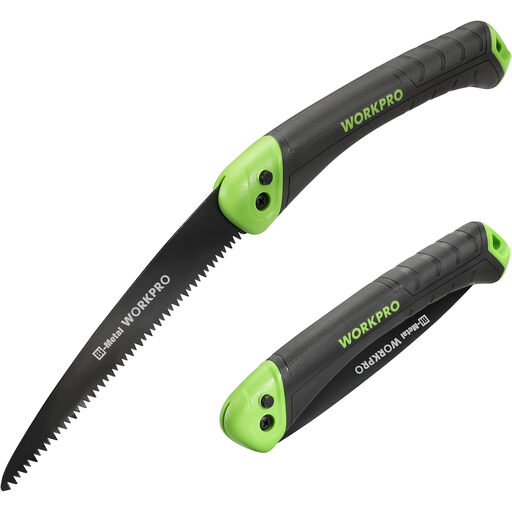
Why this product suits this profile: The adjustable blade position is suitable for different cutting angles. Combined with its folding design, the saw is well suited to garden maintenance, landscaping and outdoor activities.
The blade can be locked securely and positioned at several angles. This combines a flexible design with a specific safety mechanism.
Bi-metal blade, 230 mm folded or 410 mm unfolded length, TPR handle and belt loop.
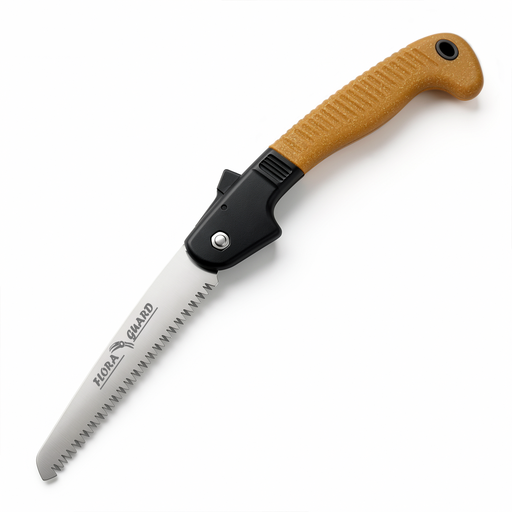
Why this product suits this profile: The compact folding design is suitable for a rucksack, vehicle or tool bag. The 7-inch blade and its purpose-designed teeth are suitable for cutting smaller pieces of wood and branches.
The safety lock prevents the saw from remaining open unintentionally. The care instructions recommend drying and safe storage.
Hardened SK5 carbon steel, cork or TPR handle and folding construction.
We have put together a complete, regularly updated list of products that fully meet these strict selection criteria and the safety regulations applicable in the EU.
Before sawing, mark the cutting line and secure the workpiece firmly. The following basic rules apply while working:
Different blades may be required for metal, plastic and wood. A small bow saw or bi-metal hacksaw may be more suitable for pipes and soft metals than a conventional garden saw.
For branches, a pruning saw with coarse teeth and a sufficient blade length is a practical choice. If you regularly work in different positions, an adjustable or folding tree-pruning saw can make handling easier. The branch thickness should be compatible with the intended cutting capacity.
Its lifespan depends on how often it is used, the type of wood, dirt and storage conditions. Resin and moisture can affect the blade. Cleaning, drying and protected storage help preserve its useful life. If the teeth are blunt or damaged, the blade should be replaced unless the model is designed to accept a replacement.
A manual saw uses no electricity or batteries while in operation. Ongoing costs may include replacement blades, maintenance oil or protective equipment. Before buying, it is therefore worth checking whether the blade can be replaced and which spare parts are available.