
Lieferung heute & morgen

Qualitätsgarantie

Willkommens-Angebote freischalten: KOSTENLOSE Lieferung | Bis zu 80 % RABATT | Kostenlose 30-Tage-JoyPlus-Testphase
App herunterladen
Choosing the right hand tool can be crucial to the success of a project, whether it's a simple household repair or a complex task in the workshop. However, the market is filled with offers that seem attractive at first glance but quickly prove to be inadequate. As your Joybuy Product Recommendation Officer, I will help you identify the typical pitfalls and make an informed decision based on objective criteria.
Many buyers invest in tools that fail to meet their expectations. Certain marketing promises and product designs often lead to disappointment. Here are two common problems:
To avoid a bad purchase, it's wise to focus on verifiable technical features rather than advertising claims.
The material composition is the foundation for the durability and resilience of hand tools. Look for the following labels:
With mechanical tools, the details often determine their functionality in practical use.
A good tool should feel secure in your hand. Handles made from dual-component materials, often a combination of hard plastic (PP) and soft, thermoplastic rubber (TPR), provide a firm grip and dampen vibrations. A well-shaped handle on a hammer or pliers prevents fatigue and allows for more precise force transfer.
Based on these objective criteria, we have selected a few products suitable for specific requirement profiles.
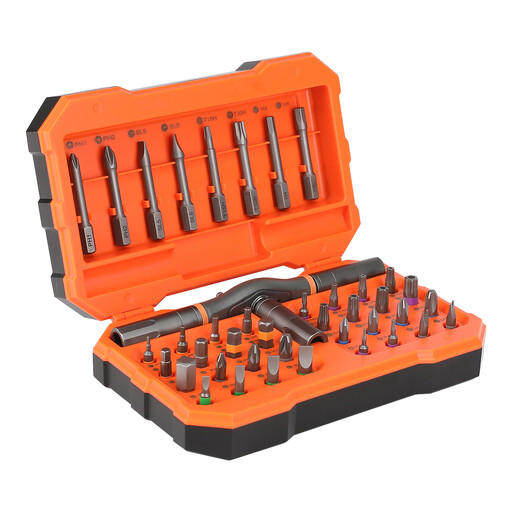
Why it's a good fit: Ideal for everyday tasks like furniture assembly, bicycle maintenance, or electronics repair. This compact tool set offers a wide variety of bits for different screw profiles.
Instead of a case full of filler items, this set focuses on the essentials: a functional ratchet handle and 40 bits made from S2 tool steel. The quality of the components is prioritised over sheer quantity.
The multi-functional handle can be used as a ratchet screwdriver and a small wrench. The magnetic bit holder makes swapping bits quick and easy.
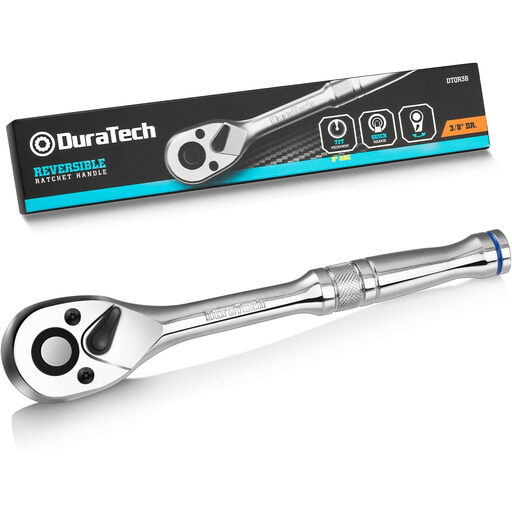
Why it's a good fit: For users seeking a reliable and versatile core tool for more demanding projects, especially in automotive and machinery maintenance.
This professional-grade tool relies on clear material specifications: the head is made of high-strength CR-MO (Chrome Molybdenum) steel, designed for high torque. It's a single, high-quality tool instead of a set of questionable quality.
The 3-in-1 design combines the three most common drives (1/4", 3/8", 1/2") in one handle. The 72-tooth mechanism, with a swing arc of just 5 degrees, allows for efficient work even in tight spaces.
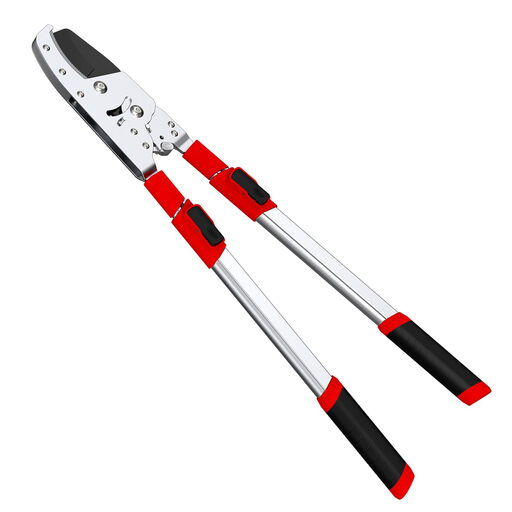
Why it's a good fit: A specialised garden tool for demanding cutting jobs. Ideal for trimming thick, dry branches that are too much for standard pruning shears.
This tool solves the problem of insufficient leverage and cutting power. The 4-stage ratchet mechanism and the blade made of heat-treated, high-carbon steel are clear performance features that go beyond vague promises.
The telescopic handle, adjustable from 72 cm to 105 cm, allows you to reach higher branches without a ladder. The ratchet mechanism multiplies your applied force, enabling cuts on branches up to 50 mm in diameter.
We have compiled a complete, up-to-date list of products that fully meet these strict selection criteria and safety standards.
Look for specific labels like CR-V (Chrome Vanadium) for high durability in wrenches and pliers, or S2 steel for particularly hard and wear-resistant screwdriver bits. Tools without such specifications are often made of simpler carbon steel, which can rust or deform more quickly.
Not necessarily. A large set may contain many tools you will rarely or never use, and their quality is often low. For starters, it is usually more sensible to invest in a smaller but high-quality basic set that includes essential tools like a good hammer, a set of screwdrivers, combination pliers, and a tape measure. You can then selectively expand your collection with specialised tools as the need arises.
Proper care is simple but effective. Clean your tools of dirt and moisture after each use. Store them in a dry place, ideally in a toolbox or on a tool wall. For tools made of non-stainless steel, such as carbon steel, occasionally wiping them with a thin film of oil can help prevent corrosion in the long term.