
Lieferung heute & morgen

Qualitätsgarantie

Willkommens-Angebote freischalten: KOSTENLOSE Lieferung | Bis zu 80 % RABATT | Kostenlose 30-Tage-JoyPlus-Testphase
App herunterladen
A hand tool set can cover a wide range of repair and assembly tasks. However, the number of pieces says little about whether a set is suitable for its intended use. The key factors are the drive size, materials, dimensions, safety markings and suitable storage.
A large case does not always contain the sizes you need. The commonly used intermediate sizes or suitable extensions are often the ones missing. Before buying, check which screws and nuts you actually work with. For vehicle repairs, for example, metric sockets from 4 to 24 mm are practical for many everyday tasks; specialist work may require additional sizes.
Terms such as chrome vanadium steel or alloy steel provide an indication of the construction, but they do not replace checking the tool’s design and finish. Also look for clearly marked sizes, a secure connection between the drive and socket, and a reliable reversing mechanism. A fine-tooth ratchet set can be useful where space for movement is limited, but it is not automatically designed for particularly heavy loads.
A VDE screwdriver set is intended for work on electrical installations, provided that the relevant marking and permitted voltage range are specified. Insulation does not automatically make a tool suitable for every situation. Damaged insulation must not be used, and work on live components should be carried out by qualified professionals.
On a socket set, the drive refers to the square drive size, such as 1/4, 3/8 or 1/2 inch. Small 1/4-inch drives are suitable for compact fasteners and confined spaces. 3/8 inch covers many general maintenance tasks. A 1/2-inch drive is often used for larger nuts and vehicle work.
A combined set can save space when it includes several drive sizes. Even so, check that the sockets are logically distributed across the respective drives and that extensions for recessed fasteners are included.
According to product specifications, a ratchet with 72 teeth often requires only a small return angle of around 5 degrees. This makes it easier to work in confined spaces. A flexible ratchet with a swivelling head can provide additional access options, but it should remain securely in the selected position.
A ratchet is not always the right tool for heavily seized bolts. A breaker bar, also known as a flexible breaking bar, provides greater leverage. The manufacturer’s specified load limit must not be exceeded.
Chrome vanadium steel, or Cr-V for short, is used for many sockets and screwdrivers. More important than the name alone are the correct dimensions, clear markings and controlled use of torque. Non-slip handle materials are helpful, particularly during longer tasks.
A sturdy case with dedicated slots helps prevent sockets from getting lost. With a DIY hand tool set, a clear layout is also useful, as it allows you to find sizes more quickly and return them to their places more easily after use.
For delicate or smooth surfaces, a strap wrench is an alternative to serrated pliers. Rubberised straps can help reduce scratches, but should be protected from sharp edges, high temperatures and excessive loads. A water pump plier measuring 200 mm, on the other hand, is suitable for gripping and holding, not for working on live wires. Its handles are not specified as electrical insulation.
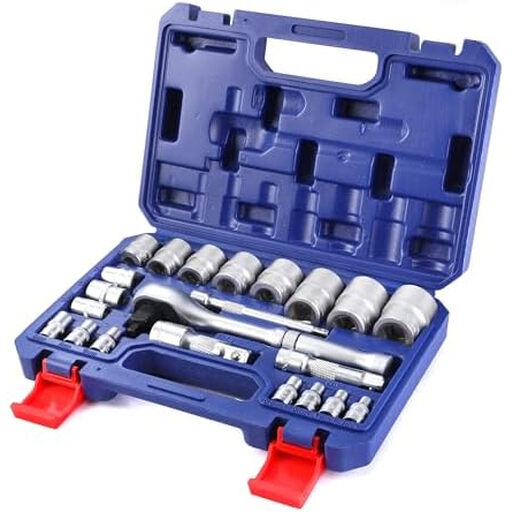
Why this product suits the profile: This set combines three drive sizes in one ratchet handle and covers metric sockets from 4 to 24 mm. It is designed for household tasks, bicycles, appliances and general maintenance work.
The included sizes and three extensions are listed clearly. This lets you check before buying whether the contents match your needs.
72-tooth ratchet, Cr-V steel, 18 metric 6-point sockets and a plastic case.
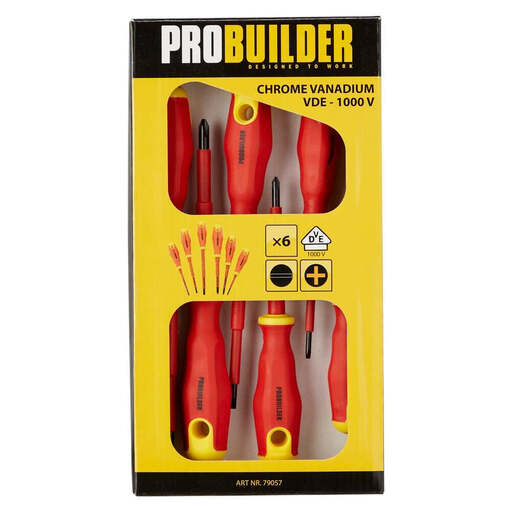
Why this product suits the profile: Electricians and people who regularly carry out installation work receive three slotted and three Phillips screwdrivers with insulated handles.
The product description specifies VDE and GS testing, as well as suitability for up to 1000 V AC. Always check the insulation for damage before use.
Cr-V blades, non-slip soft-grip handles and six clearly marked tools.
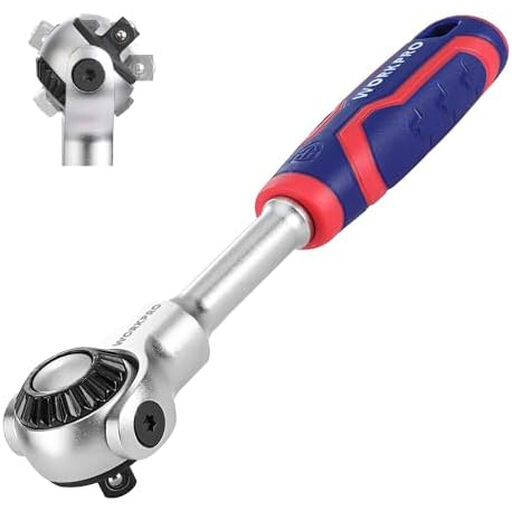
Why this product suits the profile: The swivelling design is aimed at vehicle mechanics and DIY users who often work in hard-to-reach areas.
The 270-degree swivel range and 1/4-inch size are clearly specified. This allows you to assess its suitability for confined spaces in advance.
72 teeth, quick release, 150 mm length and a weight of 140 g according to the product description.
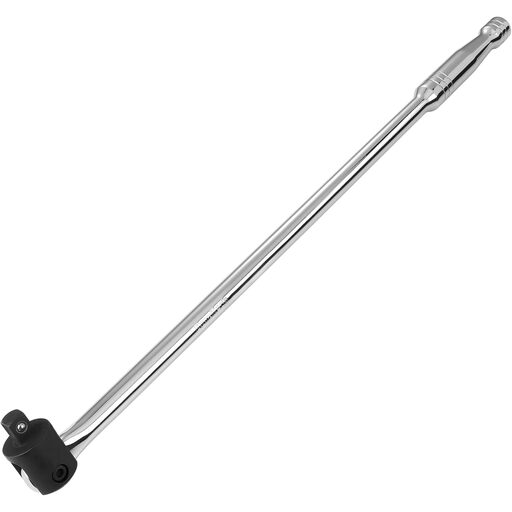
Why this product suits the profile: The 600 mm breaker bar is designed for larger fasteners and vehicle work where additional leverage is needed.
The length, 1/2-inch drive and swivel range of up to 240 degrees are specified. The stated load limit must still be observed.
Alloy steel construction, spring-loaded socket retention and a torque rating of up to 780 Nm stated by the supplier.
We have put together a complete, regularly updated list of products that fully meet these strict selection criteria and the safety regulations applicable in the EU.
For typical assembly tasks, a metric socket set, several screwdrivers, combination or water pump pliers and, where appropriate, a strap wrench are useful. Choosing a range of commonly used sizes is more important than having the greatest possible number of pieces.
Service life depends on the material, load, care and correct use. Tools should be stored in a dry place, cleaned after use and not misused as levers or striking tools. With VDE tools, check the insulation for cracks and cuts before every use.
A versatile set may be sufficient for occasional tasks. For frequent vehicle repairs, a 1/2-inch drive, suitable sockets, extensions and a breaker bar are useful additions. A flexible ratchet can make access easier in confined spaces.