
Lieferung heute & morgen

Qualitätsgarantie

Willkommens-Angebote freischalten: KOSTENLOSE Lieferung | Bis zu 80 % RABATT | Kostenlose 30-Tage-JoyPlus-Testphase
App herunterladen
The selection of a bathroom sink is governed by objective criteria, including available space, material properties, and the planned installation type. These factors define the sink's functionality and how it integrates into the overall concept of the bathroom or powder room. A technical analysis of these parameters is the basis for making an informed decision.
Before purchasing a new bathroom sink, specific technical aspects should be evaluated. These include the material, mounting style, and precise dimensions.
Sanitary ceramic is the predominant material for bathroom sinks. The reasons for this lie in the physical and chemical properties of the material.
A ceramic wash basin is therefore a technically sound and low-maintenance solution.
The installation method directly influences the room's aesthetic and the usability of the vanity area.
Correct sizing is crucial. For a small sink in a guest bathroom, widths of 30 cm to 40 cm and depths of 18 cm to 35 cm are often sufficient. In main bathrooms, larger models with widths from 60 cm can offer more comfort. The mounting height should follow the standard, which is typically between 85 cm and 95 cm from the finished floor to the top edge of the sink in Germany.
The following models have been selected based on their technical specifications and functional design for various applications.
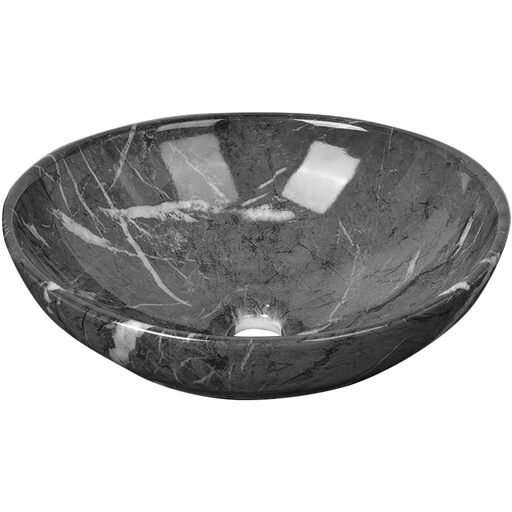
Why we recommend this product: This model combines a classic oval shape with a modern design element of grey stripes. Its compact dimensions of 40.6 x 33 cm make it a suitable option for bathrooms where countertop space must be used efficiently without sacrificing a design accent.
Advantages:
Who it's for: Users looking for a functional countertop sink with a subtle yet distinctive design feature for a modern bathroom.
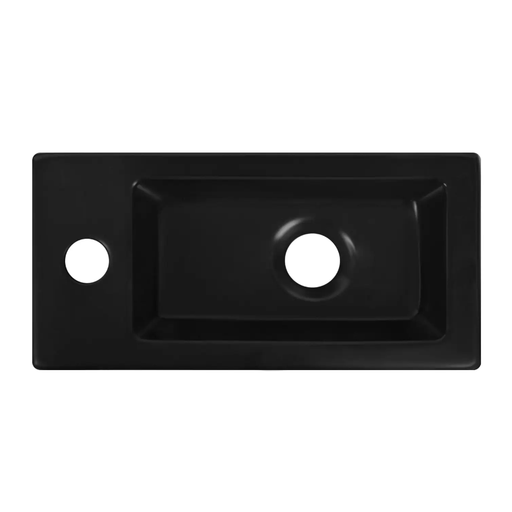
Why we recommend this product: Measuring 36.5 x 18 cm, this wall-mounted sink is a highly space-efficient solution. The side placement for the faucet is specifically designed for narrow layouts. Its matte black finish makes it a statement piece in minimalist or design-focused powder rooms.
Advantages:
Who it's for: Owners and project planners with very limited space, such as small powder rooms, tiny houses, or studio apartments, who need a solution that is both functional and stylish.
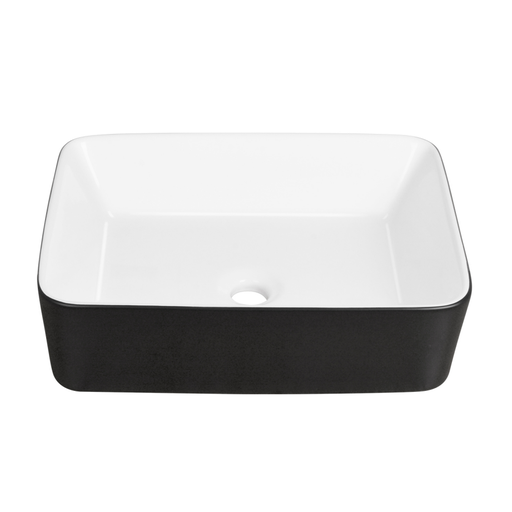
Why we recommend this product: The two-tone design, with a black exterior and white interior, offers a strong visual contrast. With a width of 47.5 cm and a depth of 37.5 cm, it is suitable for standard vanities. The internal basin depth of 10.48 cm is a practical feature that can reduce water splashing.
Advantages:
Who it's for: Users seeking a countertop sink with a striking yet functional design for their main or guest bathroom, who also value practical details like effective splash protection.
If these models don't include the right solution for your project, the market offers a multitude of other designs and configurations. You can find a wider selection of models in our main category for Bathroom Sinks.
1. What is the difference between a countertop sink and an inset sink? A countertop sink sits on top of the vanity like a bowl and is fully visible. An inset sink is installed into the countertop, so its rim is either flush with the surface or sits underneath it. The choice is a matter of aesthetics and ease of cleaning.
2. What is the best material for a powder room sink? For a powder room sink, sanitary ceramic is an excellent choice. The material is robust, scratch-resistant, and very hygienic and easy to clean thanks to its smooth, non-porous glaze. These properties are advantageous in a frequently used but small space.
3. How high should a wall-mounted sink be installed? The standard installation height for sinks in Germany is based on DIN 68935. The standard recommends a height of 85 to 95 cm from the finished floor level to the top edge of the sink. The exact height can be adjusted to the height of the primary users.