
Lieferung heute & morgen

Qualitätsgarantie

Willkommens-Angebote freischalten: KOSTENLOSE Lieferung | Bis zu 80 % RABATT | Kostenlose 30-Tage-JoyPlus-Testphase
App herunterladen
A hand-woven Chindi rug can add visual structure to your living room, bedroom, hallway, home office or child’s room. Cotton rugs also vary considerably in their weave, dimensions, weight and care requirements. If you choose one based on colour or price alone, you could overlook important details.
With handmade rugs, the colour variations, weave pattern and edges may vary slightly. This is typical of Chindi products made from reused strips of cotton. If you expect a completely uniform pattern, you may be disappointed by these distinctive variations.
A 170 x 120 cm rug looks different in a small seating area than a 200 x 140 cm or 230 x 160 cm rug beneath a larger seating group. Before buying, mark out the area you have in mind on the floor using masking tape or newspaper. This helps you check that doors, drawers and walkways will remain clear.
An easy-care rug isn’t necessarily suitable for the washing machine. For the flat-woven rugs featured here, recommendations vary by product and include regular vacuuming, shaking out or spot-cleaning with a damp cloth. Harsh cleaning products can affect cotton fibres and colours.
A cotton rug usually has a pleasantly textile feel and is easy to move around thanks to its relatively low pile weight. A flat-woven rug around 1 cm thick will often fit under doors and furniture with little clearance beneath. However, it offers less cushioning than a deep-pile rug.
Chindi rugs are often made from cotton strips in different colours, creating visible colour variations and a rustic look. Before ordering, check:
Choose dimensions to suit your furniture and walkways:
Product details may list the measurements as height and width, depending on the version. For example, a rug measuring 230 cm long and 160 cm wide is rectangular and needs space in both directions.
A pink rug makes a bold colour statement and can be paired with white, beige, grey or natural wood. A blue-green rug works well with neutral sofas and light wood tones. A grey-and-white rug has a more understated look and suits a wide range of interior styles. A yellow rug can brighten up dark floors or simple furniture.
A non-slip underlay can be useful on laminate, tiled or wooden floors. It isn’t automatically included with every product. The rug edges should also lie flat to avoid creating a trip hazard.
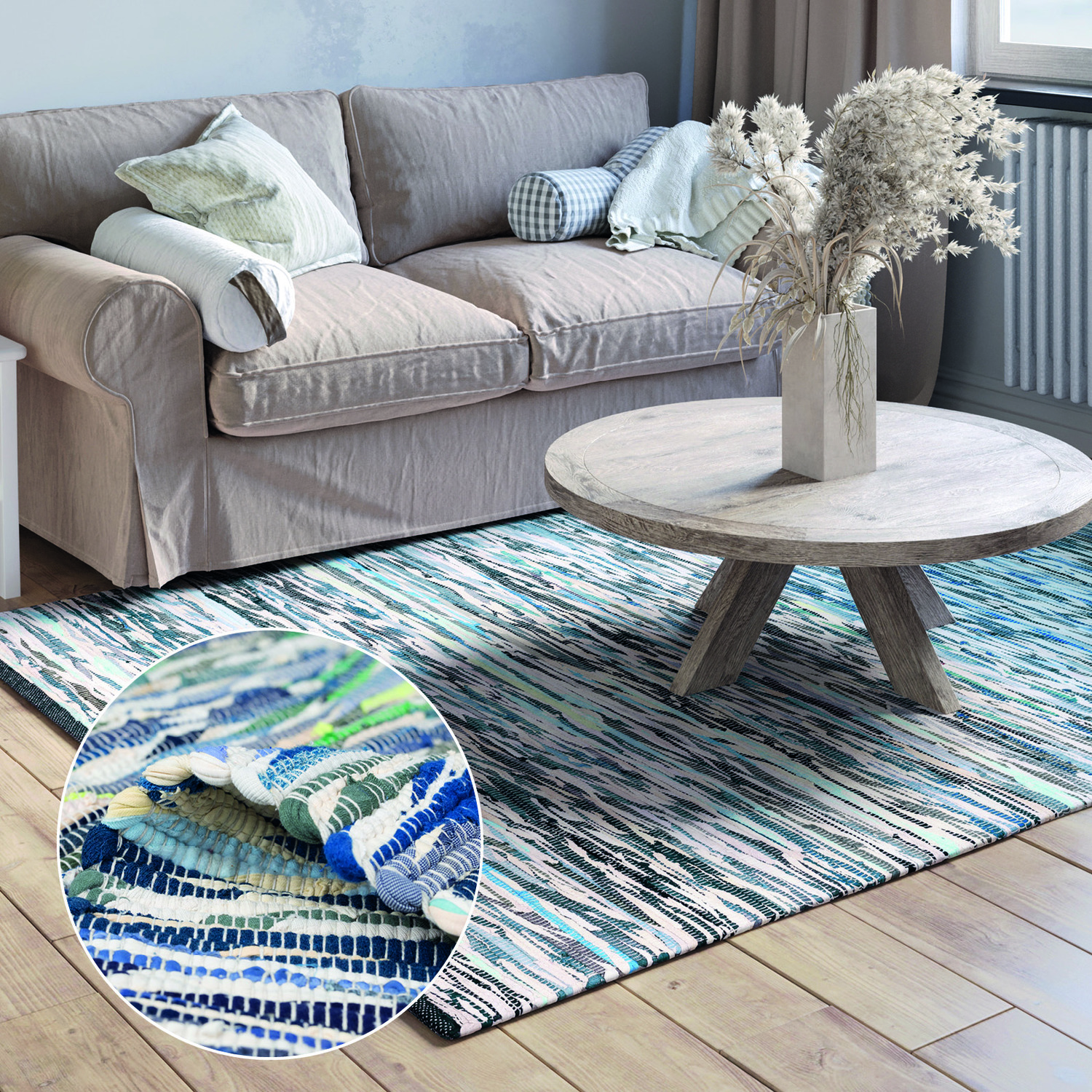
Why this product suits this profile: Its compact rectangular shape works well in smaller rooms, hallways or a limited space beside the bed. With a stated net weight of 2 kg, it’s easy to lay out and move elsewhere.
The clearly stated dimensions help prevent choosing a rug that’s too large for a small space. The grey-and-white mix is less of a commitment than a bold splash of colour.
Rectangular shape, 150 x 80 cm, cotton material and a flat construction with a stated depth of 1 cm.
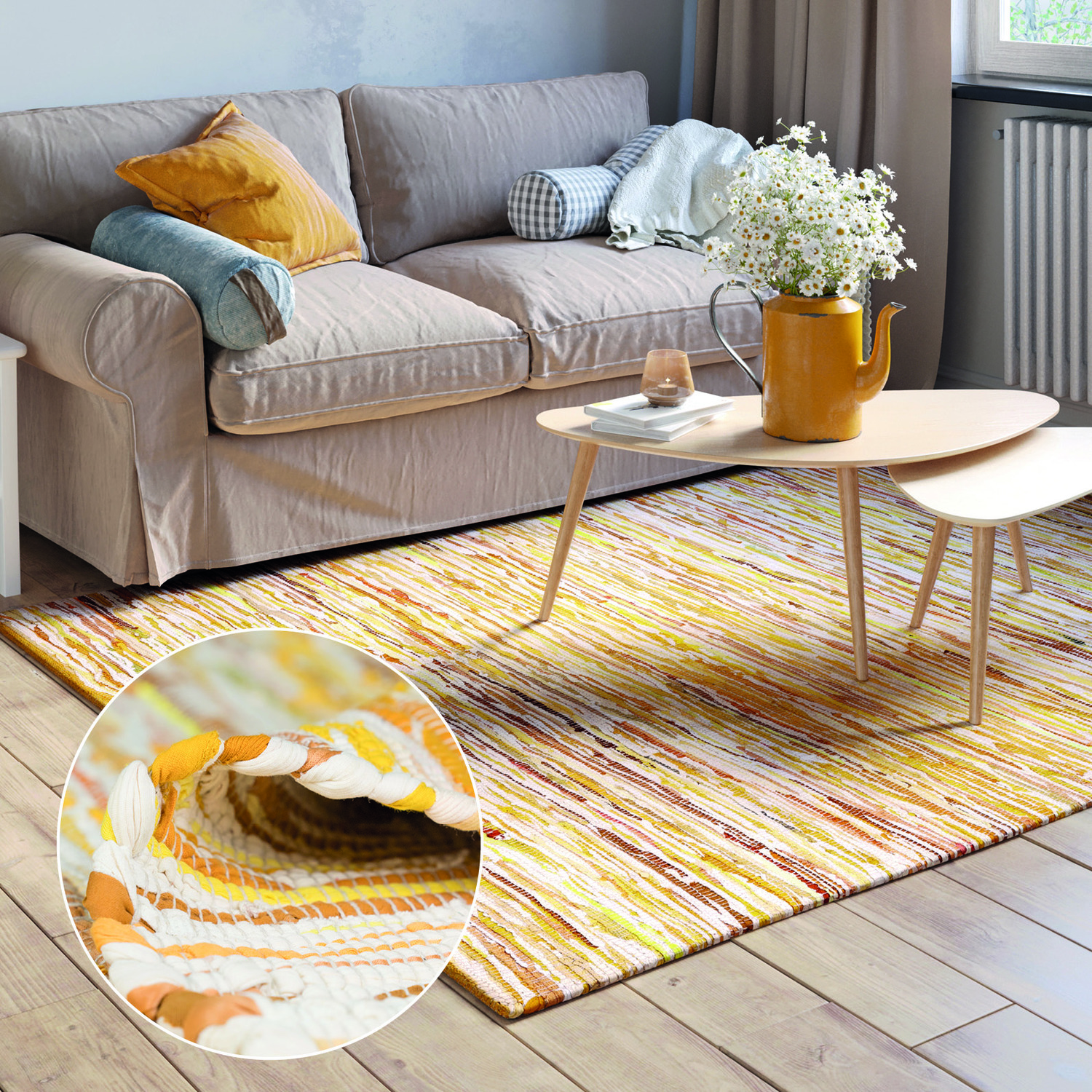
Why this product suits this profile: Its generous size is designed for living rooms or bedrooms with plenty of floor space. The listing specifies 100% recycled cotton, a hand-woven flat weave and Oeko-Tex Standard 100 certification.
The material and care details are clearly specified. The recommendations are to vacuum without a rotating brush and spot-clean with a mild cleaning product.
230 x 160 cm, flat-woven Chindi style, recycled cotton and Oeko-Tex Standard 100 certification, as stated in the product details.
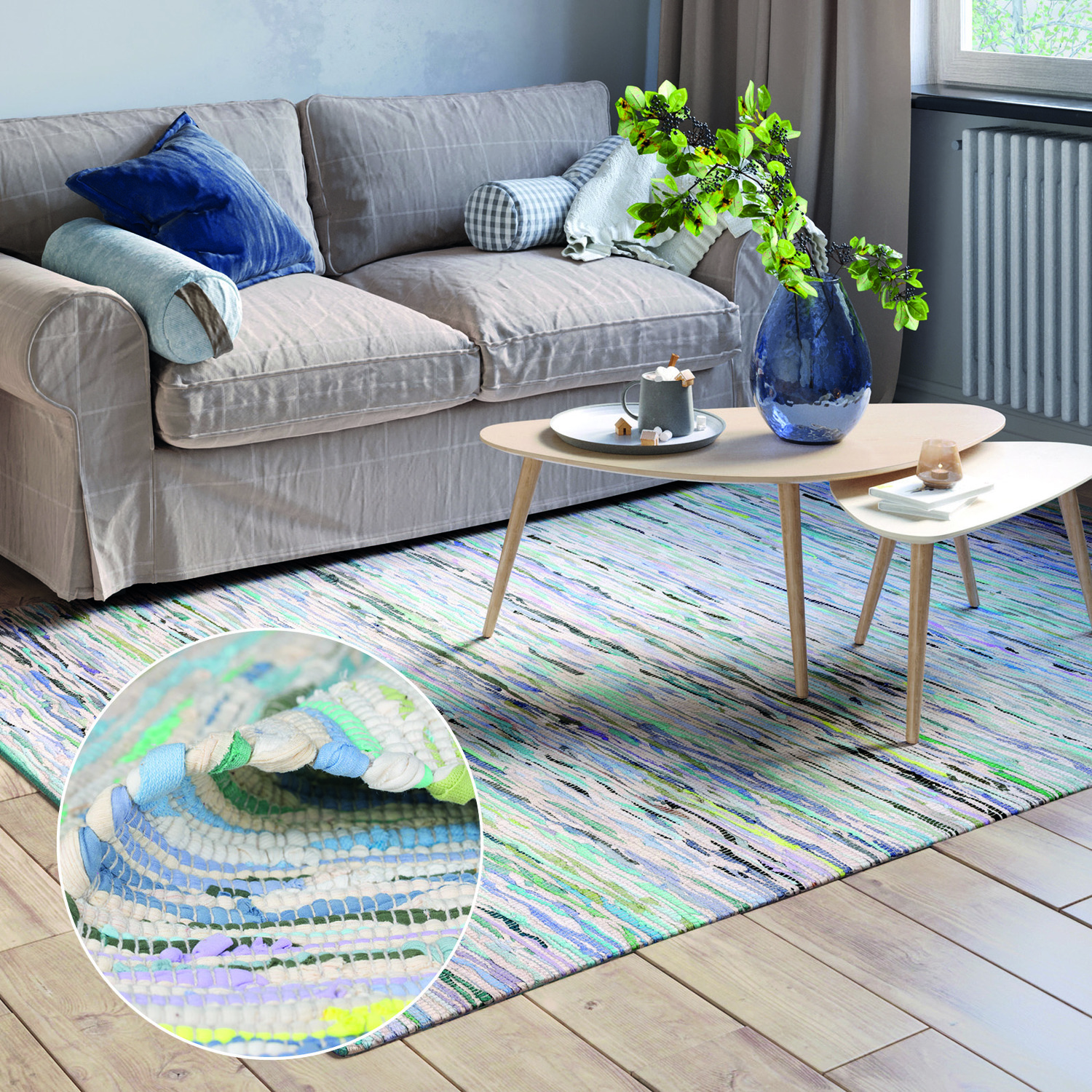
Why this product suits this profile: Its medium-to-large size is well suited to living areas, home offices or bedrooms used every day. The blue-green colour adds texture to rooms with neutral décor.
Its flat construction and stated dimensions make it easier to plan for use under furniture and along walkways. On smooth floors, check whether a suitable underlay is needed separately.
200 x 140 cm, cotton, hand-woven texture and a stated depth of 1 cm; net weight of 6 kg according to the product details.
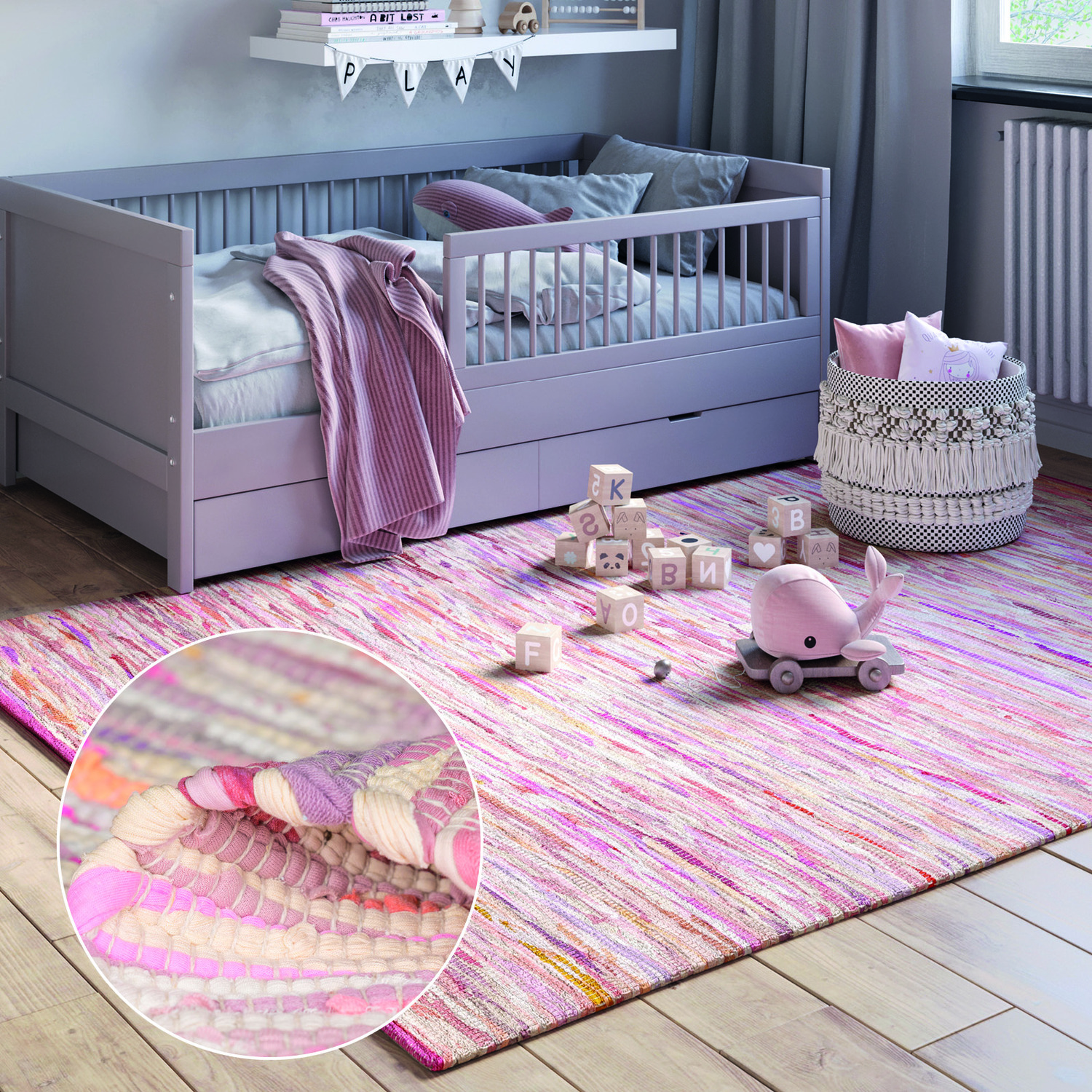
Why this product suits this profile: Its size works well in smaller living rooms, bedrooms or a defined seating area. The pink shade makes a clear colour statement, while the rectangular shape remains versatile.
The specific dimensions make it easier to plan your space accurately. Care instructions recommend vacuuming or shaking the rug out, but you should still assess the type of soiling before cleaning.
170 x 120 cm, cotton, flat construction and a hand-woven pattern with visible colour variations.
We’ve put together a complete, regularly updated list of products that meet these strict selection criteria and fully comply with the safety regulations in force in the EU.
Regular, gentle care is essential for a hand-woven Chindi rug. Vacuum with a suitable floorhead, and avoid rotating brushes where the product description advises against them. Treat small stains promptly and spot-clean them.
Also bear the following in mind:
It isn’t possible to give a reliable general estimate of a rug’s lifespan. This depends on factors including foot traffic, sunlight, moisture, furniture weight and cleaning.
Yes, the flat, hard-wearing construction of many Chindi rugs can make them suitable for living rooms, bedrooms, hallways or home offices. The important things are choosing the right size, ensuring the rug sits securely on the floor and following the care requirements for the specific product.
In many cases, regular vacuuming and shaking it out are enough. Depending on the care instructions, small stains can be treated with a damp cloth and mild cleaning product. Only machine-wash the rug if this is explicitly stated.
That depends on the sofa, coffee table and layout of the room. A 200 x 140 cm rug can define a compact seating area. For larger seating groups, a 230 x 160 cm rug provides more coverage. Measure the area you have in mind before buying, and allow for doors and walkways.