
Lieferung heute & morgen

Qualitätsgarantie

Willkommens-Angebote freischalten: KOSTENLOSE Lieferung | Bis zu 80 % RABATT | Kostenlose 30-Tage-JoyPlus-Testphase
App herunterladen
A hand blender can purée soups straight in the pan, make smoothies in a blending beaker and, with the right attachments, whisk eggs or chop vegetables. But a low price or a high wattage doesn’t automatically mean it’s the right kitchen appliance for you. What matters is whether its power, accessories, controls and cleaning requirements suit the way you cook.
A 1000-watt hand blender sounds powerful at first. However, motor power is only one factor. The shape of the blades, the diameter of the blending shaft, the speed settings and the permitted running time are just as important. A 600-watt model may be enough for soups, sauces and soft fruit, while hard or frozen ingredients place greater demands on the appliance.
Even a powerful hand blender shouldn’t be run continuously without a break. Check the manufacturer’s guidance on maximum running times and cooling intervals before buying and when using the appliance.
A multifunction hand blender with a whisk, chopper, measuring beaker and other attachments can take the place of several kitchen appliances. But if you mainly purée soups, you may not need an extensive accessory set. On the other hand, a basic hand blender may not be practical for families or keen home cooks who regularly prepare onions, herbs, nuts or small portions.
Check whether the attachments you want are actually included and which replacement parts or compatible accessories are available.
A blending shaft that’s difficult to take apart can make cleaning after each use a chore. Removable, dishwasher-safe parts are handy for everyday use. One important rule: never immerse the motor unit, mains cable or plug in water or any other liquid.
If the appliance will often come into contact with food, stainless steel blades and a sturdy blending shaft are good choices. BPA-free parts for food contact may also be a factor in your decision. Always follow the manufacturer’s information for the specific model.
For simple tasks such as blending soft fruit, cooked vegetables or sauces, a medium-powered motor is often enough. For frozen ingredients, fibrous vegetables or small chopping tasks, suitable blades and a turbo function can help. The turbo button provides a short burst at a higher speed, but it doesn’t replace the right technique or an adequate amount of liquid.
Variable speed control or several speed settings let you adjust the blending more precisely. According to the product details, the Braun MultiQuick Pro MQ55254M has 25 speed settings plus Turbo. The Braun MQ 3135 BK offers 11 speed settings plus Turbo. The Bosch MSM 6B100 has a separate Turbo button and a motor power of 280 watts.
A bell-shaped guard around the blending shaft can reduce splashes and help guide ingredients towards the blades. When puréeing hot food, make sure the blending shaft is fully submerged in the liquid. It’s also a good idea to let hot liquids cool slightly first to reduce the risk of scalds from steam or splashes.
For soups and smoothies, a tall, narrow container is often more practical than a shallow bowl. Don’t fill it beyond the stated capacity.
Depending on the set, a hand blender with accessories can cover several tasks:
A hand mixer, by contrast, is primarily designed for whisking and mixing. The terms are sometimes used interchangeably by retailers, so check the specific product description and what’s included before you buy.
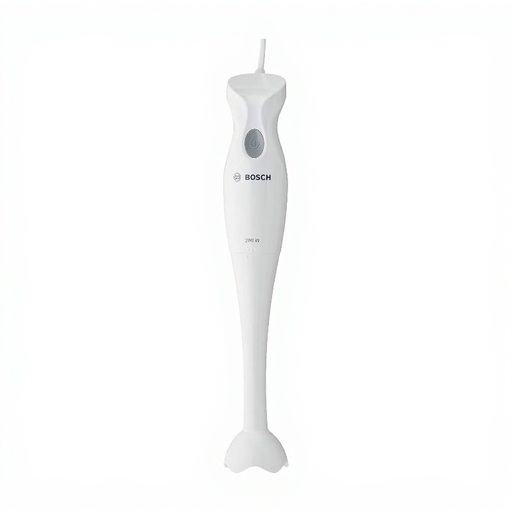
Why this product suits this profile: This compact model is designed for everyday tasks such as puréeing, blending and chopping, and weighs 0.6 kg according to the product details.
The product details clearly state its 280-watt motor power, Turbo button and removable, dishwasher-safe blending unit. This makes it easier to judge what the appliance can realistically do.
Lightweight, with a splash guard on the blending shaft and removable parts that are easy to clean.
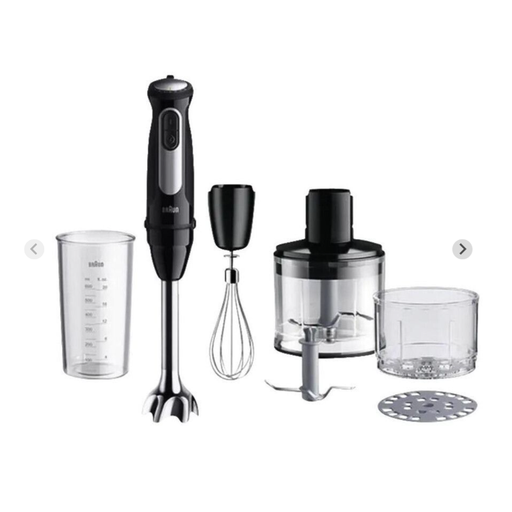
Why this product suits this profile: The combination of 1000 watts, 25 speed settings, a Turbo function and a stainless steel blending shaft gives you plenty of control for soups, smoothies, sauces and purées.
Variable speed control means you don’t have to rely on a high speed for every task. The EasyClick Plus system is designed for changing compatible attachments.
A BPA-free 600 ml measuring beaker and, according to the product details, dishwasher-safe parts that come into contact with food.
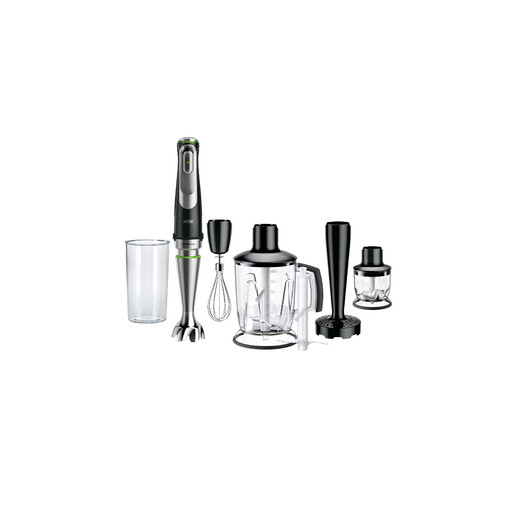
Why this product suits this profile: This set is designed for a wide range of recipes and includes a whisk, chopper, potato and vegetable masher, and ice crusher, among other accessories.
The specific list of included items shows which extra functions you’ll actually get. The iMode selector and pulse function give you different ways to work.
A 1200-watt motor, removable blending shaft and several attachments for different recipes.
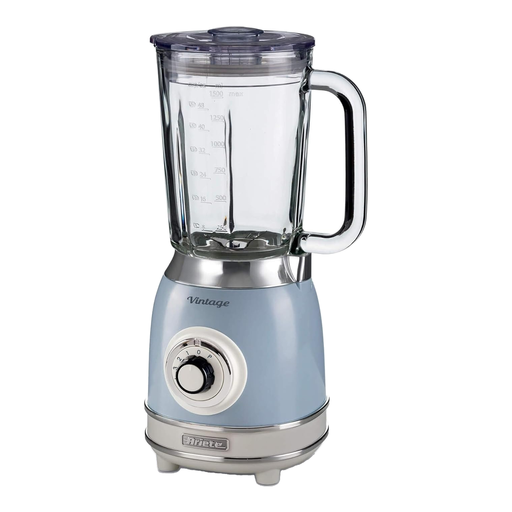
Why this product suits this profile: This jug blender has a 1.5-litre glass jug, making it suitable for larger quantities of smoothies, milkshakes, creams and drinks.
The jug capacity and four speed settings are clearly stated. This makes it easier to compare the appliance with a hand blender for smaller portions.
We’ve put together a complete, regularly updated list of products that meet these strict selection criteria and fully comply with the safety regulations in force in the EU.
When blending, make sure the blades don’t hit hard or unsuitable objects. Depending on the model, frozen or very firm ingredients need enough liquid and short blending intervals. Always use a chopper with its lid closed. Unplug the appliance before changing attachments, cleaning it or putting it away.
For running costs, the amount of time you actually use the appliance is the key factor. A 1200-watt model uses more electricity than a 600-watt model over the same running time. As hand blenders often run for only a few minutes per recipe, ease of use, cleaning and suitable power are often more important for everyday practicality than the highest possible wattage.
Check the manufacturer’s guidance. Hot liquids should be blended with care. The blending shaft must be fully submerged, and keeping a suitable distance from the surface can help prevent splashes. If you’re unsure, let the soup cool first.
There’s no single answer. It depends on how often you use it, the ingredients you blend, how you clean it and whether you allow it to cool between uses. Follow the instructions on maximum running times, how hard you can work the appliance and how to care for it.
A chopper can be useful if you regularly prepare herbs, onions, vegetables or small quantities of nuts. If you only purée soups and sauces, a basic blending shaft and measuring beaker may be all you need. What matters is how you actually use your kitchen.