
Lieferung heute & morgen

Qualitätsgarantie

Willkommens-Angebote freischalten: KOSTENLOSE Lieferung | Bis zu 80 % RABATT | Kostenlose 30-Tage-JoyPlus-Testphase
App herunterladen
A wrinkled shirt right before an important meeting or a creased blouse in your suitcase—these are situations where an ironing board is impractical or simply unavailable. A handheld garment steamer, also known as a steam brush or clothing steamer, promises a quick and easy solution. However, the market is flooded with devices whose marketing promises often suggest more than the technology can deliver.
As your Joybuy Product Recommendation Officer, I'm here to help you separate the wheat from the chaff. We'll highlight the common pitfalls of buying a steamer and show you which objective criteria truly matter, so you can make an informed decision and efficiently smooth your clothes—all without an ironing board.
Many buyers focus on superficial features and are later disappointed with the performance. Pay close attention to these three points to avoid a bad purchase:
To find the right device for your needs, you should focus on verifiable technical parameters. These three factors are crucial for actual performance and user comfort.
The power in Watts (W) indicates how much energy the device consumes and how quickly it heats up. Typical values range from 1000 to 1800 watts. A faster heat-up time (often under 30 seconds) is convenient, but the actual steaming performance is determined by the steam output, measured in grams per minute (g/min).
A higher g/min value means more steam is released per unit of time. This steam penetrates textile fibres more deeply and releases wrinkles more effectively. Therefore, a 1400 W device with 25 g/min can be more effective than an 1800 W model with only 20 g/min. So, focus primarily on the steam output specification.
The size of the water tank, measured in millilitres (ml), determines how long you can work continuously.
A detachable water tank also makes filling and cleaning much easier.
Good design is in the details. Nearly all models are designed for vertical steaming of hanging clothes. However, the ability to also work horizontally without dripping is a clear mark of quality. Look for manufacturer claims like "leak-proof" or "anti-drip system."
Additional features, such as a lockable switch for continuous steam or a rotatable handle, can make handling significantly more comfortable, especially for larger laundry loads.
Based on the objective criteria mentioned, we have identified a few models that are particularly well-suited for specific use cases.
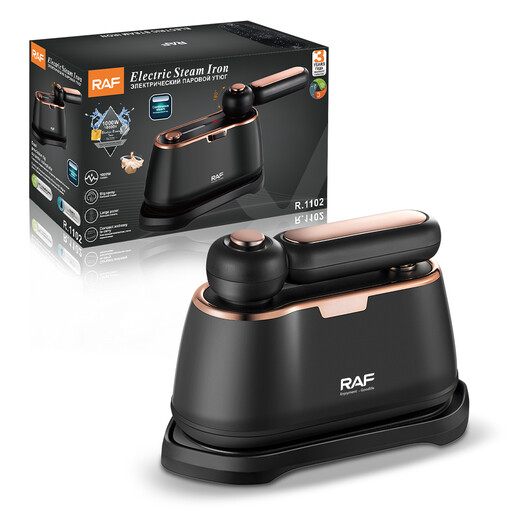
Why This Fits Their Persona: Ideal for business trips or holidays. The compact design and 180° rotatable handle make it easy to pack in a suitcase. The performance is designed for quickly refreshing shirts or blouses on the go.
The 120 ml tank is a deliberate trade-off for maximum portability, avoiding the trap of an impractically small tank by being sufficient for 1-2 garments—exactly the purpose of a travel device.
180° rotatable handle: Allows for flexible use and space-saving storage. Steam burst function: Helps with more stubborn wrinkles.
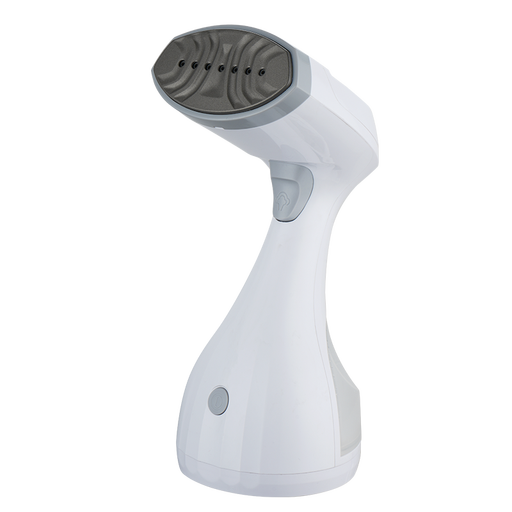
Why This Fits Their Persona: For those who regularly steam clothes for the office or daily life but don't have space for an ironing board. The large tank and high power allow for processing multiple garments in one session.
With 300 ml, this model avoids the mini-water-tank trap, offering a long runtime of up to 15 minutes. The leak-proof design also permits horizontal use.
Large 300 ml tank: For longer steaming sessions without refilling. Fast heat-up time: Ready to use in under 30 seconds, according to the manufacturer.
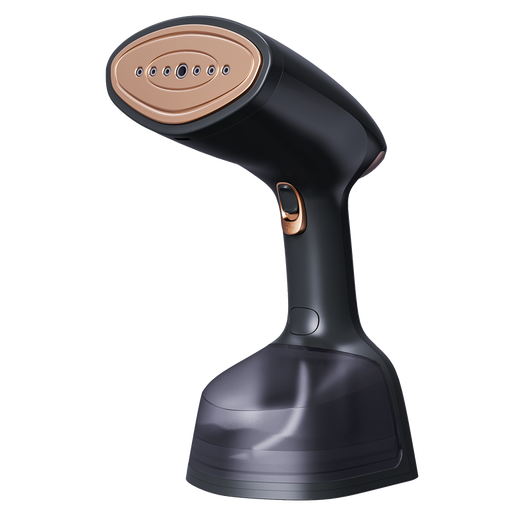
Why This Fits Their Persona: For users seeking maximum performance to quickly and efficiently steam a variety of fabrics, from delicate silk to thick cotton. The high steam output is the key criterion here.
This model escapes the wattage myth by combining its high 1800 W power with a strong steam output of up to 28 g/min. Here, the power is directly converted into effective steaming force.
Two steam levels: Allows you to adjust the steam output for different fabric types. Ceramic heating plate: Aids in smoothing and glides gently over the fabric.
We have compiled a complete, up-to-date list of products that fully meet these strict selection criteria and safety regulations.
To extend the life of your device and prevent limescale buildup, using distilled or demineralised water is recommended. Tap water, especially in areas with hard water, can clog the nozzles and reduce steam performance over time.
That depends on your needs. For quickly refreshing clothes, removing light wrinkles, and caring for delicate fabrics like silk or wool, a handheld steamer is often the better choice. However, to create sharp creases in sturdy fabrics like thick cotton or linen, a classic iron with high pressure often remains superior.
Yes, vertical steaming is the core function of every handheld garment steamer. Most devices are optimised for treating hanging clothes directly on the hanger. However, a model's quality is revealed by whether it can also be used horizontally, like an iron, without leaking water. For this, look for explicit manufacturer claims about leak protection.