
Lieferung heute & morgen

Qualitätsgarantie

Willkommens-Angebote freischalten: KOSTENLOSE Lieferung | Bis zu 80 % RABATT | Kostenlose 30-Tage-JoyPlus-Testphase
App herunterladen
A handheld garment steamer can quickly smooth shirts, blouses, dresses and lightweight jackets without requiring an ironing board. A compact garment steamer is especially practical for professionals, smaller households and frequent travellers. However, product descriptions are not always directly comparable. Wattage, tank capacity and heat-up time alone reveal little about everyday usability.
A power rating of 1,500 watts sounds impressive at first. In practice, the continuous steam output, heat-up time and ability to control the steam precisely are more important. A high-powered device with an inconsistent steam supply may still work slowly on heavier fabrics.
Look for specific details such as g/min, heat-up time and available steam modes. For delicate fabrics, a lower setting is often more suitable than continuous maximum steam.
A portable garment steamer is often made particularly compact by using a small tank. While this reduces weight, it may require frequent refilling. When steaming several garments, a tank of around 200 to 300 ml is generally more practical.
An explicitly leak-proof design is equally important. If a device may only be used vertically, horizontal steaming on a table can cause water to escape. Anyone looking for a garment steamer for home and travel should therefore check specifically whether both vertical and horizontal operation are supported.
“Suitable for all fabrics” is a broad marketing claim. Silk, wool, polyester, cotton and linen respond differently to heat and moisture. The garment’s care label remains the most important reference.
A garment wrinkle remover does not automatically replace an iron. A steamer is primarily suited to refreshing and smoothing hanging textiles. For sharp creases, cuffs or heavy cotton, a steam iron may be the better choice.
A short heat-up time is useful in the office or while travelling. For the models mentioned here, manufacturers quote heat-up times ranging from approximately 15 to 35 seconds. The Xiaomi HS5-1-4WP specifies a heat-up time of around 15 to 30 seconds, while the Adler AD 5042 is listed at approximately 30 seconds.
Steam output provides useful context:
These figures come from the respective product specifications and should not be interpreted as an independent performance comparison.
A larger tank extends operating time but often increases weight. For travel, the key is finding the right balance between tank capacity, water-level visibility and pack size. A foldable travel garment steamer can save space in a suitcase. For steaming several garments at home, 270 to 300 ml is more convenient than a very small tank.
Cable length also affects ease of use. Models with cables measuring approximately 1.7 to 2.4 metres offer greater freedom of movement, but require more storage space.
A vertical garment steamer is moved from top to bottom over a hanging garment. This is quick and requires no ironing board. A horizontal function extends use to tablecloths, sofa covers or individual sections of a garment. It should only be used when the manufacturer expressly specifies this operating mode.
For devices intended for travel outside Europe, the voltage must also be checked. A 110–240 V model may be suitable for international travel, while Germany generally uses 220–240 V. A suitable plug adapter may still be required.
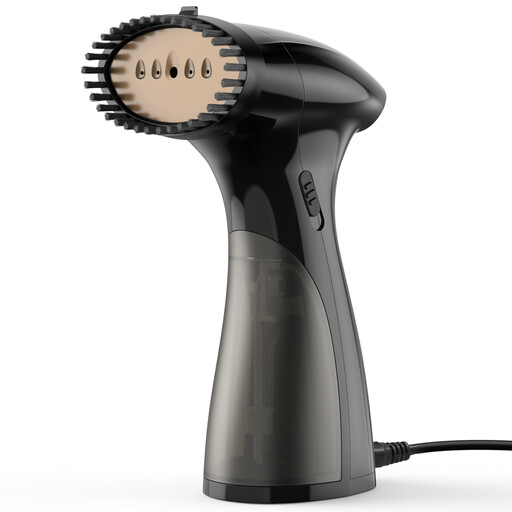
Why This Fits Their Persona: This compact 800-watt model is designed for users who occasionally want to smooth clothes at home, in the office or while travelling.
The manufacturer specifies a 150 ml water tank along with leak-proof vertical and horizontal operation. This reduces the risk of being limited to a single operating mode.
One-button operation, a weight of approximately 0.8 kg and a brush attachment, according to the product description.
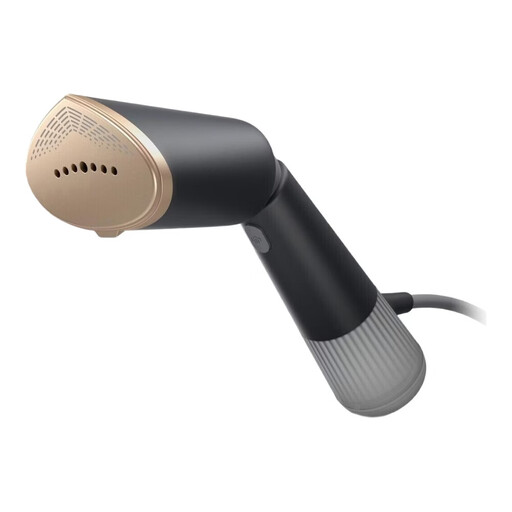
Why This Fits Their Persona: For households that value multiple settings and flexible operation, this device offers ECO and Max modes as well as vertical and horizontal steaming.
The two steam modes allow the device to be adjusted for different garments. The stated heat-up time is approximately 35 seconds.
Up to 24 g/min of continuous steam, a 2 m cable and protective or storage accessories included, according to the brand’s specifications.
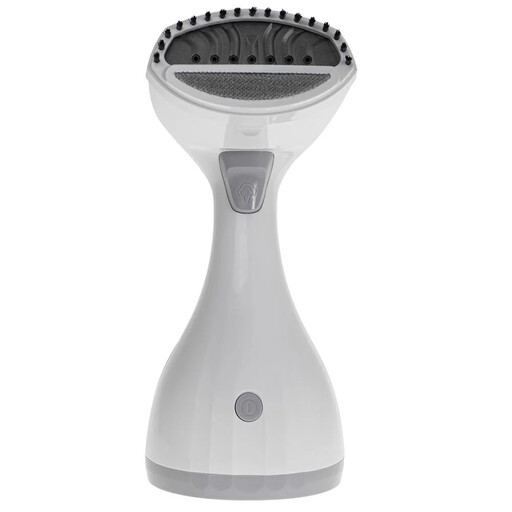
Why This Fits Their Persona: This model is designed for steaming multiple garments consecutively and can also be used on curtains.
The specified 280 ml tank capacity and continuous steam output of 27 ± 3 g/min provide more meaningful reference points than wattage alone.
1,500 watts, a 1.7 m cable and a fabric brush for heavier materials, according to the product specifications.
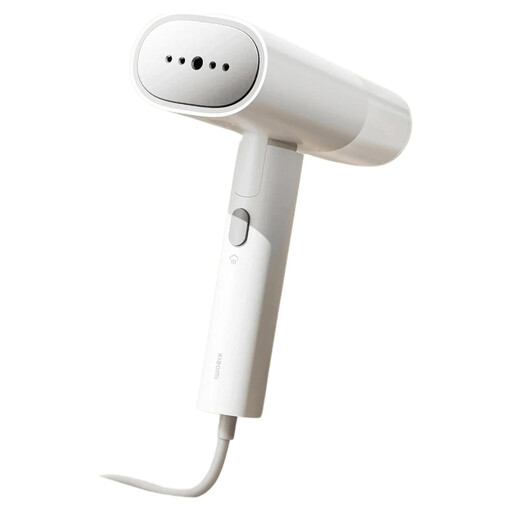
Why This Fits Their Persona: The foldable design is well suited to suitcases, offices and smaller homes when clothes need a quick refresh on the go.
The product specifications mention a collapsible housing and an EU version with 220–240 V. Travellers should nevertheless check the destination voltage before purchasing.
1,300 watts, one-button operation and a stated heat-up time of approximately 15 to 30 seconds.
The category features an continuously updated selection of devices focused on practical product specifications, flexible use and the applicable safety requirements for Germany.
Hang the garment on a sturdy hanger and hold the fabric slightly taut. Move the garment steamer slowly from top to bottom. Keep the distance between the nozzle and fabric specified in the instructions. With a 2-in-1 garment steamer featuring a horizontal function, the garment may only be treated on a suitable heat-resistant surface.
Service life depends on frequency of use, water quality, cleaning and storage. Emptying the tank regularly, descaling the device correctly and storing the cable without kinks can reduce wear. Without specific manufacturer information, it is not possible to give a reliable general service-life estimate.
Consumption depends on the device’s power rating and actual operating time. A 1,200-watt device running for ten minutes uses approximately 0.2 kWh. Actual operating time is usually shorter because the device is only switched on for individual garments. For occasional quick garment smoothing, usage duration therefore remains the most important factor.