For handheld panoramas of the Ruhr’s industrial landscape, first choose a lens with a suitable angle of view. In low light, look for stabilisation in the camera body or the specific lens. If you’ll be walking long distances, consider the weight of the complete set, not just the camera body. Stabilisation compensates for camera movement, but it won’t freeze moving subjects.
Which camera systems are right for different photographers?
Photographers shooting at dusk
If you photograph stationary industrial sites handheld in low light, consider camera shake and movement in the subject separately. Nikon Germany lists stabilisation as a feature of the Z5II; Sony Germany explains that moving subjects call for an appropriate, faster shutter speed.
Panorama and architecture photographers
For expansive industrial sites, the key question is whether the lens’s angle of view is wide enough from the accessible shooting position. Nikon Germany describes wide-angle lenses as a way to fit more of a scene into the frame.
Photographers covering long distances on foot
If you’ll be carrying your camera over long distances, consider the weight of the body and lens together. In changeable weather, you should also check the protection ratings for both components; OM SYSTEM lists weather protection for the OM-5 Mark II body.
What should you look for when buying?
First, work out the angle of view you need from your chosen location. Then check the stabilisation and weight of the complete set.
| What you’re looking for |
What to check |
Who is this important to? |
| Sharp handheld shots in low light |
Stabilisation in the specific camera body or lens; shutter speed for moving subjects |
If I’m photographing stationary industrial sites handheld as the light fades, I want to reduce camera shake without overlooking movement in the frame. Around 36% of consumers prioritise sharp handheld shots in low light. |
| Angle of view for expansive sites |
Focal length range and lens mount; the composition you can achieve from your location |
If I want to fit an expansive site into the frame from an accessible viewpoint, I check the lens’s angle of view. Around 29% of consumers prioritise getting the right composition. |
| Portability and weather protection |
Weight of the camera body and lens; protection ratings for both components |
If I’m walking long distances or taking photos in changeable weather, I want to know the weight of the complete set and what protection its components offer. Around 21% of consumers prioritise portability. |
| Complete kit and add-ons |
Camera body or kit; included lens and any accessories you need |
If I’m looking for a kit that’s ready to use, I check which lens is included and whether it covers the angle of view I want. Around 14% of consumers prioritise what’s included in the kit and which add-ons they can plan for. |
What mistakes should you avoid?
-
Assuming stabilisation ratings guarantee sharp night shots
Manufacturers’ figures apply under specific conditions. A moving subject can also appear blurred, even if you’re holding the camera steady.
Check which test configuration the stabilisation rating applies to, and choose a shutter speed that suits your subject.
-
Comparing only camera body weight or protection
You’ll need to add the lens to the weight you carry. A protection rating for the camera body doesn’t automatically mean the attached lens has the same protection.
Compare complete kits and check the specifications for both components.
A lens you need will add to the weight you carry on your photography outing.
-
Assuming a kit zoom will cover every angle of view
Whether the site fits in the frame depends on your location and the focal length range of the lens actually included.
Check the kit’s name and compare the lens’s angle of view with the locations you can access.
For a wider composition, you may need another compatible lens, which means carrying extra gear.
-
Assuming the photography rules at one site apply to every industrial location
The Zollverein Foundation distinguishes between private and commercial photography in its rules. These rules apply to its site and don’t automatically apply elsewhere.
Before taking photos, check the rules for the specific site and how you plan to use your images.
An overview of relevant camera brands
Nikon
A full-frame system for buyers looking to combine in-body stabilisation with a lens that offers the angle of view they need.
- Nikon Germany lists 24.5 MP and in-body stabilisation for the Z5II.
- You’ll need to check separately which Z lens is right for wide industrial views and how much the complete set weighs.
Fujifilm
An APS-C system with an X mount and sensor-shift stabilisation to consider if you’re looking for an interchangeable-lens camera.
- FUJIFILM X Germany lists 26.1 MP and a stabilisation rating of 7.0 stops for the X-S20 with the stated test configuration.
- The CIPA rating is based on the XF35mmF1.4 R and can’t be applied across the board to every lens.
OM SYSTEM
An option for buyers who value a lightweight camera body and stated weather protection.
- OM SYSTEM lists a weight of 418 g for the OM-5 Mark II, including battery and memory card, and an IP53 rating for the body.
- The lens adds to the body’s weight, and its protection rating should be checked separately.
Canon
The EOS R8 is available in a specified kit comprising a full-frame body and an optically stabilised zoom lens.
- Canon Germany lists the body at 461 g with battery and memory card. The specified kit includes the RF 24–105mm F4–7.1 IS STM.
- Optical stabilisation is a feature of this lens. Also check whether 24 mm at the wide end gives you a wide enough composition.
Sony
A full-frame option with in-body stabilisation, giving you the flexibility to choose a lens to suit the angle of view you need.
- Sony Germany lists 33.0 MP and 5-axis optical stabilisation for the α7C II, with a manufacturer rating of 7.0 stops.
- The lens, angle of view and weight of the complete set all need to suit the shot you have in mind.
Joybuy cameras for industrial panoramas
The Joybuy camera models below offer different zoom or stabilisation features. Check that each one’s angle of view and shooting capabilities suit your location and plans.
 No image available
Sony Alpha 6100 APS-C camera with 16–50 mm power zoom lens
The product title lists a 16–50 mm power zoom lens for changing your composition; check whether its wide end covers your location. The product details also list a 24.2 MP sensor and optical image stabilisation.
View at Joybuy
 No image available
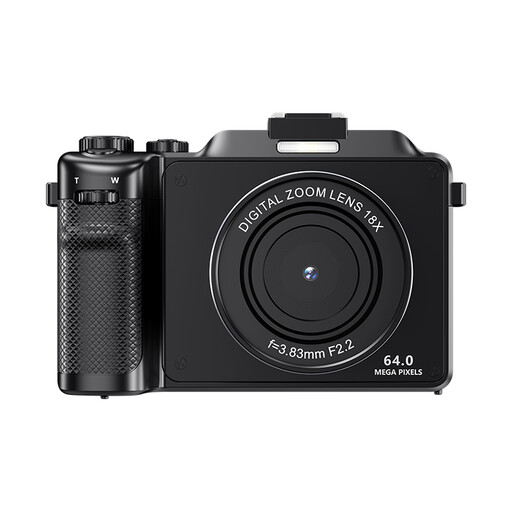
KOMERY X9 digital camera, 4K, 64 MP, 18× zoom with flash
The product title lists an 18× zoom for changing your composition; check the available angle of view before choosing it for wide industrial scenes. The product name also lists 4K, 64 MP, autofocus, flash and an anti-shake function. The name alone doesn’t tell you the conditions under which the function works.
View at Joybuy
 No image available
Songdian digital camera, 8× optical zoom, 5K, 64 MP, dual lens, white
For wide views, the product description lists an 8× optical zoom lens and a 154° wide angle; check that the angle of view and look suit your location. It also lists electronic image stabilisation (EIS) as a feature, but doesn’t make any claims about moving subjects.
View at Joybuy
 No image available
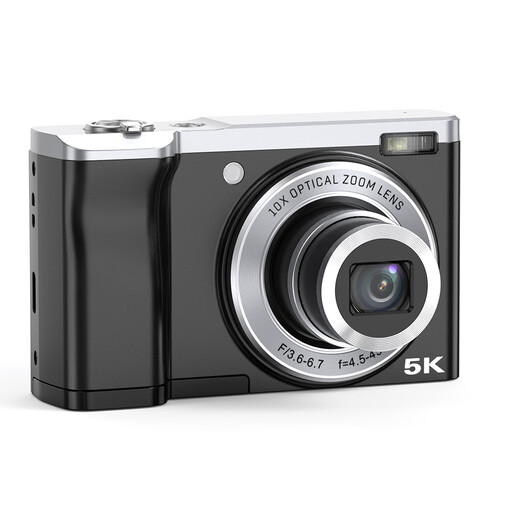
Songdian 5K digital camera, 56 MP, 10× optical zoom, black
The product title lists a 10× optical zoom for different compositions; check the angle of view you need at your location. The product description also lists electronic stabilisation and a built-in 6-axis gyroscope.
View at Joybuy
 No image available
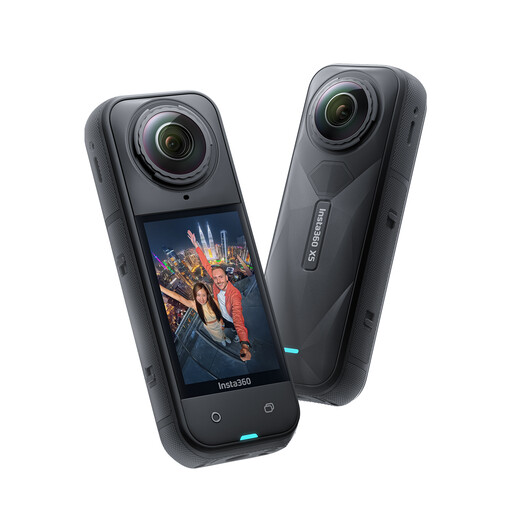
Insta360 X5 waterproof 360° action camera
If you’d rather shoot 360° video than a single architectural photo, the product description lists 8K at 30 fps, FlowState stabilisation and Horizon Lock. Check that this recording format suits your plans.
View at Joybuy
Frequently asked questions
Does image stabilisation help with moving trains or people?
No. Image stabilisation compensates for camera movement, but it won’t freeze movement in your subject. Sony Germany explains that moving subjects may need a faster shutter speed; adjust it to suit the subject and available light.
How should I put together a new handheld kit for my first photography outing?
First, check the angle of view you need from your planned location, then check the lens mount and what’s actually included in the kit. Charge the battery and take test shots with the complete set in similar lighting conditions.
Do I need permission to take photos at Zollverein?
It depends on why you’re taking the photos and the specific circumstances. According to the Zollverein Foundation, private photography in outdoor areas generally doesn’t require permission or incur a fee. Exceptions include wedding shoots and productions requiring extensive support. The site operator requires permission for images intended for commercial publication. You must not enter restricted areas; these site rules don’t automatically apply to other industrial locations.
Can I photograph industrial buildings from a public path?
Under certain conditions, Section 59 of the German Copyright Act (UrhG) allows you to photograph and reproduce works permanently located on public paths, roads or squares. For buildings, this applies only to their exterior. The German Federal Ministry of Justice publishes this provision. It doesn’t give you the right to enter restricted or private property.
What are my rights if an online purchase in Germany is faulty?
Your statutory rights relating to faulty goods are separate from a voluntary guarantee and generally apply against the seller. The Verbraucherzentrale (German Consumer Advice Centre) explains that the first remedy for a fault may be repair or replacement. The right to cancel an online purchase is separate; according to the Verbraucherzentrale, the cancellation period is generally 14 days, although the specific purchase conditions and any applicable exceptions should be checked.


