For cleaning tight stair corners
If lint collects between the edge of a step, the wall and nearby furniture, the shape and reach of the crevice tool or hose are especially important.


If your main aim is to remove lint from tight stair corners and narrow gaps, a compact handheld vacuum with a crevice tool or flexible hose is a good place to start. If you also want to clean stair coverings, upholstery or open floors with the same appliance, consider a stick vacuum that converts into a handheld. Check exactly what’s included, and bear in mind that a larger appliance may be more awkward to hold on the stairs.
If lint collects between the edge of a step, the wall and nearby furniture, the shape and reach of the crevice tool or hose are especially important.
If you’ll be carrying and manoeuvring the vacuum on the stairs repeatedly, weight, grip and battery life all matter. The consumer advice centre lists ease of use as a potential factor to consider when buying.
For lint or hair on fabric surfaces, a suitable small brush may be useful alongside a crevice tool. Check whether it’s included with the specific version you’re considering.
| What you need | What to check | Who it matters most to |
|---|---|---|
| Reach into tight corners | Check the shape and length of the crevice tool and how flexible the hose is. Take the gap between your furniture into account. | If I need to reach lint between the edge of a step, the wall and furniture, I need a slim tool or a hose that’s easy to position. Around 36% of consumers put access to tight spaces first. |
| Manoeuvre the vacuum on steps | Check the weight of the handheld configuration you’ll actually use and how easy it is to grip. Also consider where you can safely put the vacuum down. | If I’m vacuuming lots of stairs, I want to be able to hold and manoeuvre the appliance comfortably while cleaning. Around 29% of consumers focus mainly on ease of use on the stairs. |
| Clean fabric surfaces | Check whether your stairs are carpeted and whether a compatible small brush is included with the version you’ve chosen. | If lint or hair collects on carpeted stairs or upholstery, a suitable compact brush may be important. Around 21% of consumers prioritise this need. |
| Vacuum open floors too | Check which floor head is included and whether the vacuum converts for different uses. Look at the stated battery life for the mode you need. | If I also want to clean open floor areas with the same appliance, I need a suitable floor head as well as a crevice tool. Around 14% of consumers give this added use the highest priority. |
A bendable tube is designed for areas under furniture. Whether it can reach into a tight corner also depends on the tool and the space beside the furniture.
Measure the gap at its narrowest point and check which crevice tool is included with the exact version you’re considering.
Manufacturer battery-life figures may refer to a particular configuration or a maximum figure. They don’t tell you how long the battery will last on every power setting when cleaning your stairs.
Only compare battery life figures when they’re based on the same operating conditions. If having a spare battery matters to you, check availability for the exact model. The German Environment Agency recommends asking about spare batteries when buying.
Accessory information may refer to a particular version, such as the Bosch Unlimited 7 BKS711XXL or the Miele Duoflex HX1 Total Care.
Check the full model number and what’s in the box rather than choosing based on the product family name alone.
The PD1820L-QW is a compact cordless handheld vacuum with an integrated flexible hose.
The Unlimited 7 BKS711XXL combines floor cleaning with attachments for crevices and upholstery.
The Duoflex HX1 Total Care combines a floor brush with a flexible hose, a long crevice tool and a small powered brush.
For the X-Force Flex 12.60 Animal RH98A9, Rowenta lists a crevice tool and a mini turbo brush.
This selection includes cordless handheld vacuums and cordless vacuums that convert to handheld use. According to their product details, they’re designed for spot cleaning or use with a crevice tool.
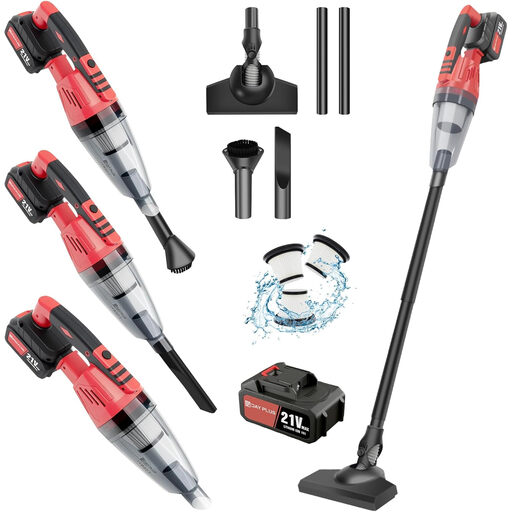 No image available
Described as a handheld appliance for spot cleaning; the product details list a crevice tool set.
The product name specifies 5500 PA suction power, a washable HEPA filter and 1 battery.
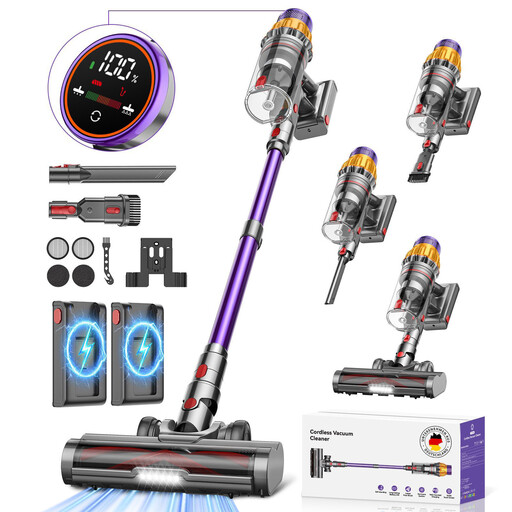 No image available
The product details describe conversion to handheld use and a crevice tool for spot cleaning.
Features listed include 2 batteries, 750W, up to 80min battery life and a 2.6-litre dust container.
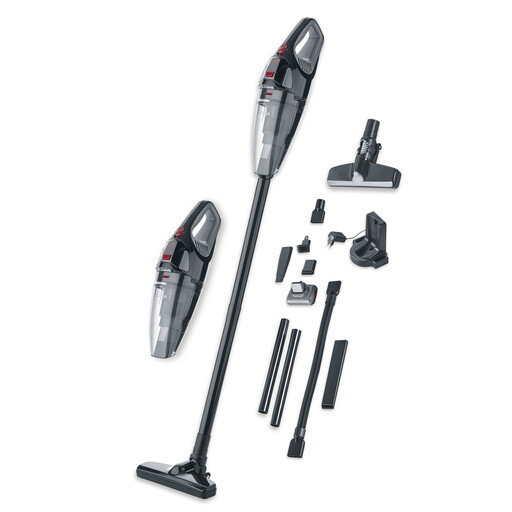 No image available
Described as a handheld appliance; the product details list a crevice tool, an extension tube and a floor head.
The product name specifies 18.5 V, 50 min battery life, wet and dry use, and a rotating turbo brush.
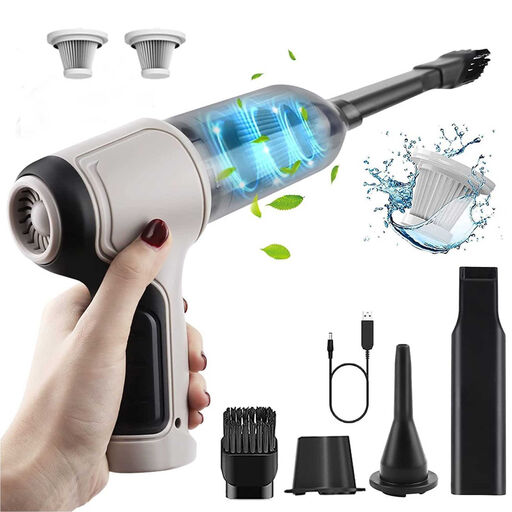 No image available
The product details list a crevice tool for tight spaces and describe the appliance as a handheld vacuum cleaner.
Features listed include a 2000 mAh battery capacity and wet and dry use.
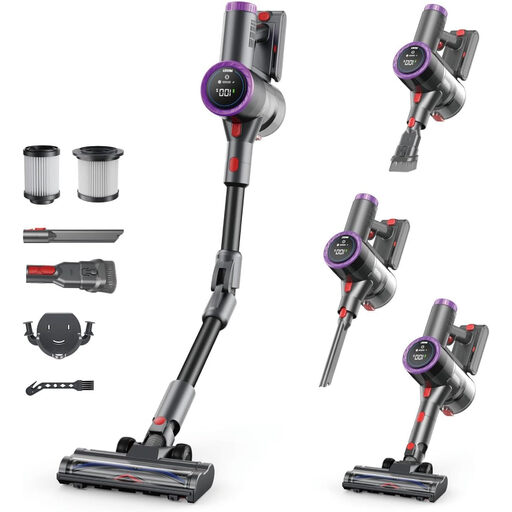 No image available
The product details list a crevice tool for tight corners; check whether it’s included with the specific version.
The product name specifies a Type C/EU plug, a container and 150 AW.
First, check whether a crevice tool is included with the specific version and whether it fits into the narrow corner. A flexible hose can make it easier to position. For carpeted stairs, a suitable small brush may also be useful.
Use a charger and attachments that are suitable for the model you’ve bought, and follow the instructions for looking after the filter and dust container. A cleaning method listed for one specific model won’t necessarily be suitable for other appliances.
Check whether the tools, replacement filters and, if needed, a spare battery you require are available for the exact model number and included in the box. The German Environment Agency recommends asking about spare battery availability when buying. Any ongoing costs will depend on the model and what’s on offer.
No. In Germany, your statutory rights if a product is faulty are against the seller. A manufacturer’s guarantee is voluntary and subject to its own terms and conditions. The consumer advice centre clearly distinguishes between these two types of protection.
No. The German Environment Agency says that old electrical appliances must be collected separately, for example at a suitable take-back point or recycling centre. Remove the battery before handing the appliance in if you can do so easily, and take it to a separate battery collection point.