
Lieferung heute & morgen

Qualitätsgarantie

Willkommens-Angebote freischalten: KOSTENLOSE Lieferung | Bis zu 80 % RABATT | Kostenlose 30-Tage-JoyPlus-Testphase
App herunterladen
A kitchen mixer should reliably handle as many everyday tasks as possible: mixing batter, puréeing vegetables, crushing ice or making a smoothie. However, product descriptions often promise more than the appliance can actually deliver. A hand mixer, for example, isn’t automatically suitable for heavy bread dough, while a compact smoothie maker won’t handle large portions for the whole family.
Before you buy, make sure you avoid these three common pitfalls:
The design has a major bearing on what you can use the appliance for:
Wattage describes the electrical power input; it doesn’t automatically indicate how well the mixer will perform. Also check the recommended operating time, the required breaks between cycles and the maximum filling capacity. Some appliances can only run for short periods at a time and need to cool down afterwards.
A compact mixer may be enough for liquid smoothies. If you regularly process firm ingredients, nuts or ice, check the manufacturer’s guidance for these foods. A powerful mixer rated at 1,100 or 1,200 watts may be designed for these tasks, but it still shouldn’t be overloaded.
A chopper is only versatile if it comes with a suitable container and blade. For keen bakers, twin beaters and dough hooks are more important than a large number of speed settings.
Before you buy, check:
Removable stainless steel or plastic parts can make cleaning easier. Even if a mixer is described as dishwasher-safe, check which components are actually suitable for the dishwasher and the temperature they can withstand.
Only clean sharp blades after unplugging the appliance or removing the battery. Never rinse the motor unit under running water. On some blenders and smoothie makers, safety locks prevent the appliance from operating if the lid or jug isn’t fitted correctly.
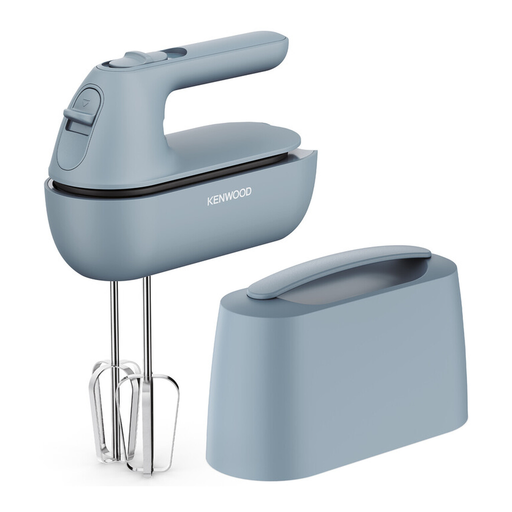
Why it suits this type of user: This hand mixer is suitable for cake batter, cream, egg whites and smaller batches of dough. With 350 W, five speed settings and compact storage, it’s a practical choice for smaller kitchens too.
The five speed settings and slow start make it easier to control. Twin beaters and dough hooks are included, and the accessories are listed as dishwasher-safe.
350 W motor, five speeds and a storage bag with compartments for the cable and accessories.
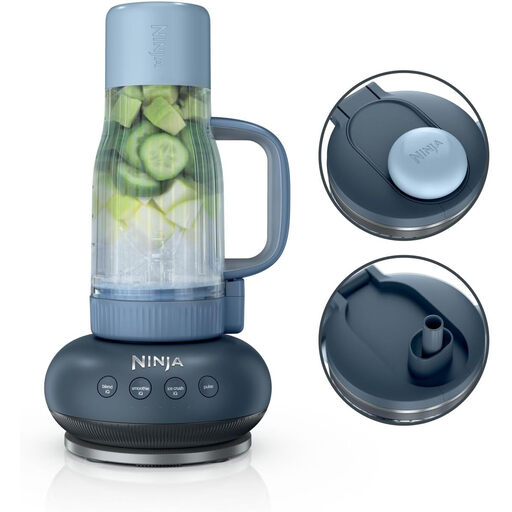
Why it suits this type of user: This 1,100 W blender is designed for smoothies, frozen ingredients and ice. Three automatic programmes and a pulse function give you different ways to use it.
The programmes are clearly designed for smoothies, blending and chopping. The 710 ml cup fits directly onto the appliance, so there’s less need to transfer your drink.
1,100 W motor, three Auto-IQ modes, pulse function and removable parts that are dishwasher-safe.

Why it suits this type of user: This appliance combines a stand mixer, meat mincer and blender attachment. It’s designed for households that want to knead, whisk, chop and make smoothies with a single appliance.
Its range of functions is covered by specific attachments. According to the product information, the safety lock prevents operation when the head is raised.
6-quart stainless steel bowl, 1,300 W motor, eight speeds and attachments for kneading, blending and chopping.
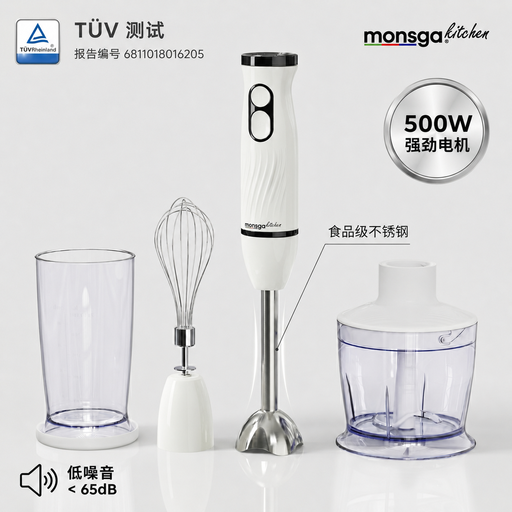
Why it suits this type of user: This hand blender is suitable for puréeing soups, making smoothies and whisking. Its 36.5 cm shaft can be useful when working with deep pans.
The splash guard helps prevent splashes onto your cookware while you’re puréeing. According to the product information, the removable accessories are dishwasher-safe.
Hand blender, whisk, chopper and 500 ml measuring jug in one set, with standard and turbo modes.
We’ve put together a comprehensive, regularly updated list of products that meet these strict selection criteria and fully comply with the safety regulations in force in the EU.
A personal blender with a drinking cup is often enough for individual portions. For several people, a blender with a larger jug is more practical. Check whether the manufacturer specifically lists frozen ingredients or ice as suitable.
A hand mixer with dough hooks can handle smaller quantities of dough. For heavy yeast dough, or if you make it frequently, a stand mixer with a sturdy bowl and a suitable operating time is usually a better choice. Follow the quantity and run-time recommendations in the instruction manual.
Its lifespan depends on how you use, clean and store it, and whether you overload it. Stick to the recommended operating intervals, let the motor cool down when needed and only use approved attachments. An appliance with a design that suits its intended purpose is less likely to be used outside its specifications in everyday use.