
Lieferung heute & morgen

Qualitätsgarantie

Willkommens-Angebote freischalten: KOSTENLOSE Lieferung | Bis zu 80 % RABATT | Kostenlose 30-Tage-JoyPlus-Testphase
App herunterladen
A hand mixer is part of the standard equipment in many households. It whips cream, stirs dough and processes ingredients much faster than a manual kitchen whisk. However, the wide choice of appliances does not automatically make it easy to choose the right one. Focusing only on wattage or a high number of speed settings can mean overlooking important details.
A 300 W hand mixer, 500 W hand mixer or 700 W hand mixer is often marketed primarily on the basis of motor power. However, wattage mainly describes the appliance’s electrical power consumption. It does not fully indicate how well the appliance is designed or how comfortable it is to use.
For occasional stirring, whipping and light batter, 300 to 350 W may be sufficient. If you regularly knead firmer doughs, you will benefit from more motor power and suitable dough hooks. The design, power transmission, operating time limit and motor cooling are also important factors.
A hand mixer with five speed settings may be sufficient for everyday tasks. Other models offer nine, eleven or more settings, as well as a turbo setting. What matters is whether the lowest setting starts gently enough and whether the speed can be adjusted easily while mixing.
A slow start helps to reduce splashing when working with flour, liquids or cream. The turbo function is better suited to short bursts of power and should not be used for extended periods unless the instruction manual specifies otherwise.
Not every hand mixer automatically includes dough hooks, beaters and other attachments. Before buying, check which accessories are actually included. A hand mixer with dough hooks is designed for yeast dough and heavier mixtures, while a hand mixer with beaters is particularly useful for whipping and stirring.
“Dishwasher-safe accessories” generally refers only to removable parts. The motor housing, mains plug and cable must not come into contact with water.
An electric hand mixer with higher power can offer more capacity when working with firm dough. However, the motor’s greater weight may affect ease of use.
Stainless-steel beaters are corrosion-resistant and usually easy to clean. With dough hooks, a secure connection to the appliance is important. Look for a clear locking mechanism and a separate eject button. During operation, keep hands, hair and loose clothing away from the moving attachments.
A non-slip handle, easily accessible controls and a sufficiently long cable make the appliance easier to use. If you often work in deep bowls, you should also consider the shape of the attachments and the weight. A standing position or storage bag can save space in small kitchens.
A hand mixer is designed for stirring, whipping and kneading. A stick blender, on the other hand, processes soups, sauces, smoothies or vegetables directly in the container. Models with accessories can also chop or whip, but they do not always replace appliances designed specifically for each task.
A manual kitchen whisk is sufficient for small quantities and liquid ingredients. For regular baking and cooking tasks, an electric appliance is generally more practical, provided its accessories and power suit your individual needs.
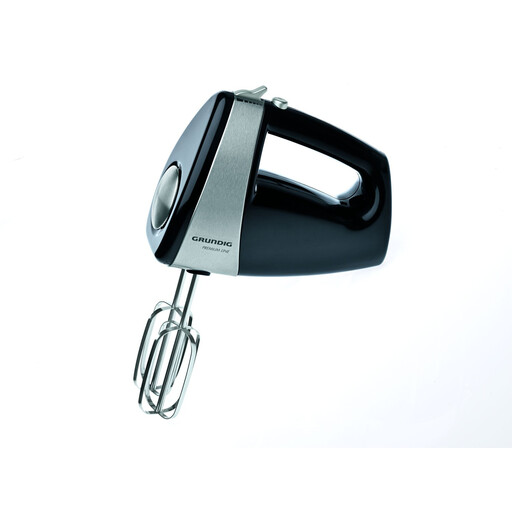
Why this product suits the profile: 300 W, five speed settings and a turbo function cover typical baking and mixing tasks.
The included equipment is clearly specified and includes beaters and dough hooks instead of unnecessary extra functions.
Stainless-steel attachments, five settings plus turbo and a smooth surface that is easy to wipe clean.
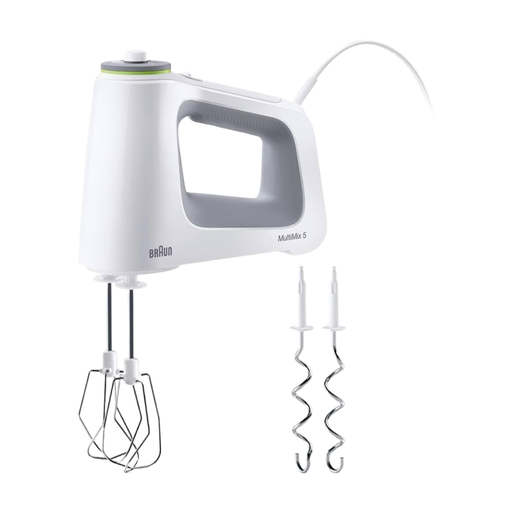
Why this product suits the profile: With 700 W of power, nine continuously adjustable speeds plus turbo and a soft-grip handle, it is designed for regular baking.
Its power is combined with specific controls and accessories, rather than being promoted on wattage alone.
Two stainless-steel beaters, two dough hooks, EasyClick attachment system and removable dishwasher-safe accessories.

Why this product suits the profile: This model is a stick blender with a 1,200 W motor and several attachments for blending, chopping, whipping and emulsifying.
The type of product is clearly defined: a hand mixer is better suited to cake batter, while this stick blender is designed for soups, sauces and chopping.
Variable speed, turbo, whisk, chopper and removable dishwasher-safe parts.
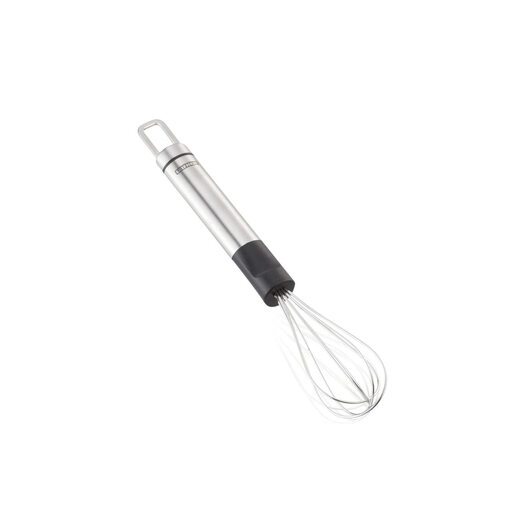
Why this product suits the profile: This manual whisk is designed for sauces, liquids and small containers when an electric appliance is not needed.
The compact 21 cm length and 3.6 cm-wide head are designed for small containers, not large quantities of dough.
Stainless steel, a practical hanging loop and, according to the product details, dishwasher-safe.
We have put together a complete, regularly updated list of products that fully meet these strict selection criteria and the safety regulations applicable in the EU.
For occasional tasks, 300 to 350 W is often sufficient. For regular baking or firmer doughs, 500 to 700 W may be a sensible choice. Wattage should always be considered alongside the accessories, speed control and recommended operating time.
The service life depends on how often it is used, the type of dough, cleaning and correct operation. An appliance should not be operated continuously beyond the limits stated in the instruction manual. If the motor becomes noticeably warm, allow it to cool down and only change attachments after unplugging the appliance.
A hand mixer is usually operated for only a few minutes per use. Actual consumption therefore depends more on operating time and power than on wattage alone. Short operating times and the appropriate speed setting help to avoid unnecessary running time.