
Lieferung heute & morgen

Qualitätsgarantie

Willkommens-Angebote freischalten: KOSTENLOSE Lieferung | Bis zu 80 % RABATT | Kostenlose 30-Tage-JoyPlus-Testphase
App herunterladen
As a Joybuy Product Recommendation Officer, my role is to provide you with clear, objective information to help you make an informed purchasing decision. The breast pump market is filled with marketing promises that don't always make life easier for mothers. This guide is designed to help you identify the essential features and avoid common pitfalls.
Modern mothers need flexibility. A hands-free breast pump promises just that: the ability to have your hands free for other tasks while pumping. However, not every model lives up to its promise. Before you invest, you should be aware of the three most common pitfalls that can lead to disappointment and unnecessary expense.
To find a pump that truly meets your needs, you should focus on objective, technical parameters. These three criteria are crucial for the functionality and comfort of an electric breast pump.
The fit of the breast shield is the most critical factor for efficient and pain-free pumping. A poorly fitting shield can not only reduce milk output but also lead to sore nipples.
For a portable breast pump, freedom from a power outlet is a key feature.
Hygiene is of utmost importance with breast pumps. A pump that is complicated to disassemble and clean quickly becomes a burden in daily life.
Here are some recommendations tailored to specific needs and lifestyles.
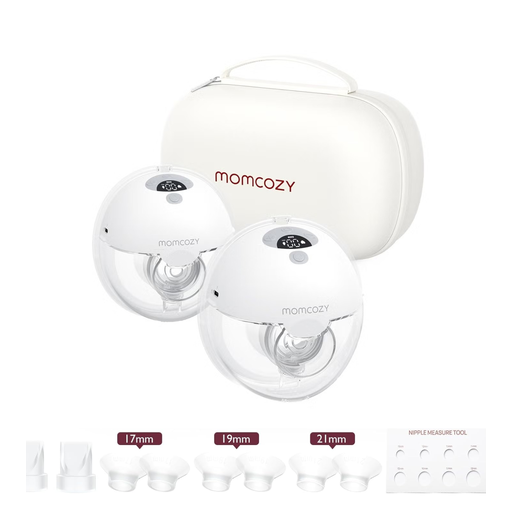
Why This Fits Their Persona: As an electric double breast pump, this set allows for simultaneous, double-sided pumping, thereby maximising efficiency. Its lightweight, discreet design fits directly into a nursing bra, enabling discreet pumping at work or on the go without being tied to a power outlet.
The model focuses on technology that mimics a baby's natural nursing pattern rather than on raw suction power. It also comes with four different breast shield sizes, minimising follow-up costs for a proper fit.
Three modes (Stimulation, Expression, Mixed) with nine levels each for customised control. The low weight of just 225 grams per unit ensures excellent wearing comfort.
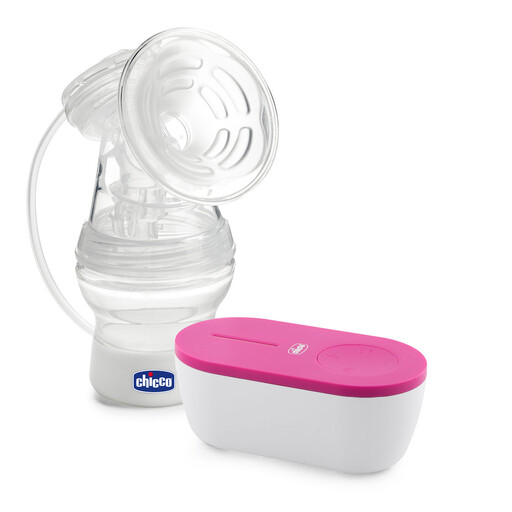
Why This Fits Their Persona: This model is ideal for mothers looking for a reliable yet straightforward solution for occasional pumping. Its compact and lightweight design makes it a practical companion for travel or occasional use at work, without straining the budget.
The pump focuses on essential functions: a 2-phase technology to mimic nursing behaviour and adjustable intensity levels. It avoids complex features and is flexible to use thanks to its USB charging capability.
Very light and compact, fits in a handbag. The closed system ensures hygiene, and the extra-soft silicone breast shield provides comfort.
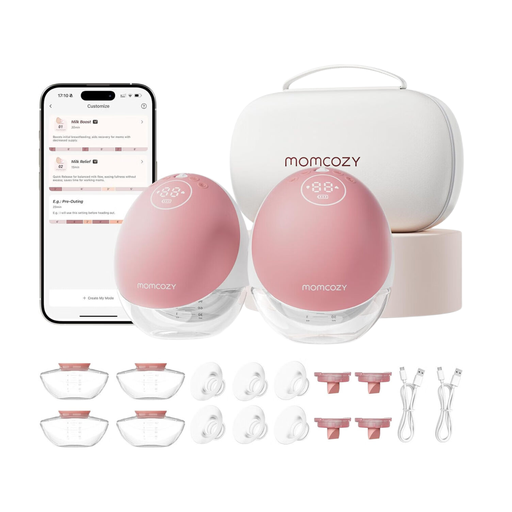
Why This Fits Their Persona: This model offers app control, allowing for precise management and personalisation of pumping settings directly from a smartphone. It is ideal for mothers who value technological features and detailed customisation.
Instead of just focusing on high suction, this pump offers up to 15 adjustable suction levels and multiple modes for fine-grained control. The set includes multiple flange sizes (17/19/21/24mm), making it easy to find the right fit from the start.
App control for personalised settings. The comprehensive package includes two pumps, multiple flange sizes, milk collection containers, and a practical storage box.
We have compiled a complete, up-to-date list of products that fully meet these strict selection criteria and local safety regulations.
Consumable silicone parts, such as valves and membranes, should be checked regularly. Most manufacturers recommend replacing them every 1 to 3 months, depending on the frequency of use. A decrease in suction power is often the first sign that these parts need replacing to maintain the pump's efficiency.
For optimal performance, a well-fitting and supportive nursing bra is recommended. An in-bra breast pump must fit snugly and securely against the breast to create a vacuum and prevent leaks. A bra that is too loose can affect the pump's position and reduce suction. Some manufacturers, like Momcozy, also offer specially designed bras.
A closed system is a key hygiene feature. It includes a barrier (usually a silicone membrane) that prevents breast milk from flowing back into the tubing and motor unit. This not only protects the motor from moisture damage but also ensures that the expressed milk remains hygienic and that bacteria or mould cannot accumulate in the hard-to-clean parts of the pump.