
Lieferung heute & morgen

Qualitätsgarantie

Willkommens-Angebote freischalten: KOSTENLOSE Lieferung | Bis zu 80 % RABATT | Kostenlose 30-Tage-JoyPlus-Testphase
App herunterladen
A handwoven rug can add structure and a unique accent to any room. At the same time, products differ significantly in material, weave, thickness and care. If you choose only by colour or a low price, you’ll often only notice important limitations once you’ve unpacked it.
There are three common buying pitfalls you should check before ordering:
A Chindi rug is often made from repurposed cotton textiles. The characteristic variations in colour and weave are common with handmade products. Recycled cotton can be a good choice if you’re after a sustainable rug made from reclaimed fibres. Still, pay attention to the exact material composition rather than the product label alone.
A wool rug usually feels more substantial and, thanks to its fibre structure, can help with room acoustics. Wool, however, needs gentle cleaning. A cotton rug is often flatter and easier to move in smaller sizes. Actual suitability depends on the weave, weight and care instructions.
With a flat weave, rug height is often around 1 cm. That makes it easier to open doors and can be practical in high-traffic areas. On smooth floors, you should also use a non-slip underlay.
A rectangular rug works well for seating areas, beds, desks or long hallways. Measure the available space, including door clearances and furniture gaps. In a living room, the rug shouldn’t be so small that only the coffee table sits on it if you want a cohesive seating area.
A round rug can sit under a small table, in a reading corner or in a children’s room. Check the diameter and leave enough space all around for movement. Options range from compact sizes up to 200 × 200 cm.
The product data should clearly state height, width, depth or pile thickness and weight. With handwoven items, slight variations in colour and pattern can occur. That’s to be expected with a handcrafted piece and should be factored into your decision.
For a living room rug or a frequently used hallway, durable surfaces and a flat construction make sense. In a bedroom rug, softer materials and subtle colours can take priority. A children’s room rug should lie flat, be checked regularly and be kept away from open flames.
For everyday care, we recommend:
For a wool rug, information about shedding, robot vacuum cleaners or underfloor heating may also be relevant. Always check these details on the respective product page.
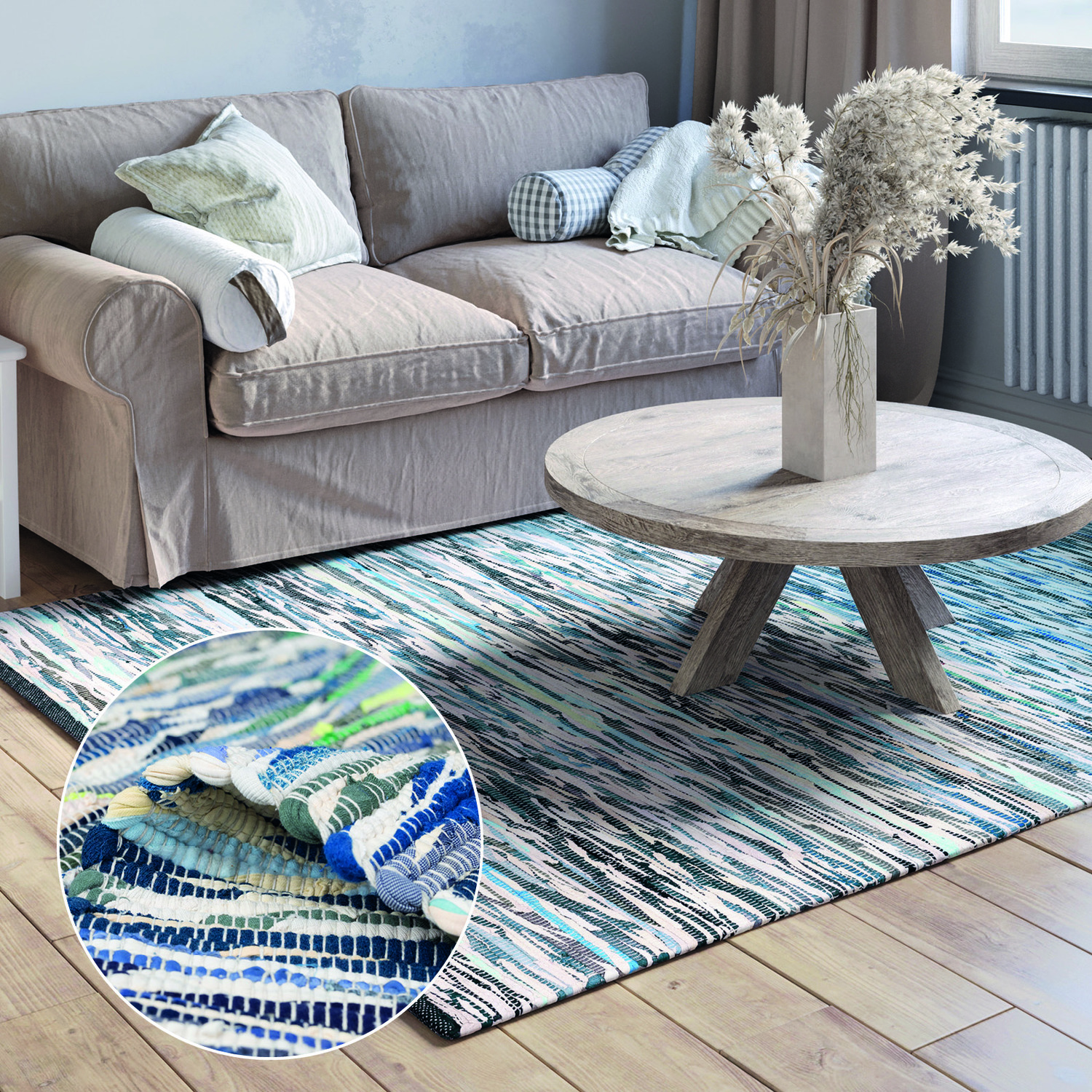
Why this product fits the profile: The mid-size format suits smaller seating areas, bedrooms or home offices. The neutral grey-white mix pairs easily with different furniture and wall colours.
The product data lists 170 × 120 cm, a depth of 1 cm and a net weight of 4 kg. That makes it easier to plan placement before you buy.
Handwoven Chindi structure, flat profile and straightforward cleaning by regular vacuuming or shaking out.
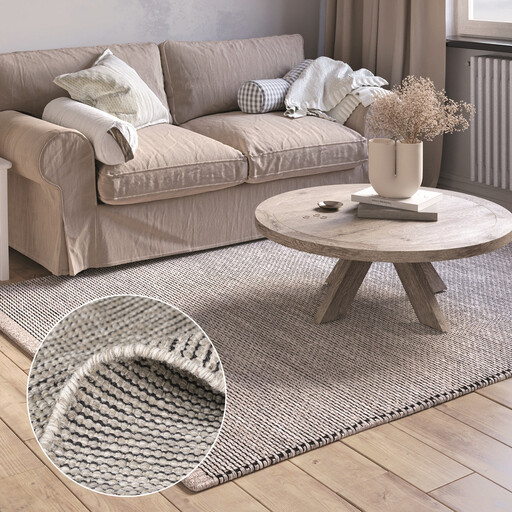
Why this product fits the profile: The large format covers a generous living area. The cream wool rug suits living rooms or bedrooms with ample floor space.
Materials and dimensions are clearly specified: wool, 290 × 200 cm, 1 cm depth and 14 kg net weight. That makes it easier to assess room size and underlay needs.
Handwoven wool, a sturdy described texture and a large rectangular size for bigger rooms.
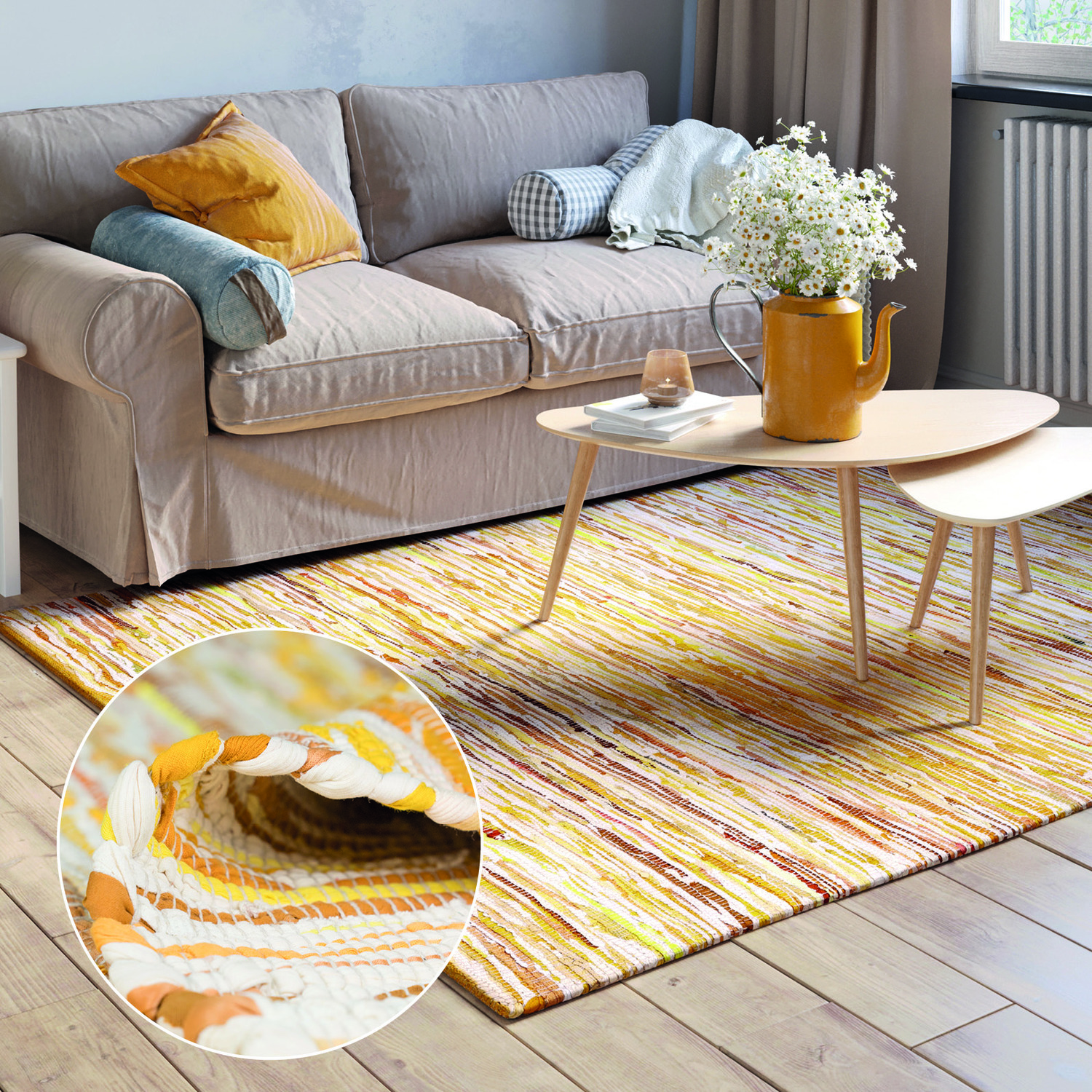
Why this product fits the profile: The larger size suits living rooms, dining areas or heavily used zones where you need a flat, predictable surface.
The details indicate 100% recycled cotton, a flat handwoven construction and a depth of 1 cm. Oeko-Tex Standard 100 is also specified for this product.
Recycled cotton, 230 × 160 cm, flat construction and cleaning described with a floor nozzle without a rotating brush.
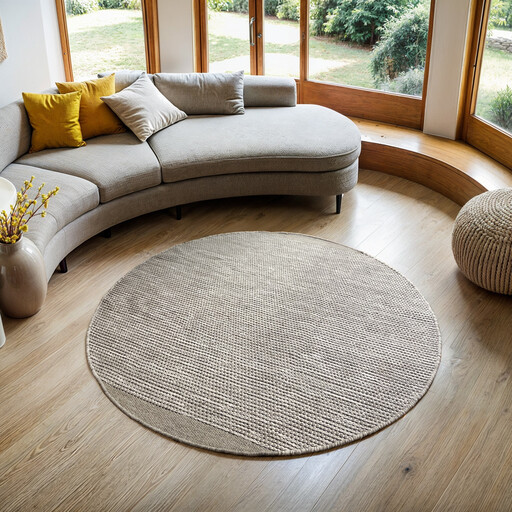
Why this product fits the profile: The round shape creates a clear focal point under a table or in a seating nook. The cream design complements modern, rustic and traditional furniture alike.
Consider diameter, height and weight separately: 200 × 200 cm, 1 cm depth and 10 kg net weight. Delivery is folded; creases may take a few days to settle.
Handwoven wool, a total height of 10 mm according to the product information, plus guidance on use with underfloor heating and robot vacuum cleaners.
We’ve compiled a complete, continuously updated list of products that fully meet these strict selection criteria and the safety regulations applicable in the EU.
Place the rug on a dry, clean and as even a surface as possible. On laminate, tiles or parquet flooring, a suitable non-slip underlay is recommended. The edges must lie flat. If delivered folded, unroll the rug and leave it for a few days to relax.
Lifespan depends on material, weave, usage, subfloor and care. A Chindi or wool rug described as robust can be suitable for everyday use, but it isn’t automatically protected against every type of stress. Regular vacuuming, avoiding heavy moisture and proper spot treatment will help maintain its condition.
Many flat-woven models are considered relatively easy to care for day to day, as dust can be removed with a suitable floor nozzle. However, “easy-care” doesn’t replace the manufacturer’s instructions. Check specifically whether a robot vacuum, a rotating brush, underfloor heating or damp cleaning is explicitly mentioned.