
Lieferung heute & morgen

Qualitätsgarantie

Willkommens-Angebote freischalten: KOSTENLOSE Lieferung | Bis zu 80 % RABATT | Kostenlose 30-Tage-JoyPlus-Testphase
App herunterladen
A hard floor cleaner can pick up dust, pet hair, spilled liquids and stains in one go. However, not every device suits every household. There are clear differences between wet-dry vacuums, mop vacuums, scrubber vacuums and steam mops when it comes to their intended use, maintenance requirements and floor compatibility.
Before you buy, you shouldn't just focus on high suction power or a long battery life. What really matters is whether the device is right for your flooring, the size of your home and your cleaning routine.
Figures like 16,000 or 22,000 Pa describe the negative pressure under certain conditions. On their own, they don't tell you how well a device picks up liquids or cleans along edges. The brush shape, airflow, filter and automatic adjustment to dirt levels all affect the result too.
So don't just compare the Pa number – also look at water tank size, brush width, edge clearance and cleaning mode.
Many hard floor cleaners are designed for tiles, vinyl, laminate and sealed wood. That doesn't automatically mean they can be used on untreated parquet, open-pored stone or delicate cork.
With wood and laminate in particular, the rule is: don't clean too wet, avoid standing water and follow the floor manufacturer's care instructions. A suitable parquet or laminate cleaner must be approved for the specific surface.
A hard floor cleaner with a self-cleaning function automatically rinses the roller and internal pipes, depending on the model. However, you still need to empty, rinse and dry the dirty water tank, filter and brush roller regularly. If dirty water stays in the device, odours can develop.
That's why a drying function, an easily accessible brush roller and clearly separate clean and dirty water tanks are very practical.
First, check which surfaces the device is approved for. Common specifications include hard floors, tiles, laminate, vinyl, sealed wood or ceramic. Rough and uneven surfaces can affect performance on some models.
The cleaning solution also matters. A concentrated floor cleaner must be diluted according to the manufacturer's instructions. For the emsal Floor Care Cleaner, for example, 75 ml per 5 litres of water is recommended. Overdosing can leave residue. Only use products that are suitable for your mop vacuum and always follow the user manual.
A cordless mop vacuum with around 30 to 50 minutes of runtime can be enough for many homes. The actual duration depends on the cleaning mode, how dirty the floor is and the age of the battery.
Also pay attention to tank sizes. Small tanks reduce the device's weight but mean you'll need to refill and empty them more often. For larger households or pet owners, bigger tanks and automatic water supply can make the job easier.
A scrubber vacuum that can lie flat is handy if you regularly clean under the sofa, bed or cupboard. However, figures like 180° flat function or a specific lying height should be checked against your actual furniture clearance.
For daily floor care, weight, manoeuvrability and the position of the roller are also important. Edge cleaning with a small clearance can save time around skirting boards and kitchen units.
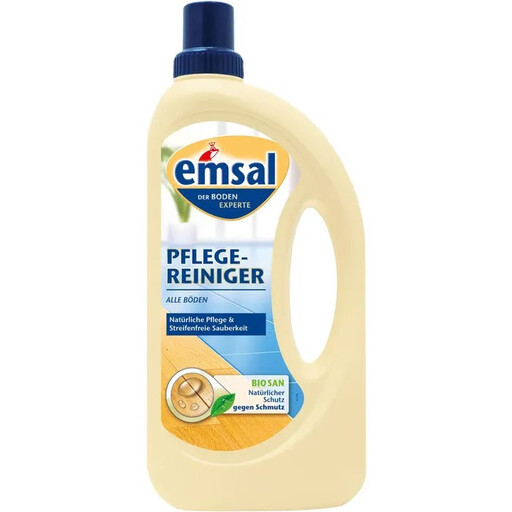
Why this product fits the profile: The concentrate is designed for manual cleaning of many sealed hard floors and is ideal for users who don't need an electric mop vacuum.
The instructions specify the exact dilution and advise using a sparingly damp mop on wood, laminate and cork. This helps you avoid over-wetting.
1-litre concentrate; according to the product information, suitable for tiles, laminate, parquet, stone, vinyl and PVC, provided the floor manufacturer allows it.
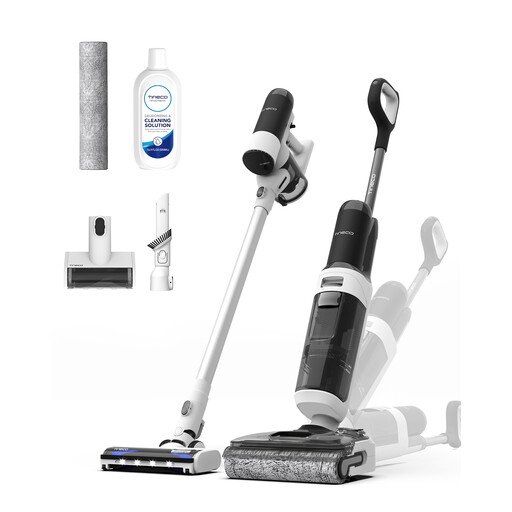
Why this product fits the profile: Households with multiple cleaning tasks get a device for wet and dry cleaning with a flat design and separate runtime figures.
The specifications separate wet and dry operation: up to 40 minutes wet vacuuming and up to 50 minutes dry vacuuming. This makes planning easier than a single, general runtime figure.
180° flat function; stated 85°C quick drying and 21 kPa suction power.
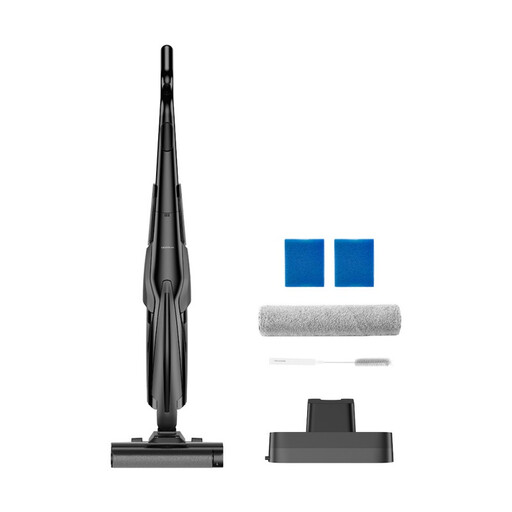
Why this product fits the profile: This model is aimed at users who frequently clean larger hard floor areas and value a flat working position and automatic roller care.
The stated hot water wash and hot air drying function addresses residual moisture on the roller. However, the tank and filter still need to be maintained according to the manufacturer's instructions.
22,000 Pa according to the product information; 180° flat function and up to 50 minutes maximum runtime.
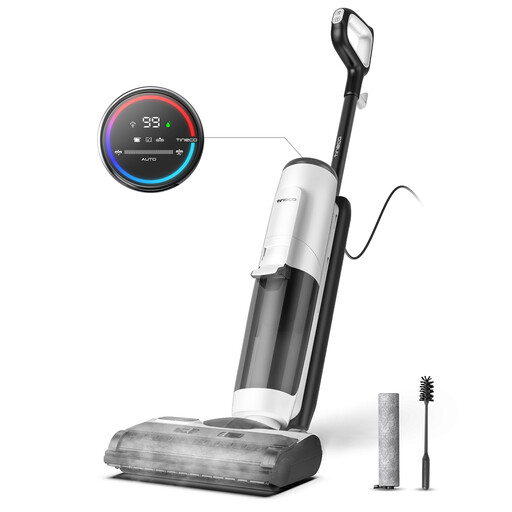
Why this product fits the profile: The combination of wet-dry vacuum and steam function is designed for sealed hard floors and sticky messes.
The usage instructions limit the device to suitable indoor hard floors such as vinyl, tiles and sealed wood. It is not intended for untreated wood or materials that haven't been approved.
Steam cleaning and wet-dry vacuuming in one device; digital display and an additional roller set according to the product description.
A floor cleaner for hard floors should always match both the material and the device. For laminate, parquet and cork, a well-wrung mop is essential. Tiles and stone may have different care requirements depending on the surface. Always read the label and test a new product on an inconspicuous area first.
Products like the POLIBOY Bio Floor Cleaner or the Stardrops The Pink Stuff All-Purpose Floor Cleaner list various areas of use. The instructions regarding dilution, rinsing and unsuitable surfaces are binding. Care products with shine or protective components aren't automatically suitable for every material.
We've put together a complete, regularly updated list of products that fully meet these strict selection criteria and the safety regulations in force in the EU.
Many models are designed for laminate, provided it is a suitable, sealed or water-resistant floor. Use little liquid, avoid standing water and check the floor manufacturer's specifications.
The stated runtime is often between around 30 and 50 minutes, depending on the model and operating mode. High suction levels, heavy soiling and an ageing battery can reduce the actual usage time. For large areas, you should compare the maximum runtime with the tank capacity and charging time.
In addition to electricity consumption, there are costs for cleaning solution, filters and brush rollers. Devices with a self-cleaning function can reduce maintenance effort, but still need water and possibly a special cleaning solution. Empty and rinse the dirty water tank after each use to keep floor care hygienic and odour-free.