
Lieferung heute & morgen

Qualitätsgarantie
App herunterladen
Kategorien
Choosing the right hardside suitcase is determined by material properties, volume, weight, and functional components like the wheel system and locking mechanism. An informed decision requires analysing these parameters against your intended travel purpose and duration. This guide focuses on the objective criteria relevant for selecting the perfect model.
A suitcase's technical specifications define its durability, handling, and security. The following points are central to making an informed purchasing decision.
The outer shell is the most critical component of a hardside suitcase. The three most common materials have distinct physical properties:
Modern suitcases are typically equipped with four wheels and are known as spinner suitcases. These offer 360-degree manoeuvrability, allowing the suitcase to be pushed effortlessly alongside you instead of being pulled. This significantly reduces strain on your arm and shoulder, especially in narrow aisles or queues. A 4-wheel suitcase thus offers a significant comfort advantage over models with only two wheels.
A trolley with a TSA lock is essential for travel, particularly to the USA. The Transportation Security Administration (TSA) is authorised to open luggage for inspection. A TSA-certified lock allows security personnel to open the suitcase with a master key without damaging the lock or the case itself. Without such a lock, a locked suitcase may be forcibly opened.
The size of a suitcase is often specified in inches (height) or litres (volume). For trips lasting one to three weeks, a large suitcase with a volume between 70 and 100 litres is generally sufficient.
The following models have been selected based on their specific material combinations, functional features, and volume.
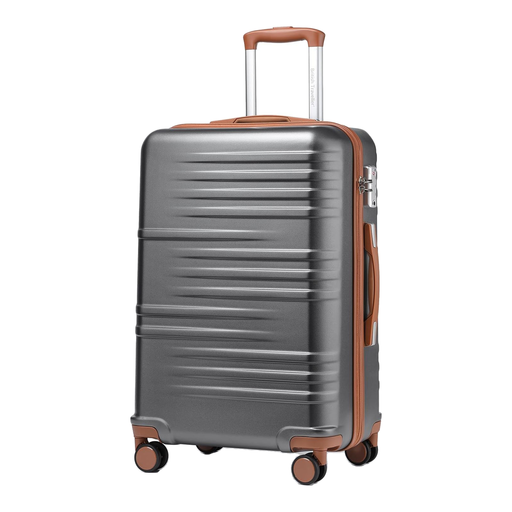
British Traveller Medium PC Hard Shell Check-in Suitcase, 64 cm, Grey Brown
Why we recommend this product: This model represents a balanced solution for travellers. The material blend of ABS and PC provides a great balance of lightness and resilience. With a 57-litre volume, it is well-suited for medium-length trips.
Advantages:
Who it's for: Individuals seeking a versatile suitcase for trips up to two weeks, who value a combination of durability and low weight.
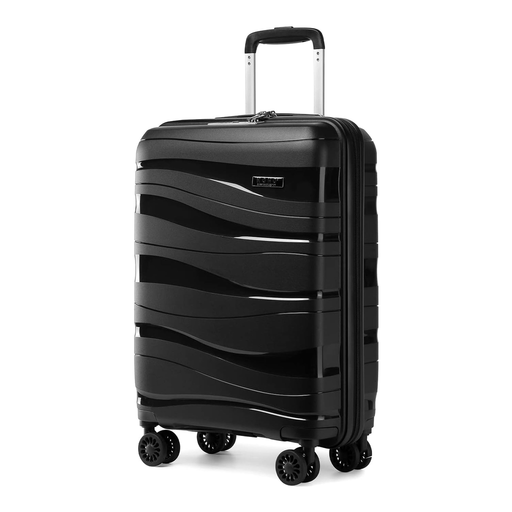
Kono Large Check-in Luggage 28-inch Lightweight Polypropylene Hard Shell Suitcase, Black
Why we recommend this product: This model stands out with its 100% polypropylene (PP) construction, making it extremely lightweight yet highly impact-resistant. The generous 100-litre volume is ideal for long journeys.
Advantages:
Who it's for: Leisure and business travellers who need maximum packing volume with minimal suitcase weight for extended stays.
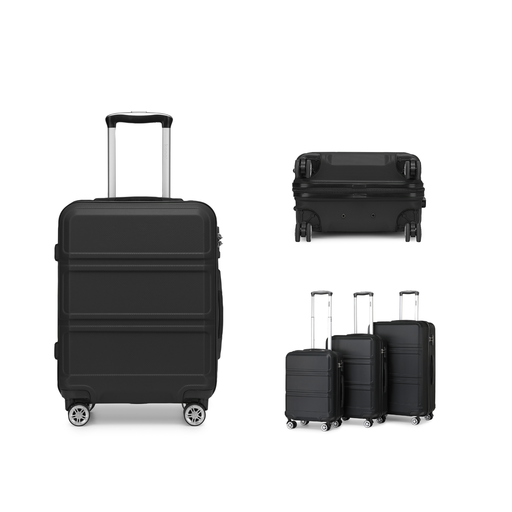
Large Travel Case, Lightweight Hardshell Suitcase with Built-in Lock and Easy-Glide Wheels, Black
Why we recommend this product: This ABS hardshell model offers a very large storage volume of 94 litres. It is a pragmatic choice for travellers seeking a spacious and functionally equipped suitcase for longer trips.
Advantages:
Who it's for: Travellers who need a very spacious suitcase for extended holidays or business trips and appreciate a solid set of essential features.
Should the models presented here not perfectly match your requirements, a broader selection of luggage may offer the right solution. You can find an overview of different sizes and styles in our Trolley & Suitcase Bags category.
1. What is the advantage of a hardside suitcase over a softside one? A hardside suitcase offers better protection for fragile items inside, as the rigid shell absorbs external shocks and pressure more effectively. Additionally, hardside cases are generally more water-resistant and easier to clean than fabric models.
2. Which hardside suitcase material is the most durable? Polycarbonate (PC) and Polypropylene (PP) are considered very durable. PC is known for its flexibility and ability to absorb impacts, while PP stands out for its extremely low weight combined with high impact resistance. ABS is a lighter and often cheaper alternative, but it is less flexible.