
Lieferung heute & morgen

Qualitätsgarantie

Willkommens-Angebote freischalten: KOSTENLOSE Lieferung | Bis zu 80 % RABATT | Kostenlose 30-Tage-JoyPlus-Testphase
App herunterladen
Choosing the right carry-on suitcase is a crucial decision for any air traveller. A suitable hard-shell carry-on suitcase not only protects its contents but also ensures a smooth airport experience by complying with airline baggage regulations. However, with the vast array of models, materials, and features available, finding the right one can be overwhelming.
This article serves as a helpful guide. It highlights the essential features to consider when making your selection and presents a curated list of models that are well-suited for different travel needs due to their specific characteristics.
To make an informed decision, you should consider three key aspects: the material, the dimensions, and features like wheels and locks.
The hard shell of a suitcase is typically made from one of three plastics, each with its own distinct properties.
Most airlines have size restrictions for cabin baggage. A cabin trolley with dimensions of 55x40x20 cm is accepted by many major European airlines. Nevertheless, it is always advisable to check the specific regulations of your airline before you travel. A lightweight suitcase with 4 wheels is advantageous as it provides more leeway for packing weight and makes transport easier.
Modern carry-on suitcases are typically designed as spinner suitcases. This means they have four 360° rotating wheels that allow for effortless manoeuvring in any direction—a clear advantage in crowded airport terminals. An integrated trolley with a TSA lock is also an important security feature, especially for travel to the USA. It allows security personnel (TSA) to open the suitcase with a master key without damaging the lock.
Based on the criteria mentioned above, here are three models that stand out for their specific features.
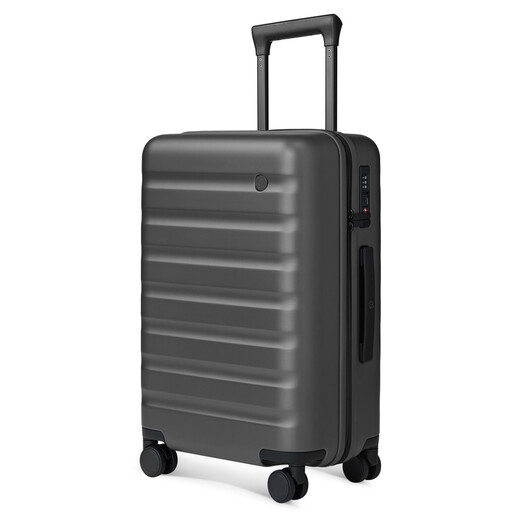
Why it stands out: The design of this suitcase features a completely flush top surface. The handle is fully recessed, creating a flat area that can be used as a convenient shelf for a laptop or a cup of coffee on the go.
Advantages:
Who it's for: Business travellers and digital nomads who appreciate functional details like the flat top surface and robust security features.

Why it stands out: This suitcase combines a 100% polypropylene shell with a very low unladen weight of just 2.41 kg. This maximises the available packing weight, which is particularly beneficial on airlines with strict weight restrictions.
Advantages:
Who it's for: Travellers who prioritise minimal suitcase weight to make the most of their packing allowance without compromising on durability.
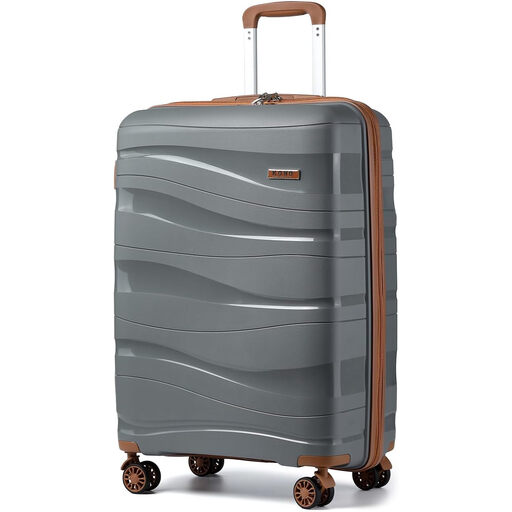
Why it stands out: This model comes with a separate cosmetics bag, which allows for structured organisation of toiletries and smaller personal items.
Advantages:
Who it's for: Travellers who prefer a well-thought-out interior layout and the added organisational benefit of a separate bag for short trips or weekend getaways.
If our recommendations don't include the perfect suitcase for your needs, you can find a wider selection of travel luggage in our unclaimed luggage category. There are more models and options to discover there.
A hard-shell suitcase offers better protection for fragile items inside. It is also more resistant to moisture and is generally easier to clean than soft-shell models.
A TSA lock is a type of luggage lock that can be opened by the U.S. Transportation Security Administration (TSA) and other international security agencies using a master key. This allows for baggage inspection without having to break the lock. The owner uses a personal combination to secure it.
For a lightweight yet sturdy carry-on suitcase, polypropylene (PP) and polycarbonate (PC) are excellent materials. Both offer a good balance of low weight and high durability. Polypropylene is often the lighter of the two options.