
Lieferung heute & morgen

Qualitätsgarantie

Willkommens-Angebote freischalten: KOSTENLOSE Lieferung | Bis zu 80 % RABATT | Kostenlose 30-Tage-JoyPlus-Testphase
App herunterladen
The legal requirement for smoke alarms in Germany is a crucial measure for fire safety in residential properties. However, when it comes to choosing the right system, many face a challenge: the market is flooded with options whose technical details are often unclear. An interlinked smoke alarm set with a 10-year battery promises a durable and connected safety solution, but not all products deliver on that promise. This guide will help you avoid common purchasing pitfalls and make an informed decision for your home.
Before you make a purchase, it's essential to understand the typical traps that can lead to wasted money and security gaps.
To make the right choice, you should focus on three core technical parameters. These define the reliability and practical utility of your fire alarm set.
An interlinked smoke alarm set only reaches its full potential through its network. In the event of a fire, every second counts. If an alarm in the basement detects smoke, residents on the top floor must be warned immediately. Pay attention to the maximum number of linkable devices. Systems that can connect up to 40 alarms in one network are also suitable for large residential buildings or multi-storey properties. The setup should be as straightforward as possible, achievable at the push of a button without requiring technical expertise.
The "10-year battery" claim needs clarification. The lowest-maintenance and safest option is a smoke alarm with a sealed-in lithium battery, designed to last the device's entire ten-year operational lifespan. After this period, the entire unit must be replaced anyway, as the sensitivity of the sensors degrades over time. This design completely eliminates the risk of a dead battery and the associated maintenance hassle. An additional feature like a smoke alarm with a hush function is also practical for temporarily deactivating false alarms, for instance from kitchen steam, without having to remove the battery.
Certification to the EN 14604 smoke alarm standard is non-negotiable. It is proof that the alarm has been tested for its functionality, volume (at least 85 dB at 3 metres), and durability. Ensure this mark is clearly displayed on the product or its packaging. Products from established manufacturers like Heiman smoke alarms meet this standard, providing a reliable foundation for your fire safety.
Based on the criteria mentioned, we have curated a selection of products suitable for various living situations and requirements.
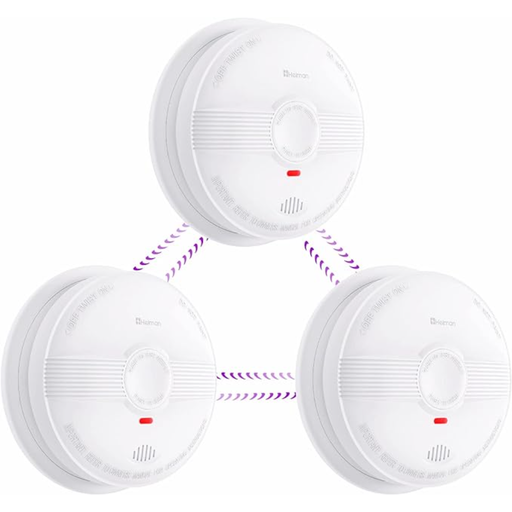
Why This Fits Their Persona: This 3-pack is ideal for a compliant setup in a standard apartment. It covers the master bedroom, a child's room, and the hallway, while the wireless interconnection ensures an alarm is heard everywhere. Perfect for tenants, landlords, and families looking for a reliable baseline solution.
The set features sealed-in 10-year batteries and is certified to EN 14604. The ability to interlink up to 40 devices ensures stable and expandable coverage.
Excellent value for money for an initial setup. Simple installation and pairing provide immediate protection in the most critical living areas.
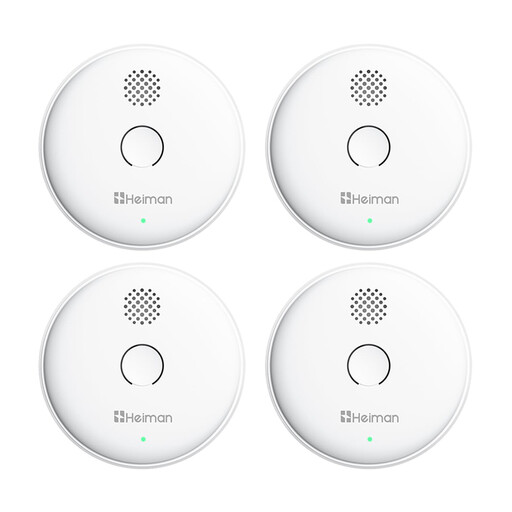
Why This Fits Their Persona: For homeowners who need to secure multiple floors, basements, and hallways. This 4-pack provides a solid foundation for comprehensive coverage, ensuring an alarm is relayed from the basement to the attic.
This set bypasses the pitfall of unstable connections with a robust radio system for up to 40 alarms. The sealed-in 10-year batteries and EN 14604 certification guarantee long-term reliability.
A larger set for immediate, whole-house coverage. The hush function is particularly useful near kitchens or bathrooms to manage nuisance alarms.
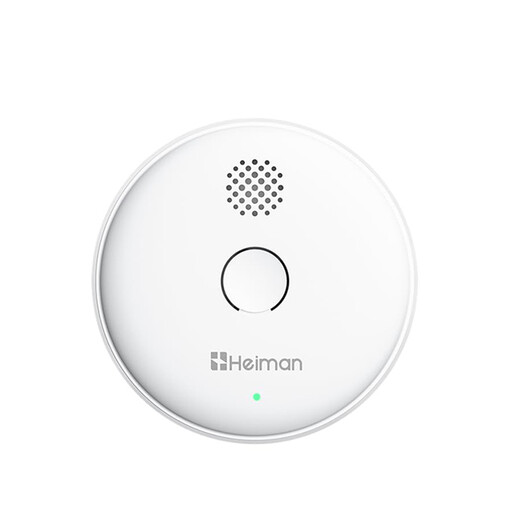
Why This Fits Their Persona: Ideal for anyone looking to expand an existing HEIMAN wireless system or secure a single area like a garden shed, workshop, or a newly converted attic. It offers maximum flexibility for retrofitting.
This single alarm is fully compatible with other alarms in the same series, preventing the incompatibility trap. It meets the same high standards (EN 14604, 10-year battery) as the multi-packs.
High flexibility for retrofitting or for small-scale applications. Allows for a needs-based and cost-effective expansion of your safety system.
We have compiled a complete, real-time list of products that fully satisfy these strict selection criteria and European safety standards.
In accordance with the DIN 14676 application standard, smoke alarms must be installed in all bedrooms and children's rooms, as well as in hallways that serve as escape routes from habitable rooms. For comprehensive protection, installation is recommended in all living spaces (e.g., living rooms, home offices). Alarms are typically mounted in the centre of the ceiling, with a minimum distance of 50 cm from walls or furnishings. Kitchens and bathrooms should be avoided due to the high probability of nuisance alarms caused by steam.
Pairing wireless smoke alarms is usually straightforward with modern devices. Typically, one alarm is designated as the "master." Then, the other alarms ("slaves") are put into a pairing mode and connect to the master at the push of a button. After successful pairing, the entire system should be tested by pressing the test button on any alarm. All interlinked devices must then sound an alert. The exact procedure can be found in the respective user manual.
The EN 14604 standard is the European benchmark for smoke alarms. It specifies the requirements and testing procedures for products used in households. An alarm certified to this standard has been tested for criteria including: