If you’d rather not change lenses while you’re out and about, a compact camera with a suitable wide-angle lens, stabilisation and a good zoom range is an obvious choice. If you want to choose your lens and have more control in low light, compare a mirrorless camera with the lens you’ll actually take with you. In the rain, it’s the protection of the whole camera-and-lens setup that matters; the weight of the body alone tells you little about how much your kit will weigh.
Which camera is right for you?
For shooting in changing woodland light
For anyone photographing bright clearings and darker stretches of trail who wants to make considered decisions about exposure and camera shake. Nikon Germany explains exposure choices when shooting into the light.
For hikers travelling light
For anyone who wants to keep a camera close at hand and capture wide views and distant details without changing lenses wherever possible. Sony Germany and Panasonic Germany list the fixed zoom focal lengths for their respective compact models.
For shooting in changeable weather
For anyone who wants to take photos in the rain and check the protection offered by the body and attached lens as a complete setup. OM SYSTEM describes the body’s weather sealing and separately lists compatible weather-resistant lenses.
What to consider when buying
First decide whether you want to avoid changing lenses. Then compare the weight of your ready-to-use kit, its protection in the rain and the field of view you need.
| Buying priority |
What to check |
Who it matters most to |
| Exposure and sharpness |
Check exposure compensation, RAW shooting and the stabilisation of the specific camera-and-lens combination. Stabilisation is no substitute for choosing an appropriate shutter speed when your subject is moving. |
If I’m photographing clearings and dark stretches of trail handheld, I want to assess exposure and camera shake separately. Around 33% of consumers prioritise control in changing light. |
| Portability |
Compare the weight and packed size of your ready-to-use kit, not just the camera body. |
Anyone who wants to keep their camera close at hand on longer walks and carry as little extra kit as possible will pay particular attention to total weight. Around 27% of consumers put portability first. |
| Protection in the rain |
Check the protection ratings for the exact camera body and lens you’ve chosen, as well as the conditions they’re designed for. |
If I’m taking photos in changeable weather, I want to know whether the body and lens are suitable for the conditions I’ll be using them in. Around 20% of consumers prioritise weather protection. |
| Field of view and zoom |
For compact cameras, compare the widest and longest focal lengths; for mirrorless cameras, the lens you actually choose is what counts. |
For anyone who wants to switch between wide trail views and distant details, the available field of view is key. Around 20% focus on this flexibility. |
Common misconceptions
-
Comparing only the body weight of a mirrorless camera
The body weight doesn’t tell you how much your kit will actually weigh on the trail. You’ll need to add a suitable lens.
Compare the weight and packed size of the complete setup you plan to take with you.
-
Assuming image stabilisation prevents all blur
Manufacturers’ stabilisation claims apply under specific conditions and won’t necessarily compensate for subject movement.
Distinguish camera shake from subject movement, and check the test conditions behind any stated number of stops.
-
Assuming body protection applies to every lens
According to OM SYSTEM, the OM-5 Mark II’s IP53 rating applies to the body; compatible weather-resistant lenses are listed separately.
Before taking photos in the rain, check the specifications for the exact camera-and-lens combination.
Camera brands: a guide
Sony
The RX100 VII is a compact camera with a fixed zoom lens, viewfinder and optical image stabilisation for photos.
- Sony Germany lists a 1.0-inch sensor, a 24–200 mm full-frame equivalent zoom range and an f/2.8–4.5 aperture.
- Focal length and aperture vary with the zoom setting. These specifications don’t guarantee weather protection.
Panasonic
The LUMIX DC-TZ300 is a compact camera with a built-in zoom lens for anyone looking for a wider zoom range without changing lenses.
- Panasonic Germany lists a 24–360 mm full-frame equivalent zoom range, a 1.0-inch sensor and image stabilisation.
- These specifications describe the model, not its current availability from any particular retailer.
Canon
The EOS R50 is an APS-C mirrorless camera, so choosing a suitable RF or RF-S lens is part of the decision.
- Canon Germany lists 24.2 MP and a weight of 375 g for the black body with battery and memory card.
- According to Canon’s specification sheet, the R50 has no sensor-shift stabilisation; image stabilisation for photos depends on the lens.
Fujifilm
The X-S20 is an APS-C mirrorless camera with an X-mount and in-body image stabilisation.
- Fujifilm lists 26.1 MP and five-axis in-body image stabilisation.
- According to Fujifilm, the rating of up to seven stops applies under the stated CIPA test conditions with the XF35mmF1.4 R, and doesn’t automatically apply with every lens.
OM SYSTEM
The OM-5 Mark II is a mirrorless camera body for anyone who often takes photos outdoors and wants to choose the body and lens as a complete setup.
- OM SYSTEM lists IP53 protection for the body and a weight of 418 g including battery and SD card.
- The body’s protection rating isn’t a blanket claim about any lens attached to it.
Camera options at Joybuy
This selection includes pocket and action cameras, as well as an APS-C mirrorless camera, to suit different needs for field of view, kit and use in wet weather.
 No image available
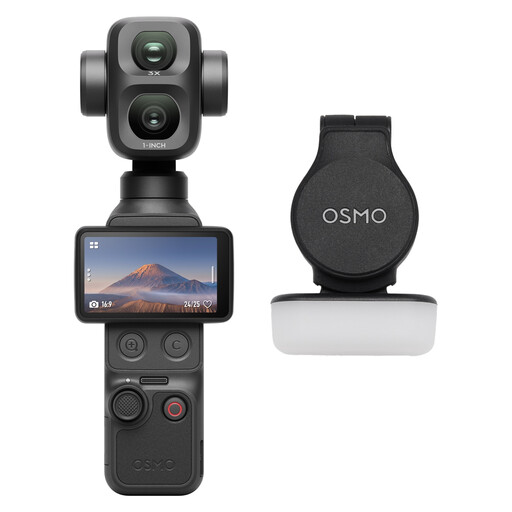
Osmo Pocket 4P, Standard Combo, Black
As a pocket-sized model, it’s worth considering if you’re looking for a camera to take out and about rather than a body with interchangeable lenses.
Version: Standard Combo, Black.
View at Joybuy
 No image available
DJI Osmo Pocket 4 Standard Combo
An option to consider if you’re looking at video as well as photos, and want an integrated zoom.
Features include a 1-inch CMOS sensor, 3-axis stabilisation, 2× zoom, 107 GB of built-in storage, a 2-inch rotating screen and 4K/240fps.
View at Joybuy
 No image available
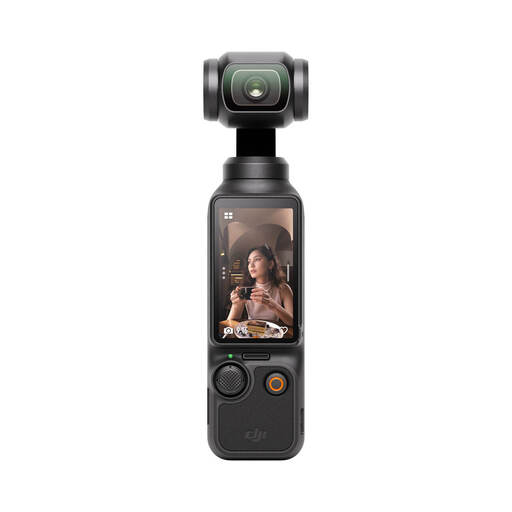
DJI Osmo Pocket 3
This pocket camera may appeal if you’re comparing compact options for taking both photos and videos.
Features include a 1-inch CMOS sensor, 3-axis stabilisation, 4K/120fps and a rotating 2-inch touchscreen.
View at Joybuy
 No image available
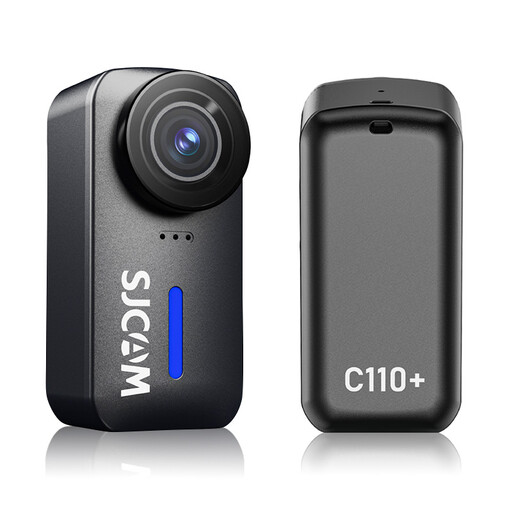
SJCAM C110+ action camera
As an action camera, it’s an alternative worth considering if an ultra-wide view of the trail matters more to you than a traditional camera viewfinder.
The product name specifies a 170° wide-angle lens, f/1.8 and 20 MP photos. It describes the camera with its housing as waterproof to 30 m; check the conditions for this use.
View at Joybuy
 No image available
Sony Alpha 6100 APS-C with 16–50 mm power zoom lens, Black
This mirrorless camera is worth considering if you want to compare an interchangeable-lens system with a 16–50 mm zoom lens.
According to the description, this product isn’t water-resistant; bear that in mind when planning to take photos in the rain.
View at Joybuy
Frequently asked questions
How do you photograph bright clearings against dark woodland?
Check the exposure and the look you want rather than relying solely on automatic settings. Exposure compensation can help when shooting into the light; whether the bright areas or the darker details on the trail matter more will depend on your subject.
Is a weather-sealed camera body enough for taking photos in the rain?
Not as a blanket guarantee for the whole setup. According to OM SYSTEM, the OM-5 Mark II’s IP53 rating applies to the body; check the compatible lens separately.
Can you leave the forest trail in Harz National Park to take a photo?
No, if you’re taking the photo within the national park. Harz National Park requires visitors to stay on signposted trails and follow any closures. This isn’t a blanket rule for every trail outside the national park.
What are your rights when buying a camera online in Germany?
In Germany, online purchases generally come with a 14-day right to cancel. The consumer advice centre explains that the period normally starts when the contract is concluded or the goods are received. If a product is faulty, statutory consumer rights against the retailer are separate from a voluntary manufacturer’s warranty; check the terms and conditions and warranty details for your purchase.


