
Lieferung heute & morgen

Qualitätsgarantie

Willkommens-Angebote freischalten: KOSTENLOSE Lieferung | Bis zu 80 % RABATT | Kostenlose 30-Tage-JoyPlus-Testphase
App herunterladen
A citrus cleaner may be formulated for glass, kitchen surfaces, floors or limescale, depending on its ingredients. The scent alone, however, tells you little about what it is actually suitable for. If you choose solely based on “citrus scent”, a large bottle or bold marketing claims, you could easily end up with a product that must not be used on the surfaces you have in mind.
“Lemon”, “orange” or “grapefruit” often describe the scent or individual ingredients, not necessarily what the product is designed to clean. A glass cleaner needs different properties from a bathroom cleaner for limescale. For greasy kitchen surfaces, surfactants or specialist grease-cutting formulas are more relevant.
A citrus all-purpose cleaner is often suitable for smooth, washable surfaces. That doesn’t mean it’s suitable for untreated wood, natural stone, aluminium or delicate painted finishes. Some acidic products can damage acid-sensitive materials, while abrasive cleaners may scratch glossy surfaces.
Claims such as biological cleaner, “natural power” or “plant-based” shouldn’t be taken as blanket assurances of environmental friendliness. What matters is the full product description, dosage, packaging, ingredients and disposal instructions. Even a cleaner containing lemon or orange oil may include fragrances and preservatives that could be relevant if you’re sensitive to them.
First, check whether the product is suitable for the surface you want to clean:
Surfactants loosen and disperse dirt. Acids such as citric or acetic acid are often used to tackle limescale and water marks. Abrasive particles, such as those in a lemon cream cleaner, help with mechanical cleaning but can dull delicate or polished surfaces.
You can’t tell whether a cleaner is streak-free from its scent or colour alone. Check the specific surface recommendations, use a small amount and follow the advice to wipe over with a dry, lint-free cloth.
Read the hazard warnings before you buy. The products featured here list fragrances such as limonene or linalool, as well as various preservatives. These may cause allergic reactions in people with sensitivities.
Also remember to:
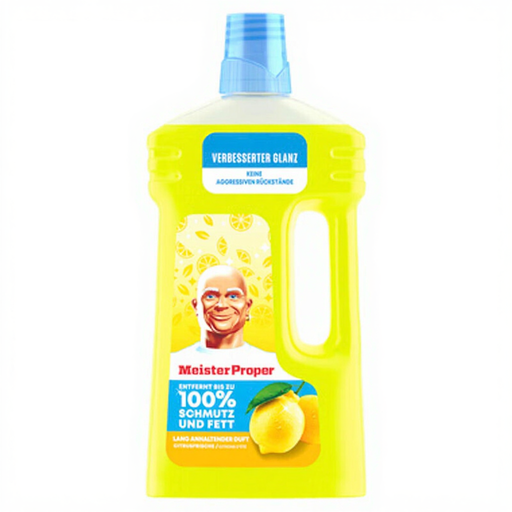
Why it suits this profile: This 1-litre household cleaner is designed to be diluted for use on many washable surfaces, making it suitable for regular cleaning tasks.
The product information specifically states that it isn’t suitable for non-washable surfaces or untreated or oiled wood, and gives a clear dosage of 60 ml per 5 litres of water.
1 litre; described for diluted and spot cleaning; citrus scent as a product feature.
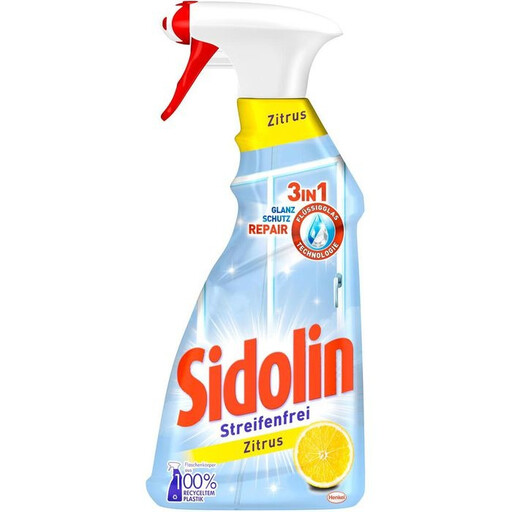
Why it suits this profile: This glass cleaner is designed for windows, mirrors, glass tables, car windows and other smooth surfaces.
The instructions clearly recommend a light spray followed by wiping with a dry, lint-free cloth. This helps you avoid using too much product.
500 ml; contains bio-alcohol according to the product description; designed for several glass and high-gloss surfaces.
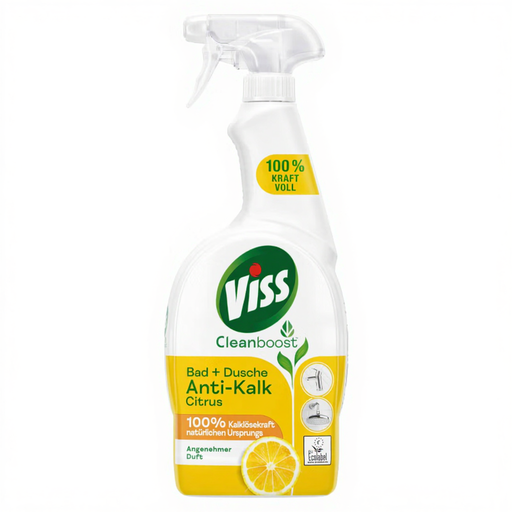
Why it suits this profile: This spray is designed for showers and bathrooms, particularly to tackle limescale, soap residue and everyday dirt.
The product information excludes marble, natural stone and worn enamel. For new or unusual surfaces, it recommends testing the product on an inconspicuous area first.
750 ml; contact time specified for tougher limescale deposits; designed for bathroom and shower surfaces.
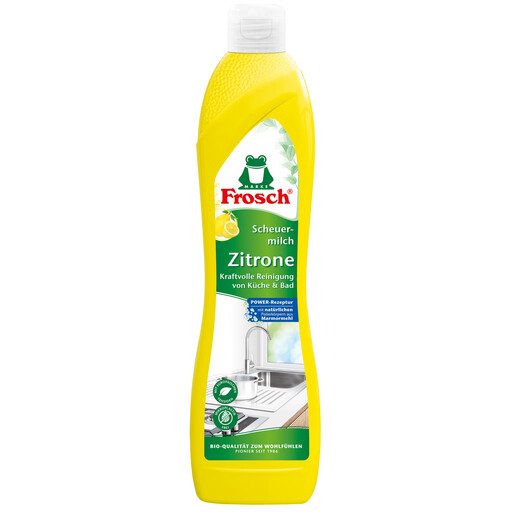
Why it suits this profile: This cream cleaner is listed for kitchens and bathrooms, as well as surfaces including ceramic, enamel, stainless steel, glass and ceramic glass.
The instructions warn against using hard, scratchy sponges and recommend testing the product first on delicate surfaces. This helps you control its abrasive action.
500 ml; contains natural micro-marble particles according to the product description; listed for specific kitchen and bathroom surfaces.
We’ve put together a complete, regularly updated list of products that meet these strict selection criteria and fully comply with the safety regulations in force across the EU.
For regular cleaning, dosage matters more than buying a particularly large quantity of product. Concentrates can cover larger areas when diluted correctly, while spray cleaners let you target specific spots. Spray only as much as you need to tackle the dirt. A short contact time can help with limescale and grease stains, if the label recommends it.
A clean, dry cloth makes a real difference to the result. For glass, use lint-free cloths. In the kitchen, change cloths regularly and follow the rinsing instructions after cleaning surfaces that come into contact with food.
For limescale and soap residue, a bathroom cleaner for limescale is a better choice than a general household cleaner. Always check the material guidance, as acidic formulas may not be suitable for marble, natural stone, certain metals or delicate enamel.
Yes, provided the product is specifically labelled as a glass cleaner or intended for glass surfaces. According to the product information, Sidolin Streak-Free Citrus Cleaner 500 ml is designed for windows, mirrors and other glass surfaces. Using a small amount and wiping with a dry, lint-free cloth can help prevent streaks.
Shelf life depends on the manufacturer’s instructions, packaging and storage conditions. Store the bottle upright, tightly closed and in a dry place, away from direct sunlight and frost. Check the printed best-before date and batch information on the packaging.