What should you consider when buying?
First decide how much you want to do yourself when preparing espresso and milk. Then compare cleaning, the complete set-up and the ongoing costs for the way you usually use it.
| Consideration |
What to look for when buying |
Who is this important to? |
| Milk preparation |
Check the milk system or steam wand, drinks menu and cleaning steps for the exact model. |
If I want to do as little as possible after shopping, how the machine handles milk matters most to me; around 36% of consumers put convenience when preparing milk first. |
| Control over espresso and milk froth |
Check whether a grinder is built in and which steps, such as grinding, dosing and frothing, you’ll need to do by hand. |
If I want to adjust the espresso and milk myself, I’m more willing to put in some extra work; around 29% of consumers prioritise hands-on control. |
| Ongoing costs |
Compare coffee portions, any grinder or milk frother you may need, and care products on the basis of the same level of use. |
If I make lattes regularly, I want to budget for coffee and care products as well as the machine; around 21% of consumers focus mainly on the overall cost. |
| Space and single servings |
Allow space for the machine and milk solution, and check which capsules are compatible with the system. |
If I only make a single serving occasionally, the complete set-up needs to fit on my available worktop; around 14% of consumers prioritise space and occasional use. |
Joybuy coffee and milk products
The models below include bean-to-cup machines with milk systems and a Nespresso Original capsule machine with automatic milk preparation.
 No image available
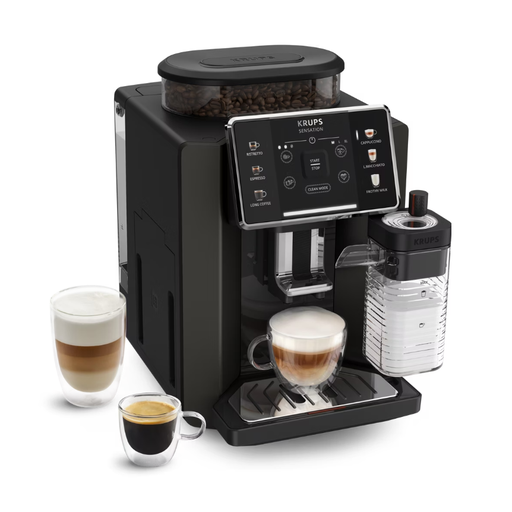
Krups Sensation Milk EA9129
For coffee and milk drinks with just a few steps; the description lists a one-touch milk function and a removable milk container.
Six coffee and milk specialities; according to the description, the milk container is dishwasher-safe.
The milk system and brewing components need regular care.
View at Joybuy
 No image available
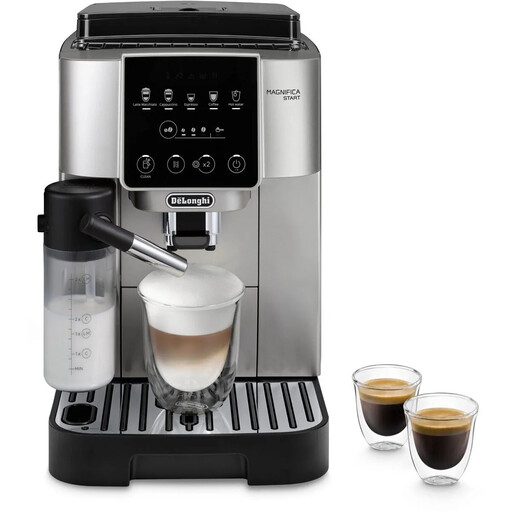
De’Longhi Magnifica Start ECAM 220.80.SB
For espresso and milk drinks at the touch of a button; the description lists Latte Macchiato and the LatteCrema Hot milk system.
Five one-touch drinks, an integrated grinder with 13 grind settings, a 1,8-l water tank and a 250-g bean container.
Cleaning, rinsing and descaling programmes are provided for the milk and brewing components.
View at Joybuy
 No image available
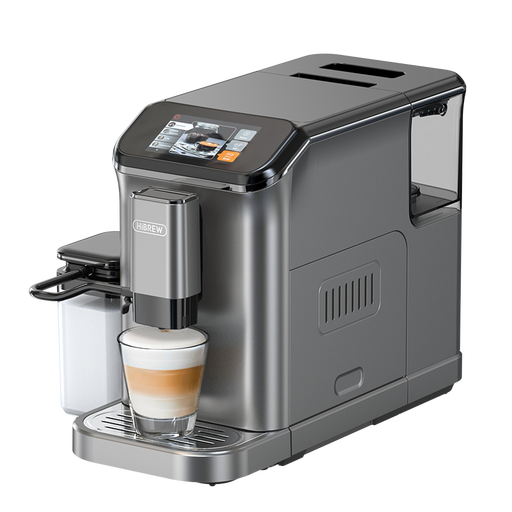
HiBREW H16
For espresso and milk drinks from one machine; the product description lists an integrated grinder and a cappuccino milk system.
15 grind settings, a dual heating system, a touch display and six coffee options.
The coffee and milk volumes can be adjusted, according to the description.
View at Joybuy
 No image available
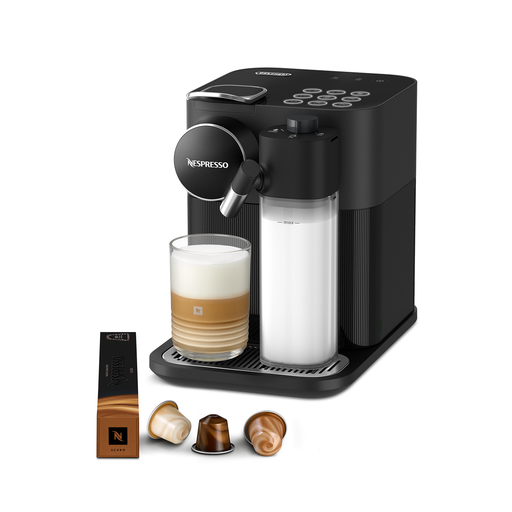
Nespresso De’Longhi Gran Lattissima EN640.B, Original
For individual latte servings with automatic milk preparation; this model is designed for Nespresso Original capsules.
One-touch operation and an automatic milk system; the product name lists a pressure of 19 bar.
A rinse cycle is recommended after preparing milk drinks.
View at Joybuy
 No image available
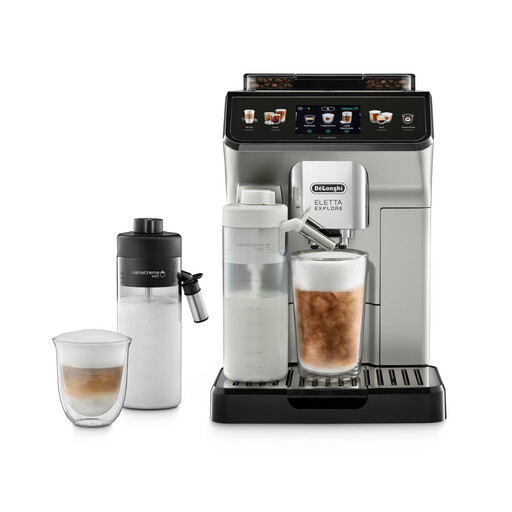
De’Longhi Eletta Explore ECAM450.55.S
For coffee and milk drinks with LatteCrema Hot & Cool; the description lists hot and cold milk drinks.
A conical grinder and a choice of 40 recipes are listed.
Recommended care includes cleaning, rinsing and descaling programmes.
View at Joybuy
Frequently asked questions
Do I need a machine with a hazelnut programme?
No, you don’t need a special machine programme for hazelnut flavour. The key machine functions are preparing the coffee and milk; you can choose the flavour separately. If you’re buying flavoured capsules, check the system: Nespresso lists Roasted Hazelnut as a Vertuo product.
How much milk fits in a separate frother?
It depends on the model and function. Nespresso says the Aeroccino 4 can froth up to 120 ml and heat 240 ml of milk. Compare the amount of milk you need for your latte with the relevant fill capacity.
What should I clean after making a milk drink?
Follow the instructions for your specific model, including those for the milk system or steam wand, cleaning and descaling. Melitta particularly highlights the risk of residue in the tubes, nozzles and frothers of bean-to-cup machines with milk systems; a drinks programme doesn’t replace regular care.
Is a manufacturer’s guarantee the same as your statutory rights?
No. Your statutory rights relate to claims against the seller if goods are faulty; a guarantee is an additional voluntary promise. The Verbraucherzentrale distinguishes between the two. Which rights apply in a particular case depends, among other things, on the purchase and the fault.
What marking matters for a new mains-powered espresso machine in Germany?
For new electrical equipment covered by the 1. ProdSV, the manufacturer must issue an EU declaration of conformity and apply the CE marking after successfully completing a conformity assessment. This applies to the voltage range specified in the regulation: 50 to 1.000 V AC or 75 to 1.500 V DC. The Bundesnetzagentur explains that the CE marking is not an independent quality seal.


