Busy cooks with limited time
If you share a kitchen, you’ll want to make your milky coffee with as few hands-on steps as possible, and know when the machine needs cleaning.


If you want to keep hands-on steps to a minimum during a busy kitchen slot, a bean-to-cup machine with a milk system could be a good fit. For more control over your espresso and milk froth, consider a portafilter machine, provided you can fit the preparation and cleaning into your schedule. A capsule machine with a milk frother makes it easier to prepare individual drinks, but ties you to a capsule system. Add the hazelnut ingredient to your glass separately, and check the ingredients of the product you use.
If you share a kitchen, you’ll want to make your milky coffee with as few hands-on steps as possible, and know when the machine needs cleaning.
You need to fit the machine in alongside other kitchen appliances, while still leaving room for your cup, the water tank and cleaning parts.
You want to control the grind, espresso and milk froth yourself, and are happy to allow extra time for the additional steps.
A good fit if: you want to make milk-based drinks with minimal hands-on operation.
Keep in mind: The milk system needs cleaning. Philips Germany says descaling can take up to 30 minutes on some affected machines.
A good fit if: you want to prepare your own espresso and milk, and have control over each step.
Keep in mind: Frothing milk manually takes attention. Make room for both preparation and cleaning afterwards.
A good fit if: you want to make individual espressos and froth the milk separately.
Keep in mind: The capsule system determines your coffee format, and the separate milk frother needs looking after too.
In a shared kitchen, it’s not just about making the drink. You’ll also need to consider how much worktop space and time you have for milk-system care and tidying up.
| What matters when buying | What to look for | Who is it important to? |
|---|---|---|
| Hands-on preparation time | Check which espresso and milk steps are automatic and which you’ll need to do yourself. | If I have little time between shared kitchen tasks, I want to make my milky coffee with as few hands-on steps as possible. Around 33% of consumers put hands-on preparation time first. |
| Milk-system care and cleaning | Check whether the milk components can be removed, and what needs cleaning after each drink as well as occasional descaling. | If I don’t want milk residue left on the worktop, I’ll clean up straight after making my drink. Around 27% of consumers prioritise the effort involved in cleaning milk systems. |
| Worktop space | Compare the machine’s dimensions with the space needed for your cup, the tank and the steps involved in making your drink. | If I share the worktop, I need enough room to prepare my drink as well as space for the machine. Around 20% of consumers put having clear worktop space first. |
| Control and ongoing costs | Check whether the machine has a built-in grinder or needs ground coffee or compatible capsules. | If I want more control over the grind and espresso, or to choose my coffee format, I’m happy to take on extra steps. Around 20% of consumers prioritise control over preparation and keeping track of consumables. |
Even a two-part milk system needs to be cleaned separately. Descaling may need its own time slot; Philips Germany says it can take up to 30 minutes on some affected machines.
Consider the whole process, from making your drink to leaving the worktop clean, and schedule maintenance outside a busy kitchen slot.
Allow time for cleaning and descaling, and budget for the recommended care products.
A slim machine doesn’t guarantee enough room for the tank, cup, portafilter or milk frother.
Measure the space where the machine will sit, as well as the work area you’ll actually need while making your drink.
Machine specifications cover espresso and milk. A recipe from Nespresso Germany adds the syrup to the glass separately, not to the machine’s tank.
First choose the right way to make your coffee and milk, then check the ingredients of the hazelnut component separately.
Allow for a separate hazelnut ingredient and, if you choose a capsule machine, compatible capsules too.
Philips describes the EP3347/90 bean-to-cup machine as making milk-based drinks at the touch of a button with LatteGo.
The Dedica Duo EC890.GR is a portafilter machine with a manual steam wand.
According to Sage, the Barista Express combines a portafilter machine with bean grinding before extraction.
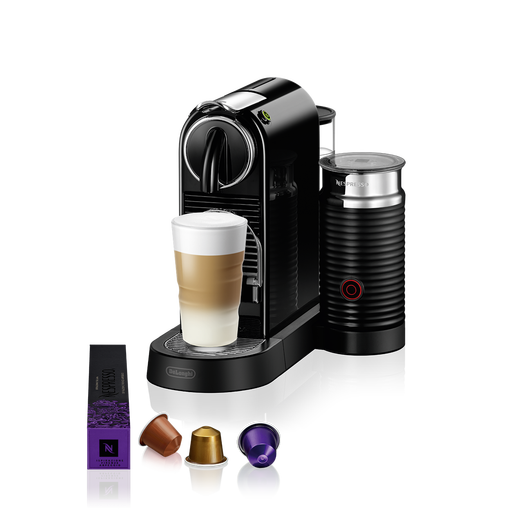
According to Nespresso Germany, the CitiZ&milk combines an Original capsule machine with an Aeroccino milk frother.
This selection includes bean-to-cup machines and capsule machines with milk preparation features. It’s for anyone looking to fit espresso and milky coffee into a shared kitchen routine with fewer hands-on steps.
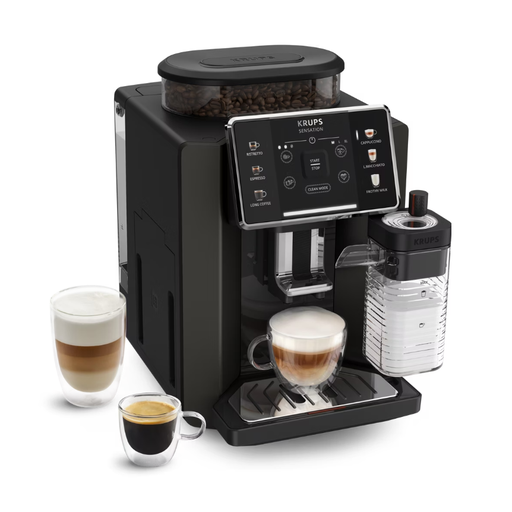 No image available
This bean-to-cup machine could suit you if you want to keep hands-on steps to a minimum when making milky coffee. Before buying, consider how its milk-system care will fit into your shared kitchen routine.
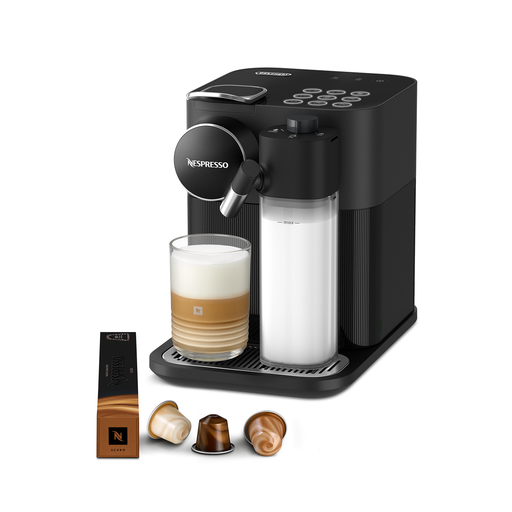 No image available
Automatic milk preparation could be useful when you have limited time in the kitchen. Bear in mind that this model is designed for the Original capsule system, and you’ll need to make time for milk-system care.
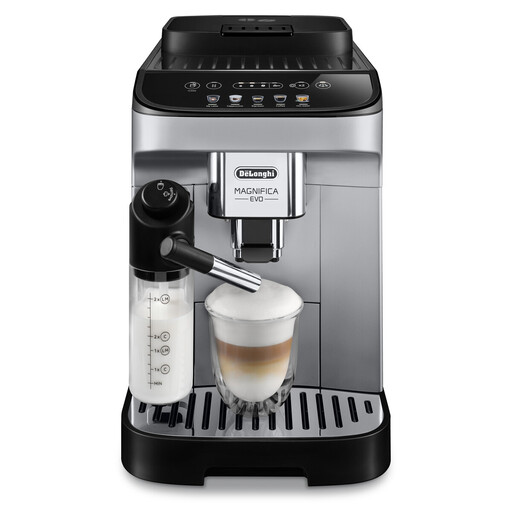 No image available
This bean-to-cup machine could be a good option if you want to fit milky coffee into your kitchen routine with only a few steps to do yourself. Check the milk-system cleaning routine before buying.
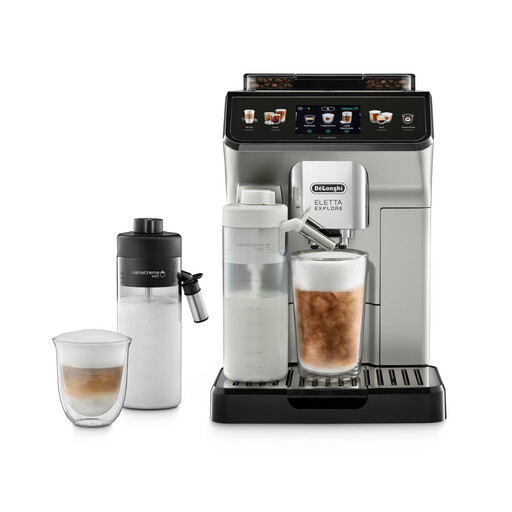 No image available
This bean-to-cup machine could suit you if you want to make milky coffee with minimal hands-on operation. Check what maintenance is involved and when you can fit it in around a shared kitchen schedule.
 No image available
Making the coffee and milk separately could work well for individual drinks in a shared kitchen. This model uses compatible capsules; also allow time to clean the separate Aeroccino.
Add the hazelnut ingredient of your choice to the glass separately, after making the coffee and milk. A recipe from Nespresso Germany also adds the syrup to the glass, not the machine’s tank. However, it doesn’t confirm whether a particular syrup is suitable for use with a machine or what allergens it contains. Check the ingredients of the product you use.
Measure the space you have, including the work area needed for your cup and milk preparation. Clean the milk system after use; descaling is a separate process and, according to Philips Germany, can take up to 30 minutes on some affected machines. Keep any milk that needs refrigeration sufficiently cold until you use it.
Statutory rights for faulty goods are generally claims against the seller and are separate from any voluntary manufacturer’s guarantee. For ordinary new goods, the statutory limitation period for claims relating to faults is generally two years from delivery; the legal requirements apply to each specific case.
Yes, if the machine is covered by the relevant EU rules. CE marking indicates that the manufacturer declares the product meets the applicable requirements; it is not an independent quality mark. The EU’s Your Europe information site makes this point too.